What to eat in Goa, from fish curry rice to bebinca
Coconut and kokum, red chillies and vinegar, fish at every meal and a Portuguese thread through it all: the twelve dishes I point guests to, and where to eat them.

On this page
In short
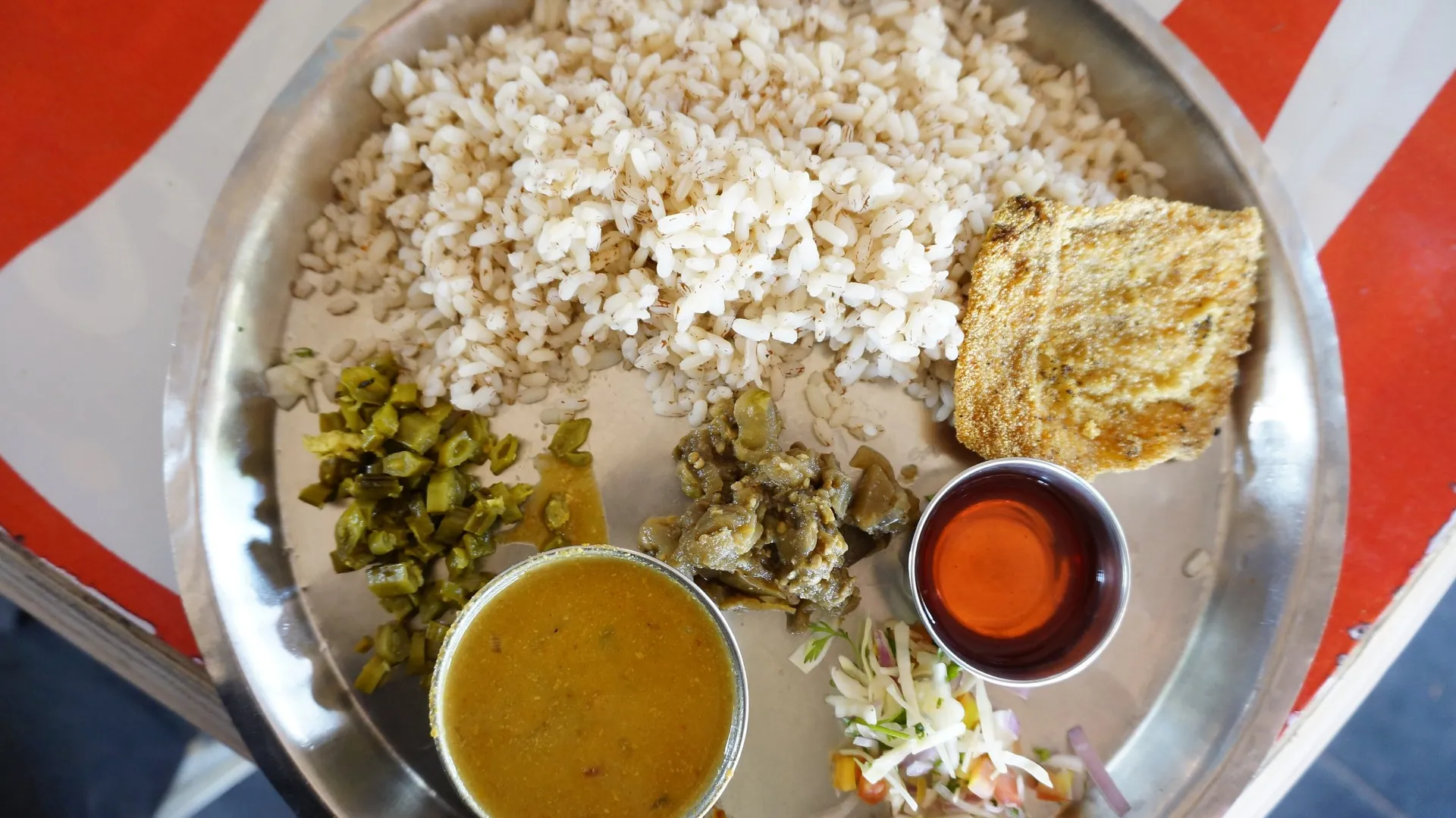
- Start with fish curry rice, Goa's everyday lunch: fish in a coconut curry soured with kokum, over plain rice. Order it as a fish thali.
- Goan food has two roots, Goan Hindu and Goan Catholic cooking, and the names carry that history: vindaloo comes from the Portuguese carne de vinha d'alhos and xacuti from the Konkani shagoti.
- Have bhaji pão for breakfast and bebinca, 7 to 16 layers of coconut milk and egg, for pudding. Sip feni, from cashew or coconut, at about 43%.
- For Goan food I'd go to Souza Lobo on Calangute beach, The Fisherman's Wharf at Cavelossim and, in Panjim, Viva Panjim, Ritz Classic or Mum's Kitchen. Book dinner ahead from mid-December to early January.
The first thing to eat in Goa is fish curry rice, the everyday lunch: fish in a coconut curry soured with kokum, over plain rice. It's the simplest way into a kitchen built on rice, fish and coconut. The famous names follow from there: vindaloo, xacuti, cafreal and prawn balchão, with bebinca to finish.
It's what I tell every guest in the guide I wrote for them: start with a fish curry rice at lunch and go from there. Below are the twelve dishes I point them to, grouped the way you'll meet them, and then the places I'd send you to eat them, from Siolim to the south.
What Goan food tastes like, and why
Rice is the constant, and fish matters so much that a Goan meal is thought incomplete without it. Most Goan cooking balances three things: the richness of coconut, a sour note and the heat of chillies, red or green.
| Ingredient | What it does | Taste it in |
|---|---|---|
| Coconut | Gives body, as milk or toasted and grated | Fish curry rice, xacuti, sol kadhi, bebinca |
| Kokum | The dried skins sour a curry and turn sol kadhi pink | Fish curry rice, sol kadhi |
| Vinegar | A Portuguese-era sourness, traditionally made from toddy | Vindaloo, balchão, recheado |
| Chillies | Brought by the Portuguese: dried red for the red masalas, green for cafreal | Recheado, balchão, xacuti, cafreal |
Two kitchens shaped it. Goan Hindu cooking is mostly fish and vegetables, soured with kokum and tamarind, sweetened with jaggery and cooked in coconut oil. Goan Catholic cooking joined that base to Portuguese ways: vinegar, bread and pork, in dishes such as sorpotel and vindaloo.
Portugal ruled Goa for 451 years, and it shows on the plate. The Portuguese brought bread, vinegar and chillies, along with cashew, pineapple, guava, potato and tomato from Latin America, and Goan cooks made them their own. The older thread is Konkani, Goa's own language, and its kitchen of rice, fish, coconut and kokum.
Read a menu with both in mind and the names make sense. Vindaloo began as carne de vinha d'alhos, meat in wine and garlic, until Goan cooks swapped the wine for palm vinegar and added spice. Balchão came with the Portuguese, most likely from Malacca, and cafreal is traced to Portugal's African colonies, possibly Mozambique, and to the African soldiers who served under the Portuguese. Xacuti, chacuti in Portuguese, takes its name from the Konkani shagoti and is said to come from Harmal, the village now called Arambol.
The curries, and the famous names
These six are the heart of the list: one everyday plate and five famous names, most eaten with rice at lunch or dinner. If you only have room for one, make it the first.
Fish curry rice
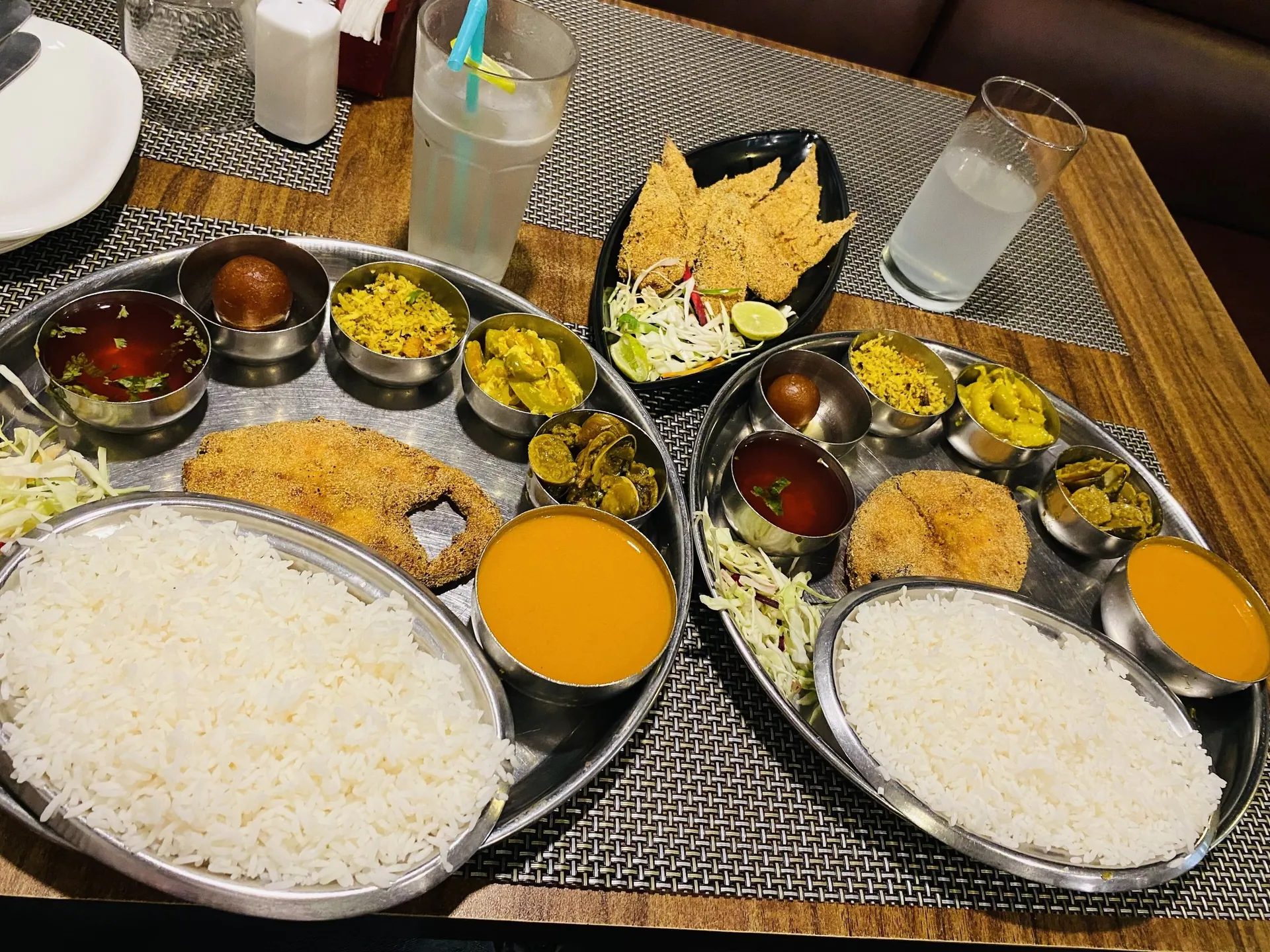
A staple of Goan Hindu cooking: fish in a coconut curry soured with kokum, over plain rice.
For the full plate, order a fish thali. Ritz Classic's, in Panjim, is famous.
Photo: Sujel Patil, CC BY 4.0, via Wikimedia CommonsPrawn balchão
Fresh prawns fried, then cooked down in a fiery, tangy masala of dried red chillies, spices and vinegar. Closer to a pickle than a curry, it's made days ahead, keeps well and is served without reheating.
Eat it with plenty of plain hot rice.
Recheado
Portuguese for 'stuffed': mackerel, pomfret or kingfish packed with a red masala of dried chillies, garlic, ginger, spices, tamarind and vinegar, then pan-fried.
Souza Lobo lists a recheado pomfret.
Xacuti
A rich curry of toasted coconut, white poppy seeds and large dried red chillies, warmed with pepper, nutmeg, cinnamon and cloves, usually with chicken, crab, lamb or beef.
Souza Lobo serves a crab xacuti.
Chicken cafreal
Whole chicken legs in a green masala of chillies, fresh coriander, garlic, ginger and spice, sharpened with lime or vinegar and pan-fried until charred. A favourite in Goa's bars and taverns, served with potato wedges and lime.
Cafreal is green and piri-piri is red: don't confuse the two.
Vindaloo
Pork in garlic, palm vinegar and spice. British curry houses made the name mean simply a very hot curry; the traditional Goan recipe is sour and garlicky, with no potatoes.
Order the pork: it's the traditional meat.
Goan breakfast, and bread at every hour
Bread came to Goa with the Portuguese in the early 17th century, and it never left. Pão is the everyday loaf. Poi is round and soft, with a pocket, made half with whole wheat and traditionally leavened with toddy, the fermented sap of the coconut palm, then baked for under a minute on the floor of a wood-fired oven.
In the villages the poder, the baker, still cycles round each morning with a horn; in Siolim you hear him before you see him. His bread is the base of the Goan breakfast, and of the snacks that keep going late into the night.
Bhaji pão
The Goan breakfast, and a vegetarian one: spiced vegetable bhaji with fresh pão to tear and dip.
Eat it early, where you see people stopping on the way to work.
Sausage pão
Spicy Goan chouriço, the local sausage, cooked and stuffed into fresh poi.
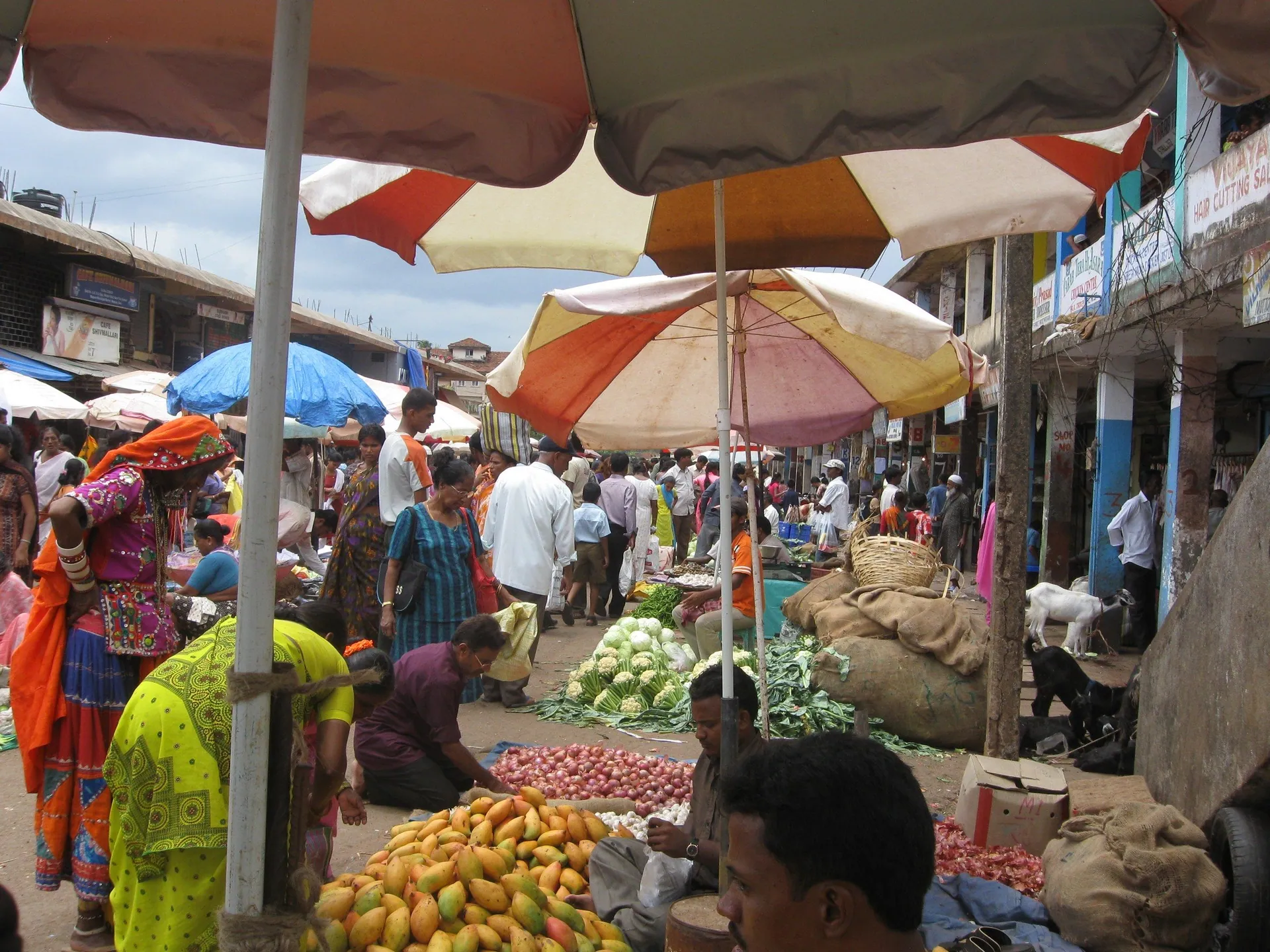
Mapusa market sells the sausages, with spices, cashews, fruit and sweets. It's open daily and liveliest on Fridays.
Photo: Aaron C, CC BY-SA 2.0, via Wikimedia CommonsRos omelette
An omelette with green chillies, onion and coriander in ros, Konkani for gravy: a spicy chicken or chickpea one, often close to a xacuti, eaten with pão. Food carts sell it in Goa's towns, and it's a late-night classic.
Ask which gravy it is if you don't eat meat.
Something sweet, something cool, something strong
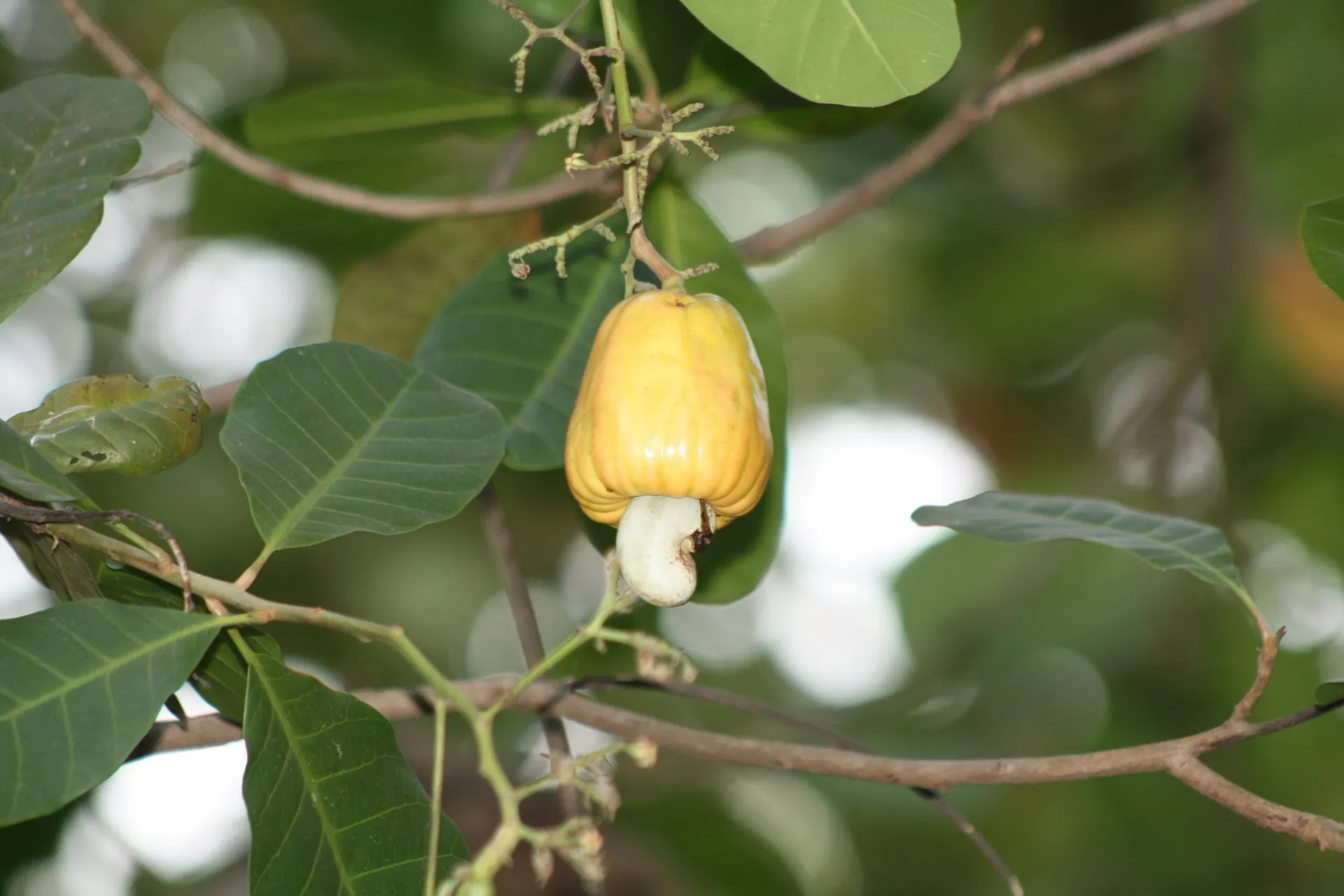
Finish with three that belong to Goa as much as any curry: a layered pudding made above all for Christmas, a pink drink that cools the heat and a spirit distilled from the cashew fruit. Treat the last with respect. Feni takes its name from the Sanskrit phena, froth, for the foam that rises as it distils; cashew feni has held a geographical indication since 2009, and Goa named feni a heritage spirit in 2016.
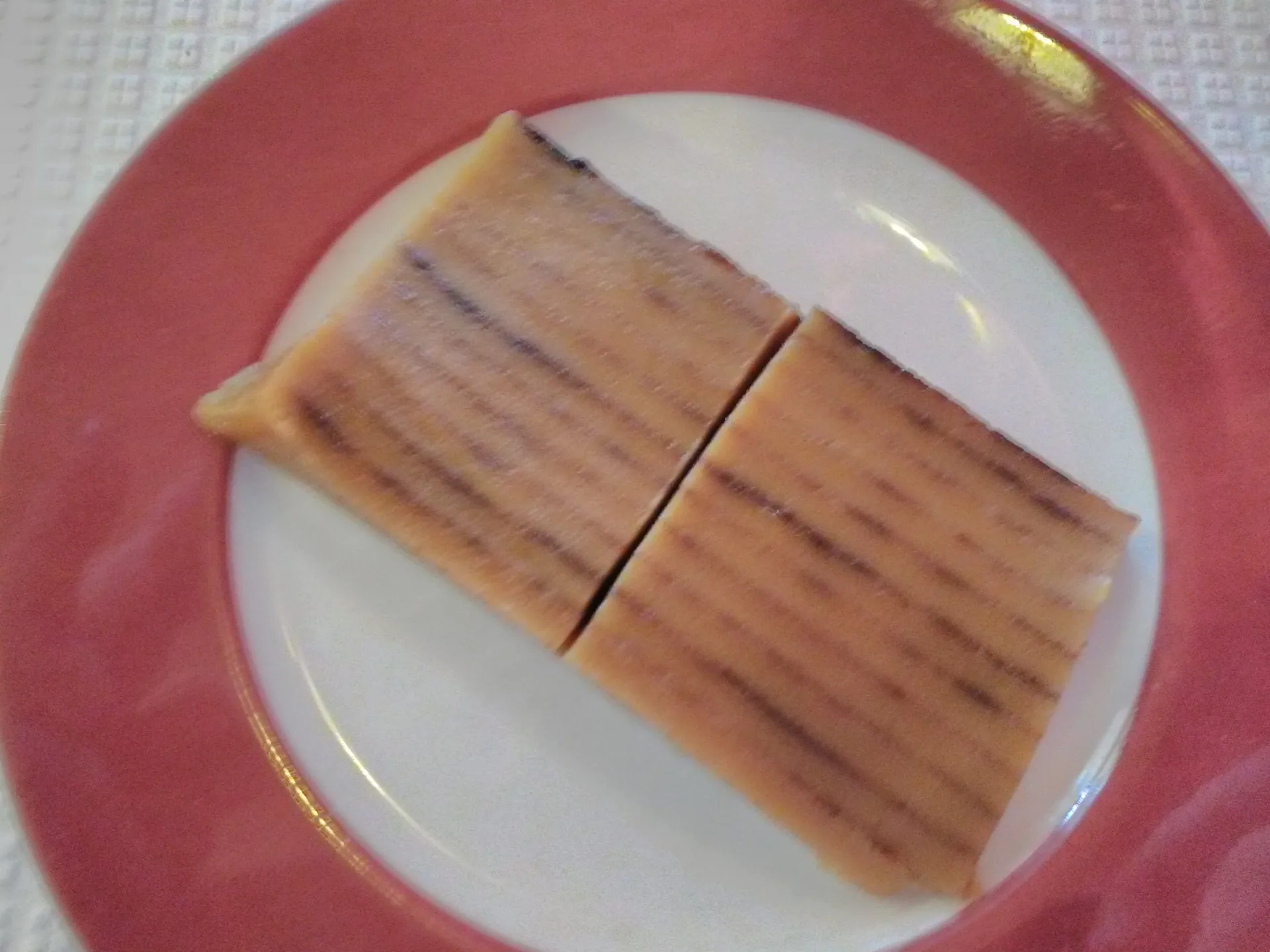
Bebinca
Flour, sugar, ghee, egg yolk and coconut milk, built one thin layer at a time, traditionally 7 to 16 of them. It's called the queen of Goan desserts and is the centrepiece of kuswar, the Christmas sweets.
Goan bakeries sell it all year, so take a slice home.
Photo: Susomoinhos, CC0, via Wikimedia CommonsSol kadhi
Coconut milk and dried kokum skins, with a little garlic, chilli and salt, turned a deep purple-pink by the kokum. Served chilled, it's a digestive after spicy meals, especially fish.
Order it with a fish thali, or on its own on a hot afternoon.
Feni
Goa's own spirit, distilled from fermented cashew apple juice or from coconut toddy, and bottled at about 43%.
Try a kokum feni at Joseph Bar in Panjim. Sip it, and never drive after.
Photo: Dr. Raju Kasambe, CC BY-SA 3.0, via Wikimedia CommonsWhere to eat Goan food, from Siolim to the south
For Goan food itself, I'd go to five places. Souza Lobo has served Goan seafood on Calangute beach since 1932. In Panjim, Viva Panjim cooks Goan food in Fontainhas, Ritz Classic has the famous fish thali and Mum's Kitchen is known for Goan home recipes. Make one of them lunch before a walk through Fontainhas. In the south, The Fisherman's Wharf serves Goan seafood on the Sal river at Cavelossim.
The rest of my list is for a very good meal of another kind, and Siolim, home to Rivara, has three in the village itself. Fireback serves Thai cooking by chef David Thompson on the river, Thalassa pairs Greek food with river sunsets and Vera's Patisserie is a Russian-style bakery café.
Assagao has Gunpowder for South Indian and coastal cooking, The ASSA House for a French bistro and Jugnu for Indian dishes with a global twist. Around Anjuna and Vagator, Artjuna is a garden café for slow breakfasts, Slow Tide does coastal cooking on the beach and Antares offers clifftop dining over the sea. On the Calangute to Candolim stretch, Britto's is a Baga beach classic and Bomra's cooks Burmese flavours. Martin's Corner is a Betalbatim institution in the south.
Eat like a local: markets, seasons and a cooking class
Goan food follows the calendar. March brings urrak, April is cashew season and May is for mangoes, and the markets show it all at once. If you'd rather learn than order, there are kitchens that will teach you.
Leave room for lunch. Order the fish curry rice and a sol kadhi to cool it, and take a slice of bebinca home for later.
Questions people ask
Fish curry rice, the everyday lunch and the dish most tied to daily life. The Goan Catholic kitchen is known for sorpotel, vindaloo, xacuti, cafreal and prawn balchão, and bebinca is called the queen of Goan desserts.
Some of it is. Vindaloo is spicy. Recheado and balchão are built on dried red chillies and vinegar, and cafreal on green chillies. A chilled sol kadhi of kokum and coconut milk, taken after a spicy meal, cools things down.
Yes. Goan Hindu cooking is largely vegetarian or fish-based, with vegetables soured with kokum or tamarind and cooked in coconut oil. Bhaji pão makes a vegetarian breakfast, and ros omelette can come with a chickpea gravy.
For dinner from mid-December to early January, yes: everywhere fills, and I tell every guest the same. At other times, check timings before you go, as many places open only in season.
Sources and checks
- The House of Nivak guest guide (facts checked 27 Sep 2026)
- Goan cuisine, Wikipedia
- Vindaloo, Wikipedia
- Xacuti, Wikipedia
- Cafreal, Wikipedia
- Balchão, Wikipedia
- Ros omelette, Wikipedia
- Poee, Wikipedia
- Solkadhi, Wikipedia
- Bebinca, Wikipedia
- Feni (liquor), Wikipedia
- Recheado masala, GOYA
- About Souza Lobo
Opening days, prices and seasonal rules change. I check them before every update; please confirm anything time-sensitive before you go.