Working remotely from Goa: what to check before you book a month
A month of work beside Siolim's fields only works if the basics are right: what to ask before you book, what to bring and how to keep the best light for yourself.


On this page
- 01Why I'd base a working month in a village
- 02Internet and power: ask first, then bring a backup
- 03The desk, the chair and a quiet corner for calls
- 04Time zones: know your overlap
- 05A working day in Siolim
- 06Which season for a working stay
- 07Staying a month: the kitchen, laundry and getting around
- 08Questions people ask
In short
- Before you book, I'd ask for the Wi-Fi speed as a number, upload and download, and whether there's a real desk and chair. Ask too whether there's power backup, and what it runs.
- Bring your own backup: a mobile hotspot or a second SIM on another network, a power bank and headphones with a microphone.
- India Standard Time is UTC+5:30 all year, with no daylight saving, so the gap to London or New York moves by an hour when their clocks change.
- For a month, I'd choose a village like Siolim over a beach strip, and a home with a kitchen, a washing machine and a welcome for long stays.
- Goa's dry season runs from about October to May. The monsoon, June to September, is wet, green and calm, and good for focused weeks once you've asked about power backup.
To work well from Goa for a month, get five things right before you book: the internet, the power, the desk, a quiet place for calls and, for a long stay, a kitchen and a washing machine. Then give the work fixed hours, and give Goa the rest.
I host guests in Siolim, a village on the Chapora in North Goa, and this is the checklist I'd hand anyone planning a working month here: what to ask, what to bring, which season to choose and how to keep Goa from becoming the view behind your screen.
Why I'd base a working month in a village
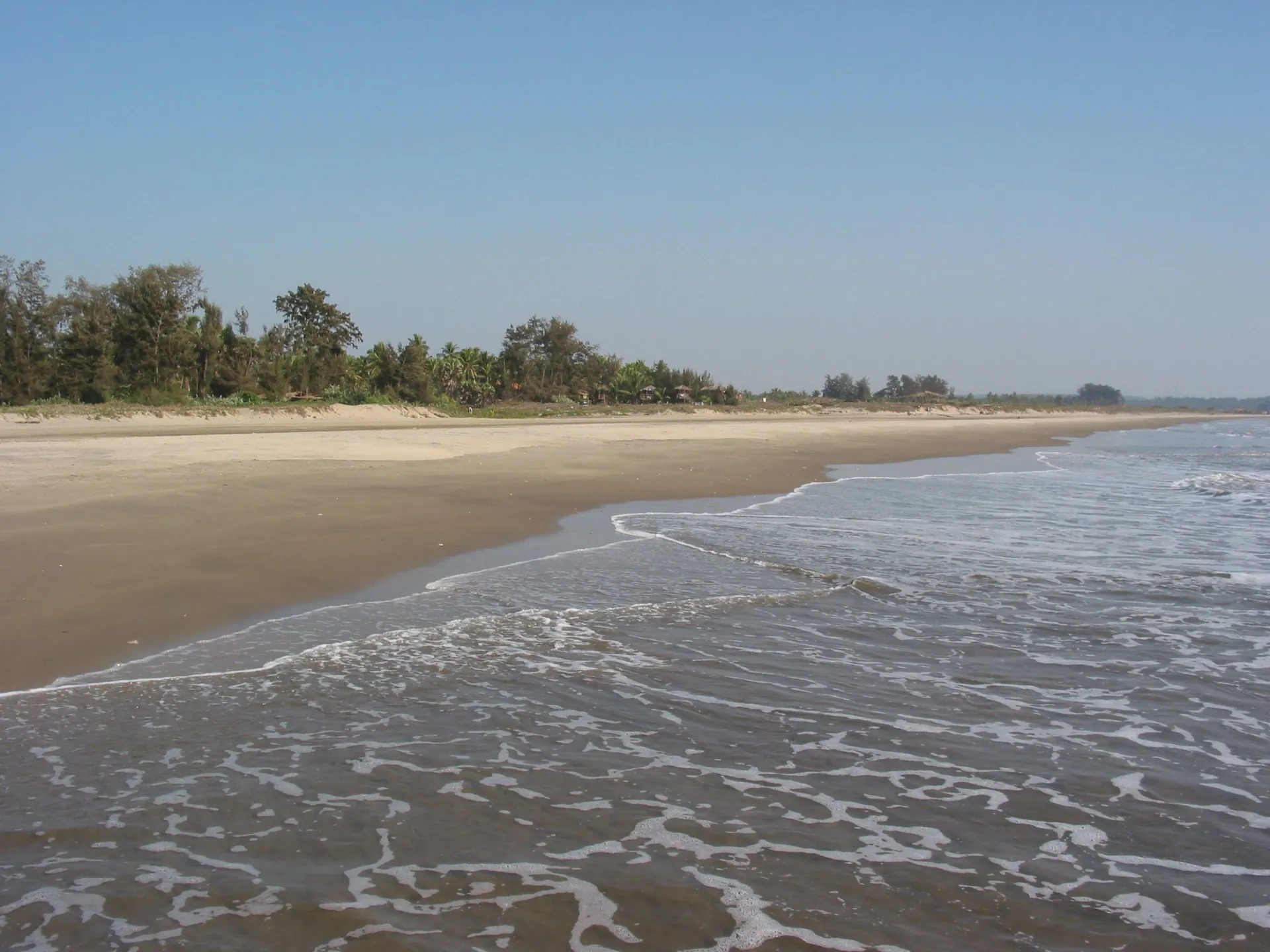
I'd choose a village over a beach strip, and Siolim is the one I know. It sits on the south bank of the Chapora, between the busy beaches of Anjuna and Vagator and the quieter north coast across the bridge, a lived-in place of old houses, church bells and river light. That makes for calm working days, with North Goa's beaches and restaurants within reach.
When the laptop closes, Morjim, Ashwem and Mandrem are there for quieter beaches, and Vagator, Anjuna and Assagao for sunsets, cafés and evenings out. Then you come home to Siolim's slower pace. For errands, Mapusa is the market town and the hub for buses, and its market is open daily and liveliest on Fridays.
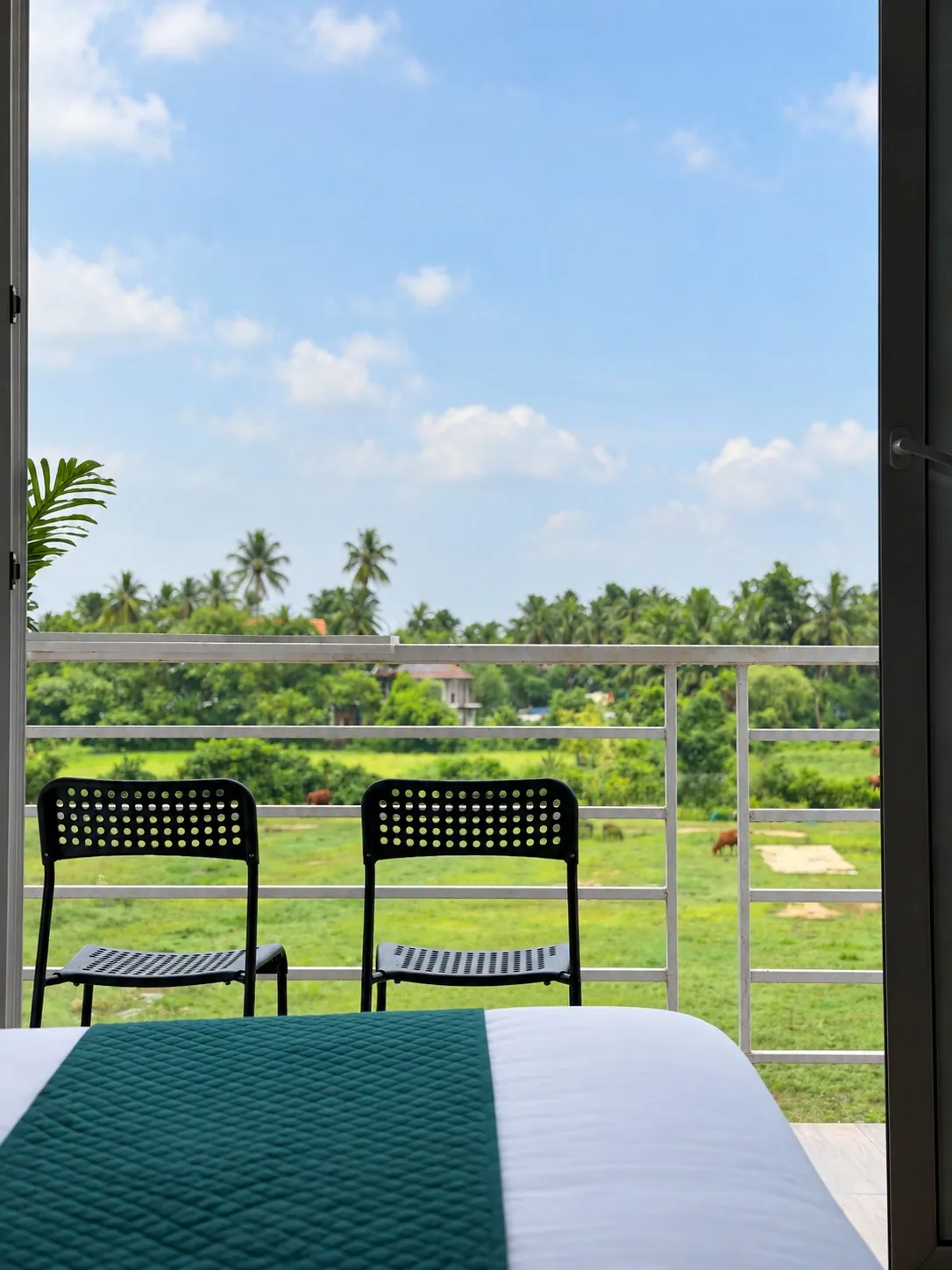
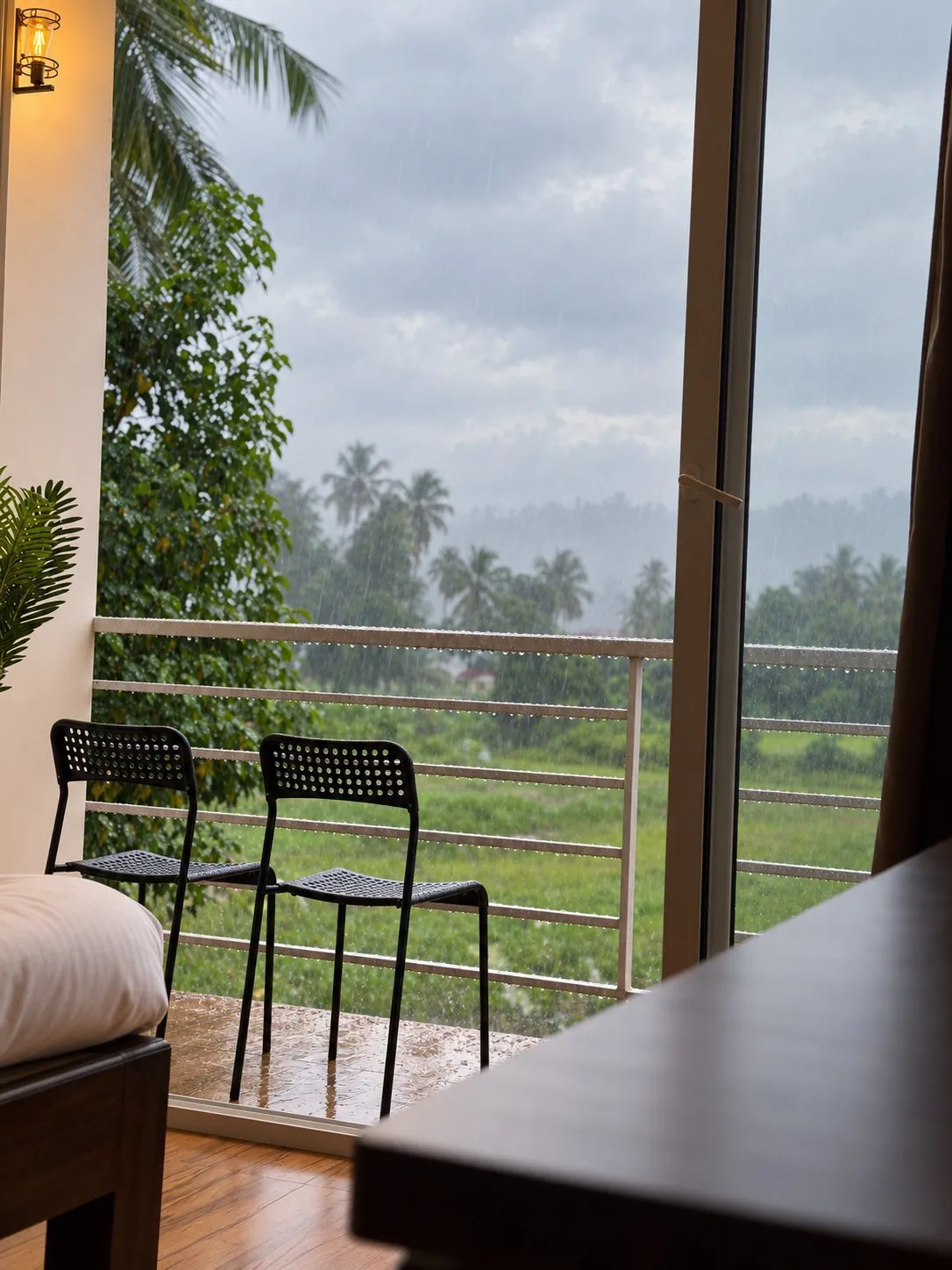
- A balcony or verandah with a view. You'll spend more time on it than you think, most of all in the monsoon.
- A market town within reach, such as Mapusa, for supplies and buses.
- A village whose days don't turn on the beach. From June to September most beach venues close or slow down, while river and inland villages such as Siolim, Aldona and Assagao carry on.
Internet and power: ask first, then bring a backup
Treat “fast Wi-Fi” as no answer. Ask for the speed as a number, ideally a recent speed test showing upload as well as download, because a video call sends your picture as well as receiving theirs. And ask where the router is: a strong signal beside it can be weak at the desk.
Then bring a backup you control. A mobile hotspot or a second SIM on a different network turns an outage into an inconvenience rather than a missed call, so test it from the desk on the first day.
Power is the question most people forget. Ask whether the home has power backup, such as an inverter or a generator, and what it runs. A backup may keep the lights and fans on but not the air conditioning; for work, what matters is whether the Wi-Fi router stays on. I'd ask it for any month, and before a monsoon month above all.
- What's the speed, upload and download? A recent test beats a description.
- Where's the router? Near the desk beats two walls away.
- Is the connection shared? One line across many rooms can slow when everyone is online.
- What happens in an outage? Is there a second line, or someone to call?
- Is there power backup, and does it run the router?
The desk, the chair and a quiet corner for calls
A dining table and a bar stool will do for a day, not a month. Look for a real desk and a chair you could sit in all morning, and check where the light falls: side light from a window is kind to eyes and to video, while a window behind you turns you into a silhouette on calls.
Find the quiet corner on the first day and learn the home's sounds: the road, the neighbours' mornings, rain in the monsoon. Take calls on headphones rather than the laptop's speakers, make a short test call before the first one that matters and, if there's housekeeping, agree a time that doesn't clash.
- Desk: room for a laptop, a notebook and a cup.
- Chair: one you'd sit in for hours.
- Light: from the side, not behind the screen or behind you.
- Your kit: a laptop stand, a keyboard, a mouse and headphones with a microphone.
Time zones: know your overlap
India has one time zone, India Standard Time, which is UTC+5:30 all year. India doesn't use daylight saving, so if your team is somewhere that does, the gap between you moves by an hour twice a year. Work out your overlap before you book, protect it and give the rest of the day to Goa.
| If your team is in | Their 9 AM is | Their 6 PM is |
|---|---|---|
| London, winter (GMT) | 2:30 PM | 11:30 PM |
| London, summer (BST) | 1:30 PM | 10:30 PM |
| New York, winter (EST) | 7:30 PM | 4:30 AM, next day |
| New York, summer (EDT) | 6:30 PM | 3:30 AM, next day |
| Dubai | 10:30 AM | 7:30 PM |
| Singapore | 6:30 AM | 3:30 PM |
With Europe, the mornings are yours and the afternoons are the team's. With New York and the East Coast, the overlap is your evening, so take the long lunch and the afternoon out first.
A working day in Siolim
The risk of working from Goa is a month somewhere beautiful spent looking at a screen. The fix is a routine with edges: fixed hours for work, and the best light kept for being outside. The midday sun is strong here, so go out early, work through the heat and go out again in the late afternoon.
A working day in Siolim, in order
- EarlyA walk along the Chapora while it's cool and still, and warm poi from the poder, the village baker who cycles by with a horn.
- MorningDeep work at the desk, before the calls begin.
- MiddayA proper lunch, away from the laptop.
- AfternoonCalls and lighter work through the hottest hours.
- Last lightLaptop closed. Out to the river under the Siolim bridge, where locals gather at dusk, or across the bridge to Morjim.
- EveningDinner in Siolim, then the balcony and an early night.

Keep weekends for longer trips, such as a day in Panjim or a long day in the south. Remote work and slow travel share a rule: one base, and fewer plans.
Which season for a working stay
Pick the season for the work you'll do. Goa's dry season runs from about October to May, with December and January the busiest weeks, and April and May hot and quiet; by April you'll want the air conditioning. My piece on the best time to visit Goa goes month by month.
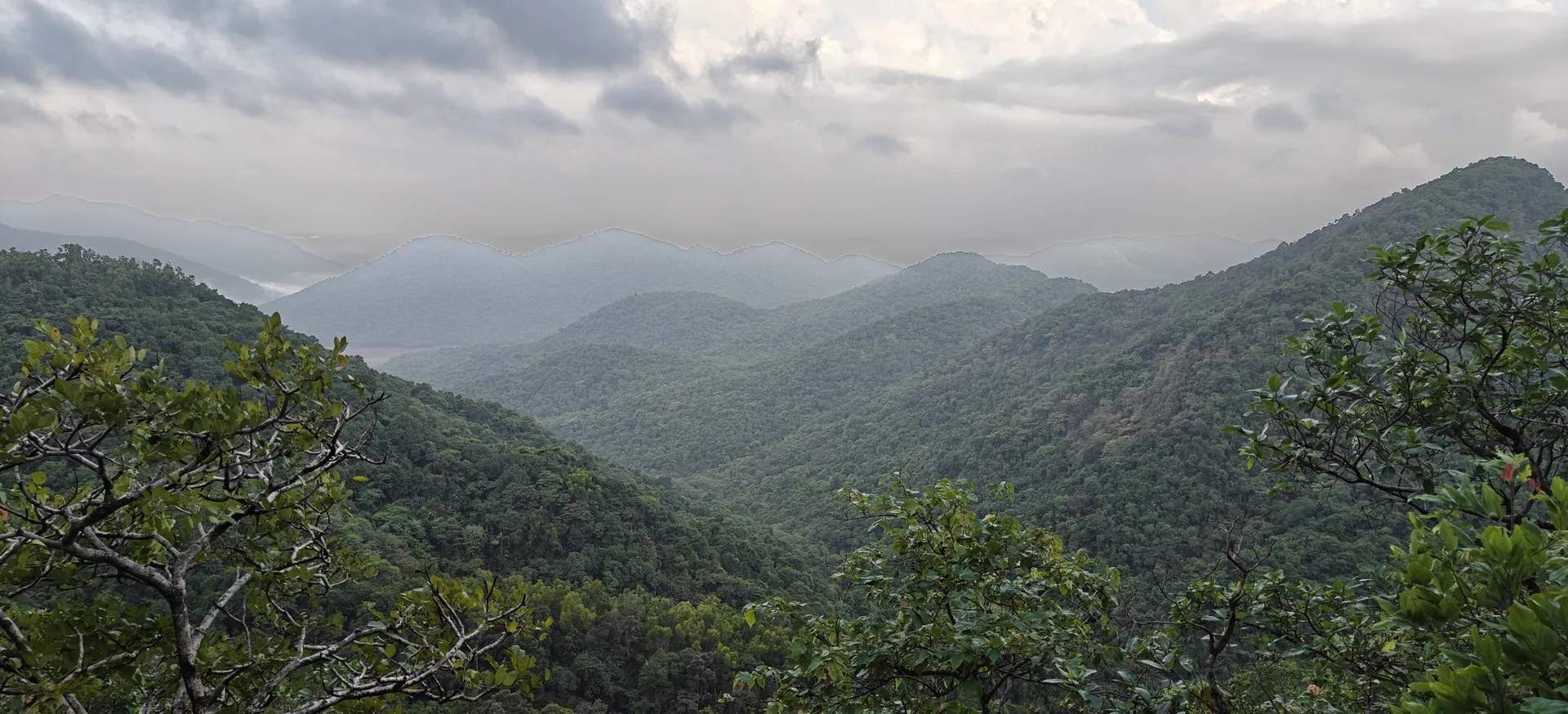
The monsoon, June to September, is wet, green and calm, and good for focused weeks once you've asked about power backup. July is the wettest month: Panjim averages about 955 mm of rain over 27 rainy days, with about three hours of sunshine a day, so expect rain on most days. The sea is closed for swimming, most beach shacks close and the villages are at their greenest. More in Goa in the monsoon.
| Months | What it's like | For work |
|---|---|---|
| October to November | Dry; the season opens | Good weeks before the busiest ones |
| December to January | Clear skies, cool evenings, the busiest weeks | Book the home and dinners early |
| February to May | Warm and easy, then hot and quiet | Calm weeks; you'll want the AC by April |
| June to September | The monsoon: rain and deep greens | Quiet and green; check the power backup |
Staying a month: the kitchen, laundry and getting around
A week can be lived out of a suitcase; a month needs a home that works. Ask whether long stays are welcome before you plan around one, and look for these.
- A kitchen you'll cook in: a cooktop, a fridge and pots and pans, with drinking water to refill.
- A washing machine, and an iron if you're on camera.
- Storage, so the suitcase can go away.
- Housekeeping on a schedule you can plan calls around.
For getting about, a scooter or a car is the easiest way around North Goa, and buses link the towns at low fares, with Mapusa the hub for Siolim. Taxis suit evenings out and airport runs: Uber and Ola don't operate in Goa, so use GoaMiles, Goa's own taxi app, or the airport's prepaid counter. My piece on getting around Goa has the rest.
Use the checklist for the house and the Wi-Fi. Siolim itself is best without one.
Questions people ask
Yes, if you choose the base and the season well. A quiet village like Siolim gives calm working days with North Goa's beaches and restaurants within reach, and the dry season runs from about October to May. I'd check the Wi-Fi speed and ask about power backup before you book.
A real desk and chair, Wi-Fi with a stated speed, an answer on power backup, a quiet corner for calls, a kitchen, a washing machine and a host who welcomes long stays. Bring a mobile hotspot as your own backup.
It can be, if you want quiet. From June to September Goa is wet, green and calm, the sea is closed for swimming and most beach venues close or slow down, which makes for focused weeks. Ask about power backup before you book.
India Standard Time, UTC+5:30, across the whole country. India doesn't use daylight saving, so the gap to places that do, like London and New York, changes by an hour when their clocks change.
Sources and checks
- The House of Nivak: Rivara's listing facts
- The House of Nivak guest guide (facts checked 27 Sep 2026)
- Wikipedia: Indian Standard Time
- Wikipedia: British Summer Time
- Wikipedia: Eastern Time Zone
- Wikipedia: List of UTC offsets
- Climate data for Panaji, India Meteorological Department normals (Wikipedia)
Opening days, prices and seasonal rules change. I check them before every update; please confirm anything time-sensitive before you go.