Panjim and Fontainhas: a day on foot in Goa's riverside capital
Pastel lanes at first light, a white church above its zigzag steps, a fish thali for lunch and the Mandovi at dusk. Goa's capital is best taken slowly, and mostly on foot.
On this page
In short
- Fontainhas, Panjim's old Latin quarter, lies between Altinho hill and the Ourem creek: lanes of pale yellow, green and blue houses, at their quietest between 6:30 and 8:30 AM.
- Panjim is small and walkable. One unhurried day links Fontainhas, the Immaculate Conception Church above its zigzag staircase, the covered market and the Mandovi at dusk.
- For Goan food, go to Ritz Classic for its famous fish thali, Mum's Kitchen for home recipes and Viva Panjim, in an old house in Fontainhas, for dinner.
- Sunset cruises on the Mandovi leave from about 5:30 PM. Reis Magos Fort faces the city across the river, and Dona Paula is the headland where the rivers meet the sea.
- The Mandovi casinos are for over 21s with original photo ID. Entry is by package, and men can't wear shorts, sleeveless tops or flip-flops.
The way to see Panjim is on foot, in one unhurried day: Fontainhas at first light, the white Immaculate Conception Church, the covered market, a fish thali for lunch and the Mandovi at dusk. Goa's capital is small and walkable, and its old quarter is still lived in, which is exactly why it is worth the trip.
Panjim sits on the south bank of the Mandovi, with Reis Magos Fort facing it across the water. From Siolim, where Rivara sits on the Chapora, it is a drive south across the river, so come for the day and stay into the evening.
Fontainhas, the Latin quarter
Fontainhas was established around 1770 at the foot of Altinho hill, on reclaimed land beside the Ourem creek, by António João de Sequeira, a Goan who had made his fortune in Mozambique. Its name is Portuguese for 'little fountain', after the springs at the base of the hill, and the spring-fed well called the Fonte Phoenix is still there, restored.
The houses are painted pale yellow, green or blue under red tiled roofs, with tiled street names and lanes that climb the hillside in steps. Under Portuguese rule, owners had to repaint after every monsoon, and many still do. Each February, an arts festival turns some of the old homes into galleries.
Fontainhas at first light
The quarter before the city wakes: pastel houses, chapels and hillside steps, in soft light and quiet lanes.
People live here, so keep voices low and ask before photographing anyone.
Chapel of St. Sebastian
A chapel from 1818 at the southern end of the quarter. It keeps a large crucifix that once hung in the Palace of the Inquisition in Old Goa.
Cover shoulders and knees if you step inside.
Fontainhas heritage walk
A guided two-and-a-half-hour walk through the Portuguese-era lanes, with a stop at an old bakery. Or wander on your own.
LetsGoa lists four starts a day, from 8:30 AM to 5:30 PM. Take the first, before the heat.
Book on LetsGoaA day in Panjim on foot
This is the route we'd give a friend: the old quarter early, the middle of the day for eating and resting, and the river when the light goes. The heart of it is all walkable. Take a taxi only for Reis Magos, Miramar and Dona Paula.
A day in Panjim, in order
- 6:30 AM, FontainhasStart in the lanes at first light. Walk up the hillside steps and back down past the Fonte Phoenix and the Chapel of St. Sebastian while it is cool and still.
- Mid-morning, the churchWalk to the Immaculate Conception Church, white above its zigzag staircase at the heart of Panjim. Then on to the covered market for fish, fruit and spice.
- LunchA fish thali at Ritz Classic, or Goan home recipes at Mum's Kitchen.
- AfternoonThe midday sun is strong, so slow down. Rest, paint an azulejo tile by appointment, or take a taxi across the river to Reis Magos Fort.
- 5:30 PM, the MandoviWalk the riverside promenade as the light goes, or take a sunset cruise from the Panjim jetty.
- EveningDinner by candlelight at Viva Panjim, in an old house in Fontainhas, then a kokum feni at Joseph Bar.
Buses, scooters and river ferries are all in our guide to getting around Goa.
The church, the market and the river
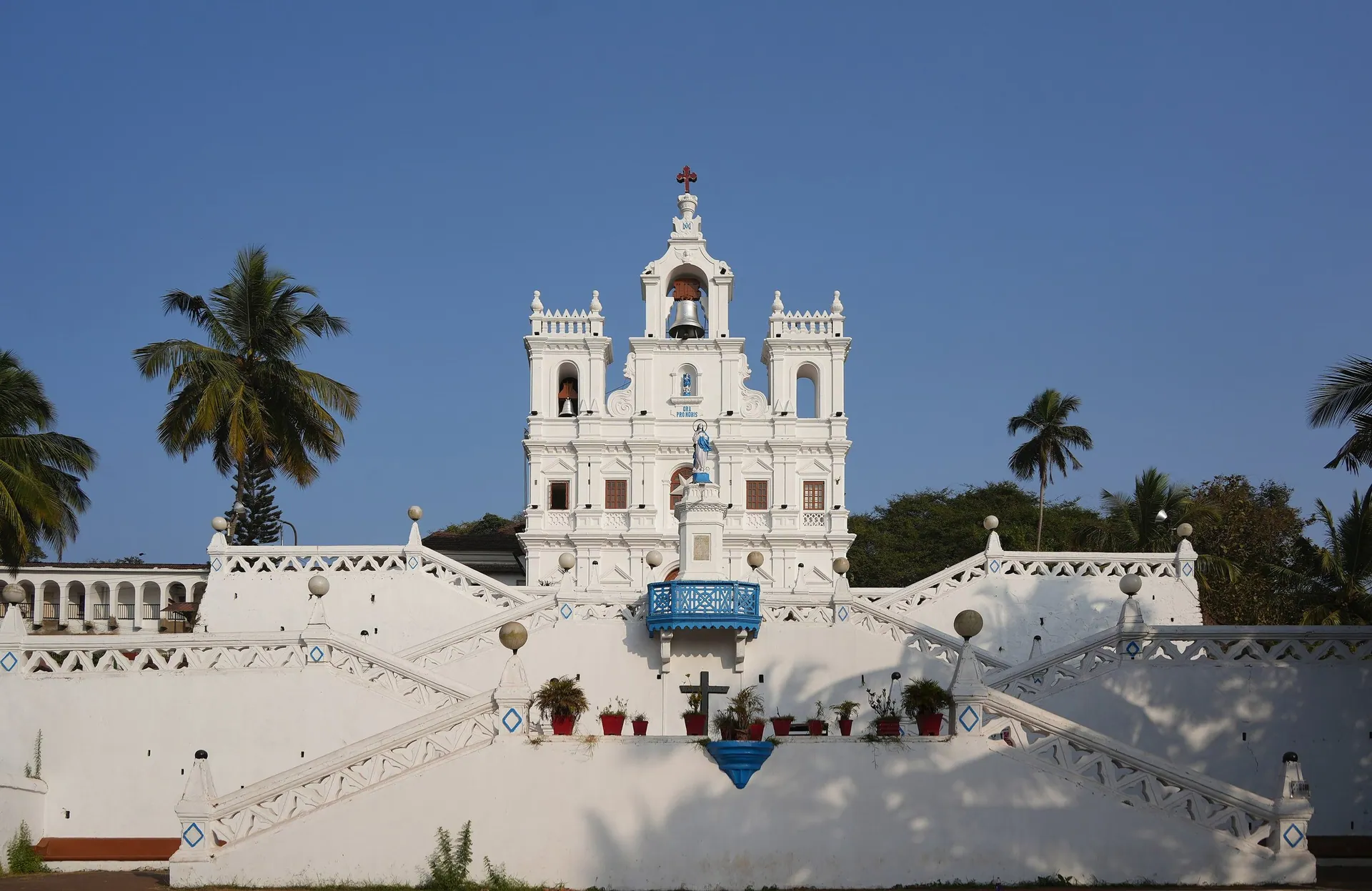
Immaculate Conception Church
The white church above its zigzag staircase, at the heart of the city. A chapel stood here from 1541, and the bell in its tower, brought in 1871 from the Augustinian monastery on Old Goa's Holy Hill, is the second largest in Goa.
Mass is said daily in English, Konkani and Portuguese. The church's feast is on 8 December.
Photo: Ingo Mehling, CC BY-SA 4.0, via Wikimedia CommonsPanjim market
A busy covered market for fish, fruit, spice and colour, and a good place to see what Goa cooks with.
Keep some cash for small stalls, and ask before photographing stallholders.
The Mandovi promenade
A riverside walk along the Mandovi, at its best as the light goes.
Pair it with a sunset cruise, which leaves from about 5:30 PM.
Sunset on the Mandovi
Goa Tourism's launches, the Santa Monica and the Shantadurga, run lively hour-long cruises with a live band and Goan folk dances. For something quieter, take a 90-minute mangrove cruise.
Arrive early for good seats.
Goa Tourism cruisesAcross the river and out to the sea
Panjim's other sights need a taxi. Reis Magos is on the north bank, so it fits on the drive in from North Goa; save Miramar and Dona Paula for the late afternoon.
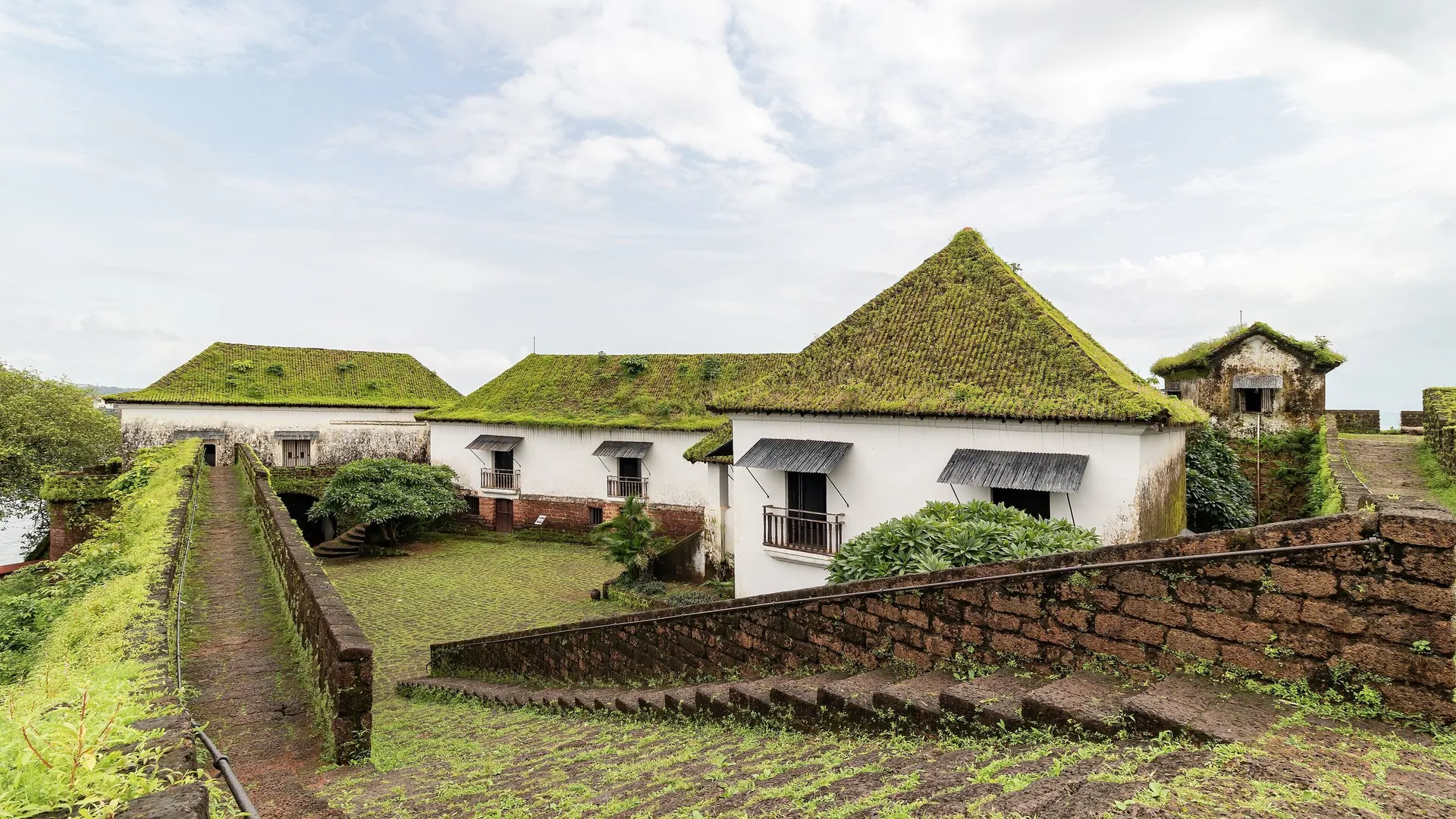
Reis Magos Fort
Built in 1551 and rebuilt in 1707, the fort faces Panjim from the north bank of the Mandovi. It served as a jail until 1993, was restored from 2008 and is now a cultural centre, with wide views over the river.
The Reis Magos Church stands at its foot. Check opening hours before you go.
Photo: iMahesh, CC BY-SA 4.0, via Wikimedia CommonsMiramar
Panjim's city beach, for a walk on the sand at the end of the day.
Swim only where lifeguards are on duty, between their flags, and never in the monsoon.
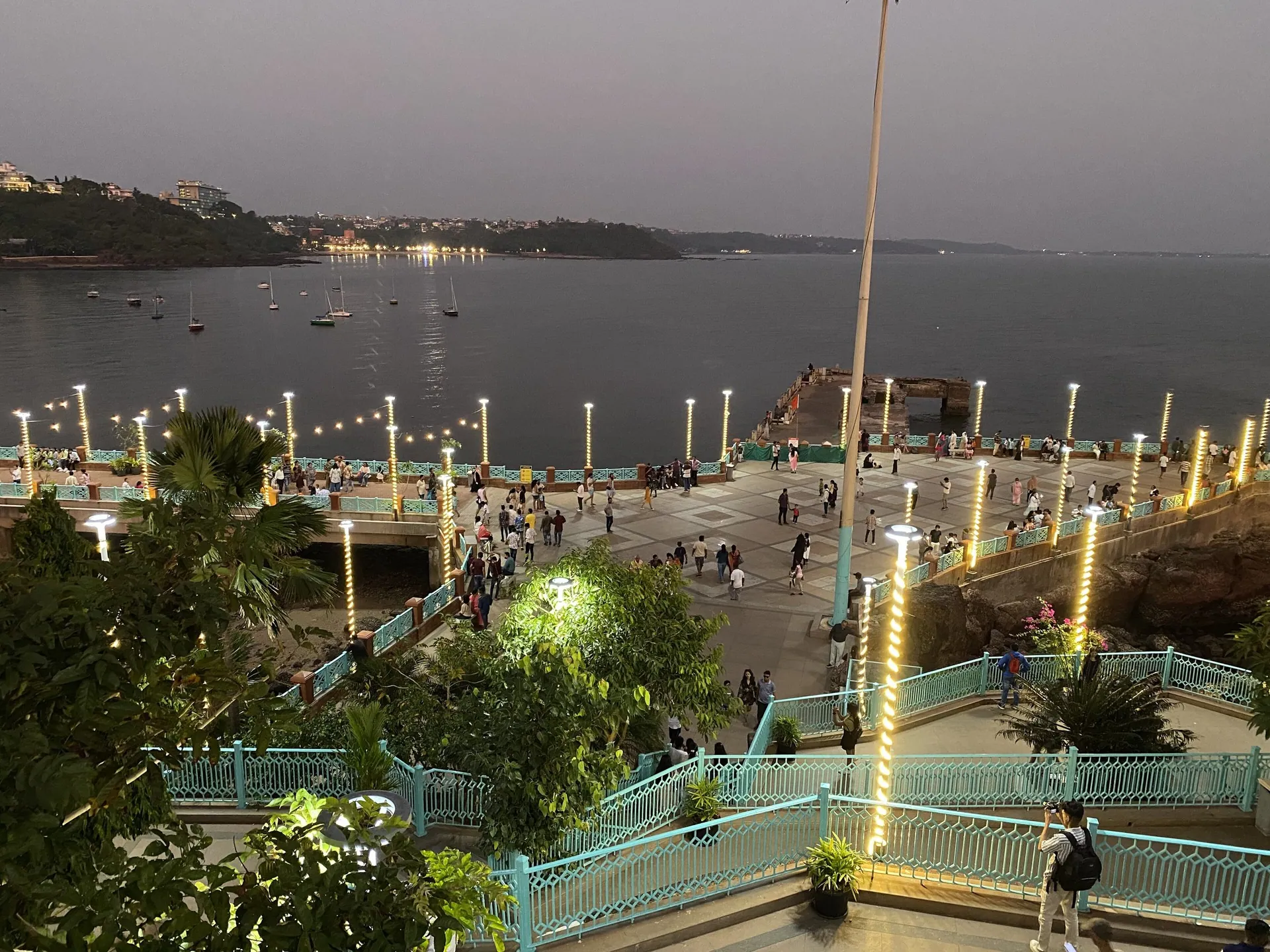
Dona Paula
A headland where the rivers meet the sea, with long views over the water.
For a sunset drink, book a table at Bar Outrigger nearby. Closed Tuesdays.
Photo: Vinayaraj, CC BY-SA 4.0, via Wikimedia CommonsWhere to eat Goan food in Panjim
Panjim is a good place for Goan home cooking, and three names cover the day: a thali at lunch, home recipes, and candlelight in the old quarter. Places change, so check timings, and book dinner ahead from mid-December to early January, when everywhere fills.
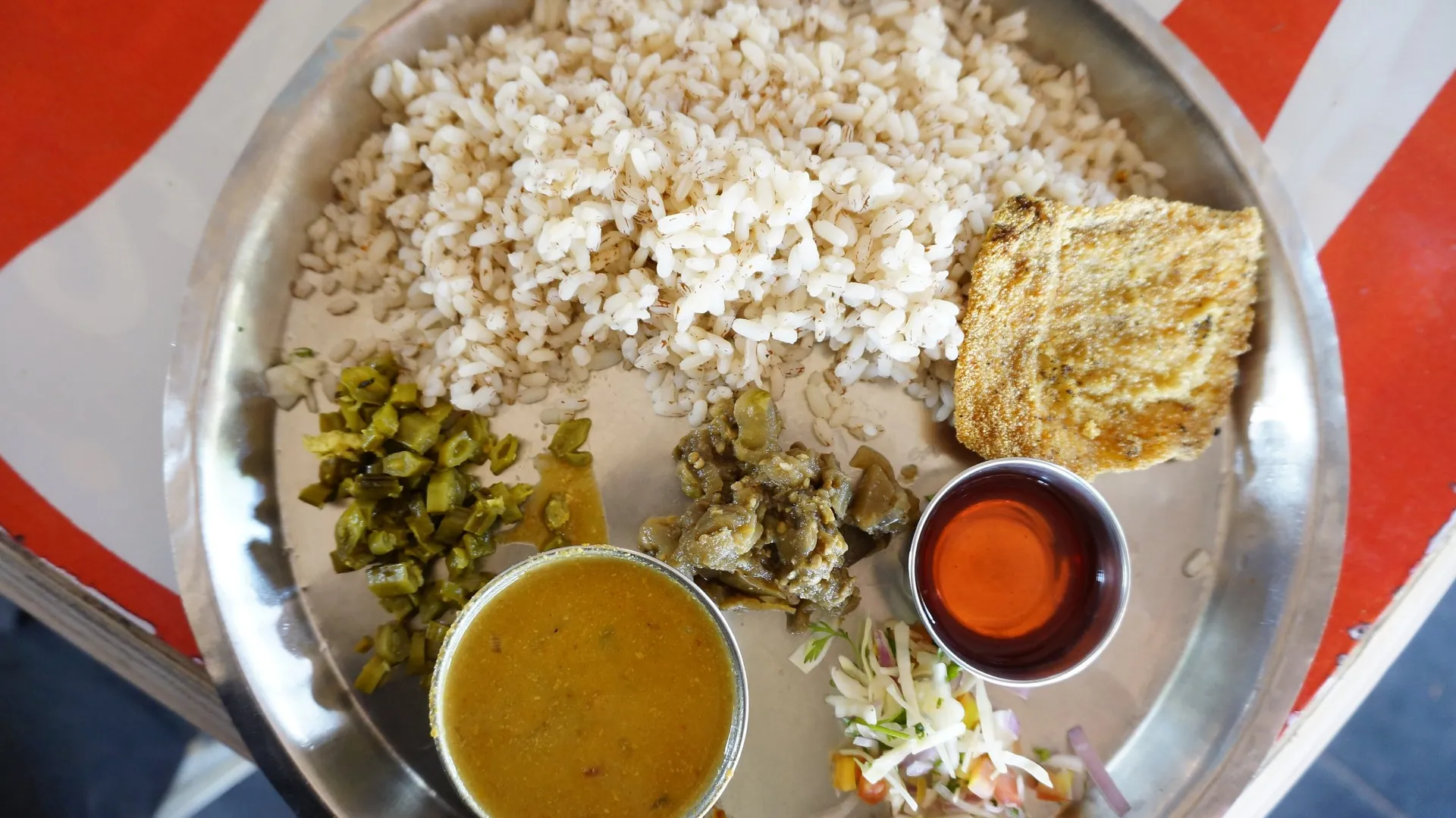
Ritz Classic
Famous for its fish thali, Goa's everyday lunch of fish curry and rice, with coconut and kokum.
Photo: Fredericknoronha, CC BY-SA 4.0, via Wikimedia CommonsMum's Kitchen
Goan home recipes, the dishes families cook at home.
Viva Panjim
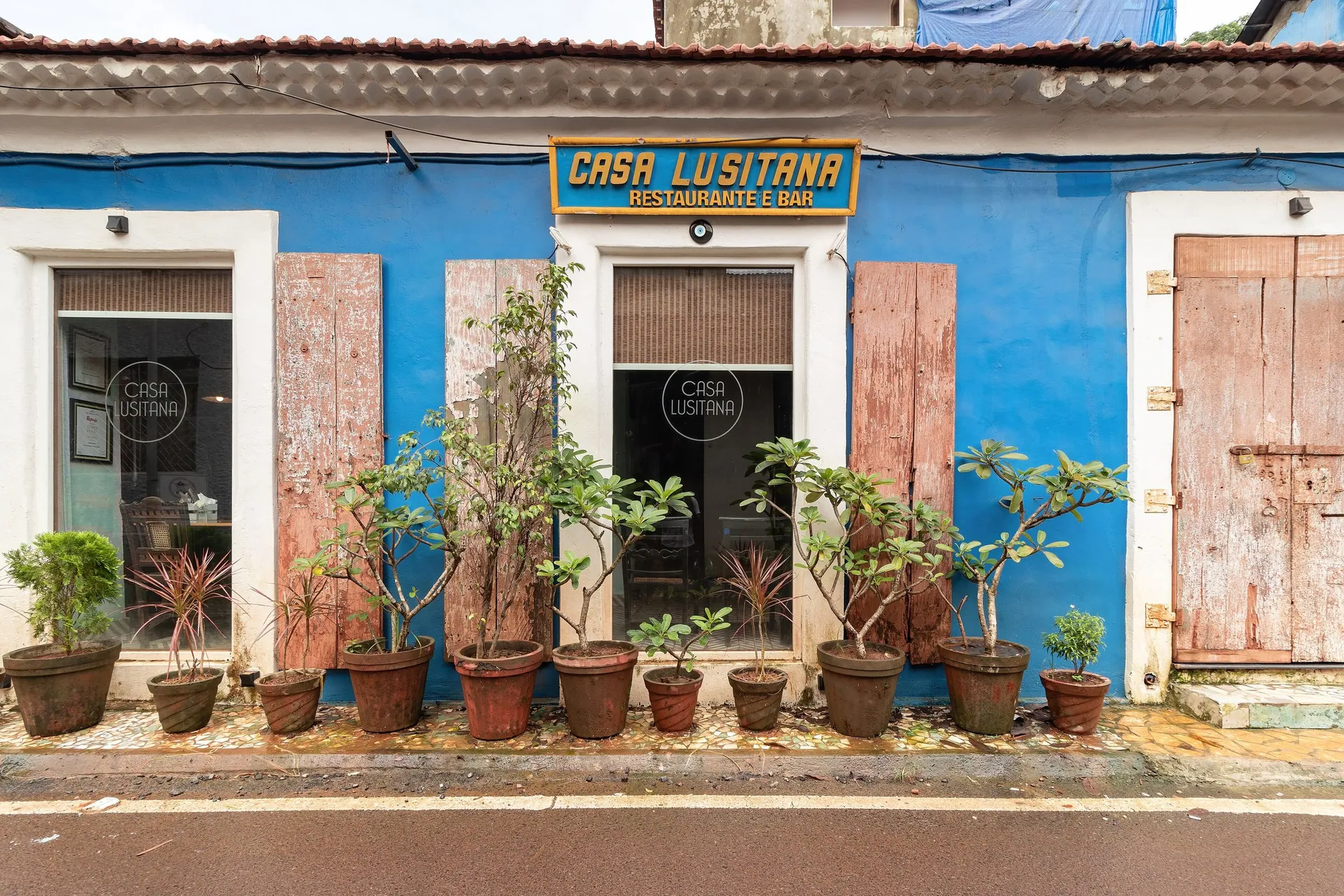
Goan food by candlelight in an old Goan house in the Latin quarter.
Book ahead.
Azulejo painting and high tea
Paint an azulejo tile together, then take high tea in a seven-generation family home.
LetsGoa also lists a two-hour azulejo workshop in Panjim, Monday to Saturday; your tile is kiln-fired to take home.
Tile workshop on LetsGoaFor the dishes to look for, from xacuti to bebinca, see what to eat in Goa. For more to book, from walks to tile painting, see experiences in Goa.
Panjim after dark
Evenings here are small old bars and the river rather than clubs. Start early at Joseph Bar, or head out to Dona Paula for a drink as the sun goes down.
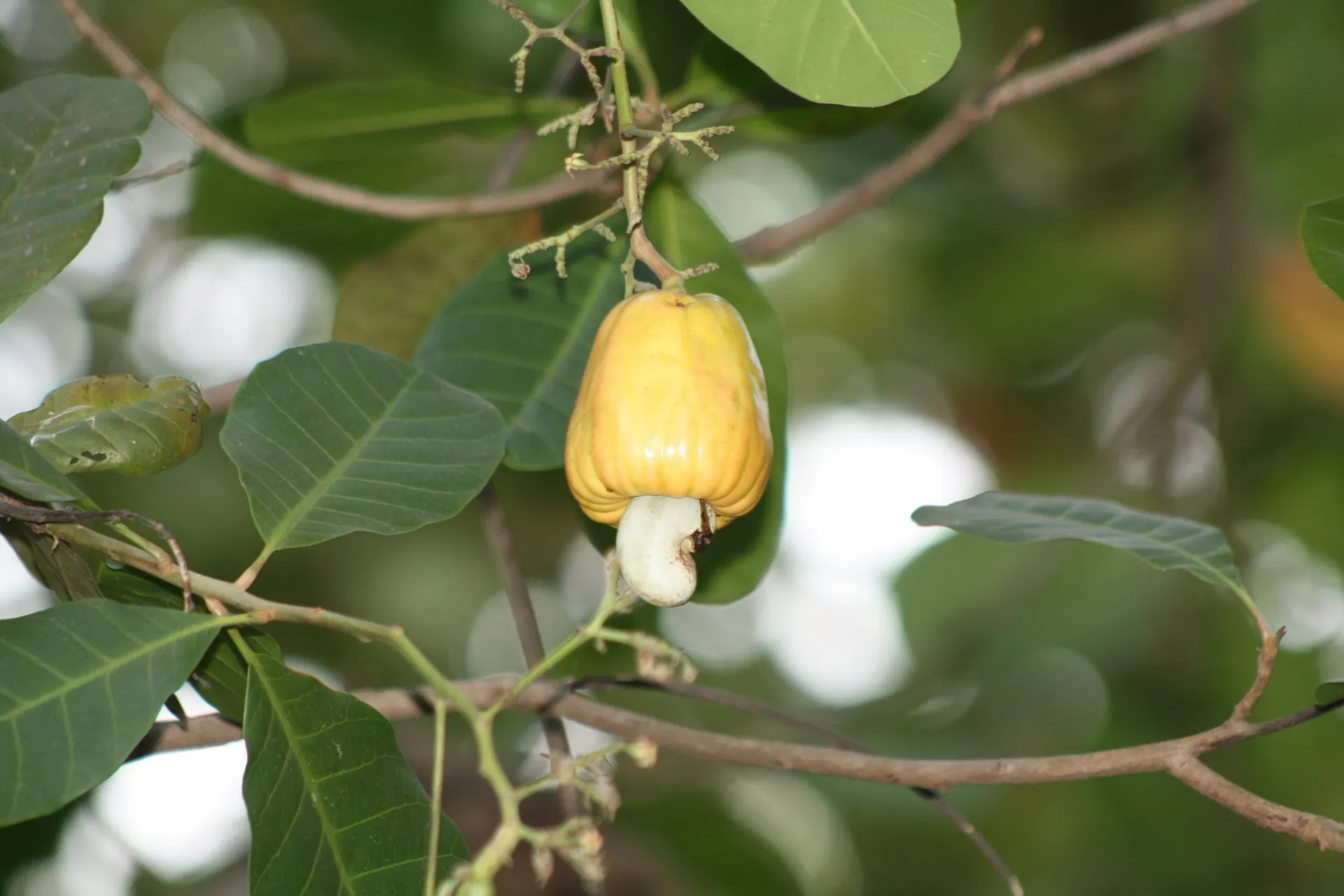
Joseph Bar
A tiny, much-loved old-Goa bar in the Latin quarter. Order a kokum feni.
Feni is strong, at about 43%. Take a taxi home.
Photo: Dr. Raju Kasambe, CC BY-SA 3.0, via Wikimedia CommonsBar Outrigger
A rum and tiki bar with over 100 rums and sunsets over the sea.
Book for sunset.
Later nights across the state are in Goa after dark.
When to go
October to March is the most comfortable time to walk Panjim, and early mornings are best in any season. In the monsoon, June to September, carry a light rain jacket and walk between showers.
| When | What | Where |
|---|---|---|
| February | An arts festival opens old homes as galleries | Fontainhas |
| February or March | Carnival: parades and music, on dates that change each year | Goa's towns |
| 8 December | The feast of Our Lady of the Immaculate Conception | The church above its staircase |
| Evenings | Sunset cruises on the Mandovi, from about 5:30 PM | The Panjim jetty |
Panjim pairs naturally with Old Goa, upriver: see Old Goa, the river islands and Ponda for the churches, which are best before 11 AM.
Questions people ask
Fontainhas is Panjim's old Latin quarter, known for its pale yellow, green and blue houses under red tiled roofs, its tiled street names and lanes that climb Altinho hill in steps. It dates from around 1770 and is still a lived-in neighbourhood, so walk it quietly.
Early morning, between about 6:30 and 8:30 AM, before the city wakes and the heat builds. Late afternoon is the next best. October to March is the most comfortable season for walking.
On foot: Fontainhas and its Chapel of St. Sebastian, the Immaculate Conception Church, the covered market and the Mandovi promenade at dusk. With a taxi, add Reis Magos Fort across the river and the headland at Dona Paula.
One full day covers the old quarter, the church, the market, lunch and the river at dusk. Add a morning for Old Goa's churches upriver, which are best before 11 AM, and an evening if you want a cruise or dinner in Fontainhas.
Yes, if you are over 21 and carry original photo ID. Deltin Royale and Big Daddy float on the Mandovi with gaming, buffets and shows. Entry is by package, and men can't wear shorts, sleeveless tops or flip-flops.
By taxi or bus. Uber and Ola don't operate in Goa, so book a GoaMiles cab, or take one of the Kadamba or private buses that link the towns at low fares, changing at Mapusa if you are coming from Siolim.
Sources and checks
- The House of Nivak guest guide (facts checked 27 Sep 2026)
- Wikipedia: Fontainhas (quarter)
- Wikipedia: Our Lady of the Immaculate Conception Church, Goa
- Wikipedia: Reis Magos Fort
- Goa Tourism (GTDC): evening cruises on the Mandovi
- LetsGoa: Fontainhas heritage walk
- LetsGoa: Azulejos tile workshop, Panjim
Opening days, prices and seasonal rules change. We check them before every update; please confirm anything time-sensitive before you go.