Old Goa, the river islands and Ponda: a day of churches, ferries and temples
Upriver from Panjim, Old Goa's great churches stand in quiet fields, free ferries cross to island villages, and inland Ponda keeps its temples and spice farms. Start early and it all fits in a day.
On this page
In short
- Old Goa was the capital of Portuguese India from 1510. Its churches and convents, including the Basilica of Bom Jesus with the relics of St. Francis Xavier, have been a UNESCO World Heritage Site since 1986.
- Go before 11 AM, ahead of the heat and the crowds, and cover shoulders and knees in churches and temples.
- Free government ferries carry foot passengers to Divar and Chorão, island villages of paddy fields and mangroves. The Dr. Salim Ali Bird Sanctuary on Chorão is open 6 AM to 6 PM.
- In Ponda, the Mangueshi and Shantadurga temples keep tall lamp towers, and Tropical Spice Plantation in Keri runs spice garden walks with a Goan lunch, open 9 AM to 4 PM daily.
- Plan around two feasts: Bonderam, Divar's flag festival, in August, and the Feast of St. Francis Xavier in Old Goa on 3 December.
Old Goa, the islands and Ponda make one long, rewarding day: the churches first thing, then a spice farm lunch or a ferry to an island village, and Ponda's temples in the afternoon. Go early, dress with care, and keep the day loose around the ferries, whose timings vary by route.
Old Goa sits upriver from Panjim on the Mandovi. It was the capital of Portuguese India from 1510, when Afonso de Albuquerque took the city, until trade declined from the late seventeenth century, epidemics swept through and the viceroy moved to Panjim in 1759. What remains is a handful of great churches standing in quiet green fields. From Siolim it makes a full day out.
The churches of Old Goa
Seven monuments make up the World Heritage Site of the Churches and Convents of Goa, inscribed by UNESCO in 1986. If your time is short, see three: Bom Jesus, the Sé Cathedral and the tower of St. Augustine. The others are the Church of St. Francis of Assisi, the Chapel of St. Catherine, the Church of Our Lady of the Rosary and the Church of St. Cajetan.
Basilica of Bom Jesus
Consecrated in 1605, the basilica holds the body of St. Francis Xavier in an ornate tomb. The relics are brought down for a public exposition about once every ten years.
Dress modestly, go early, and keep voices low during Mass.
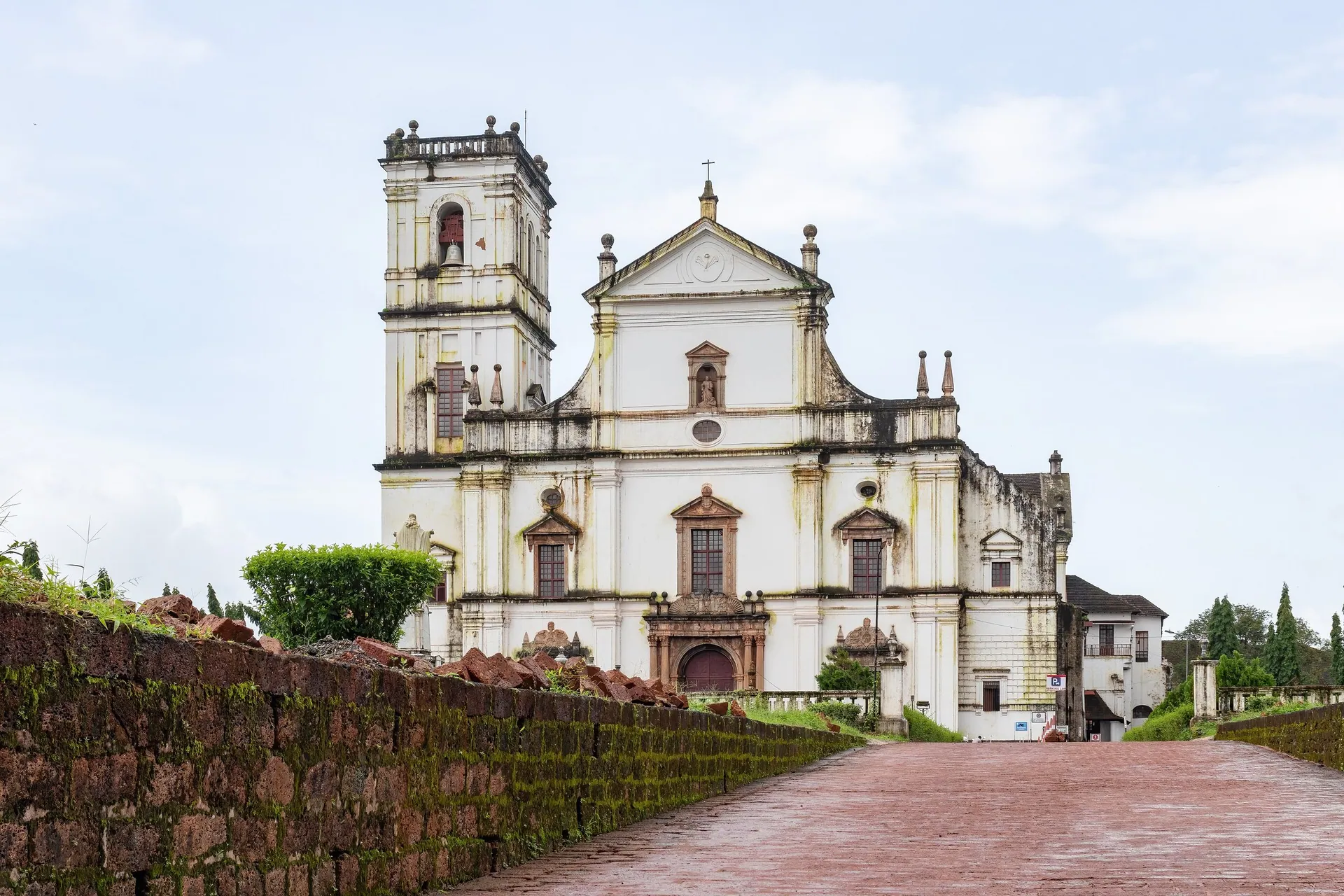
Sé Cathedral
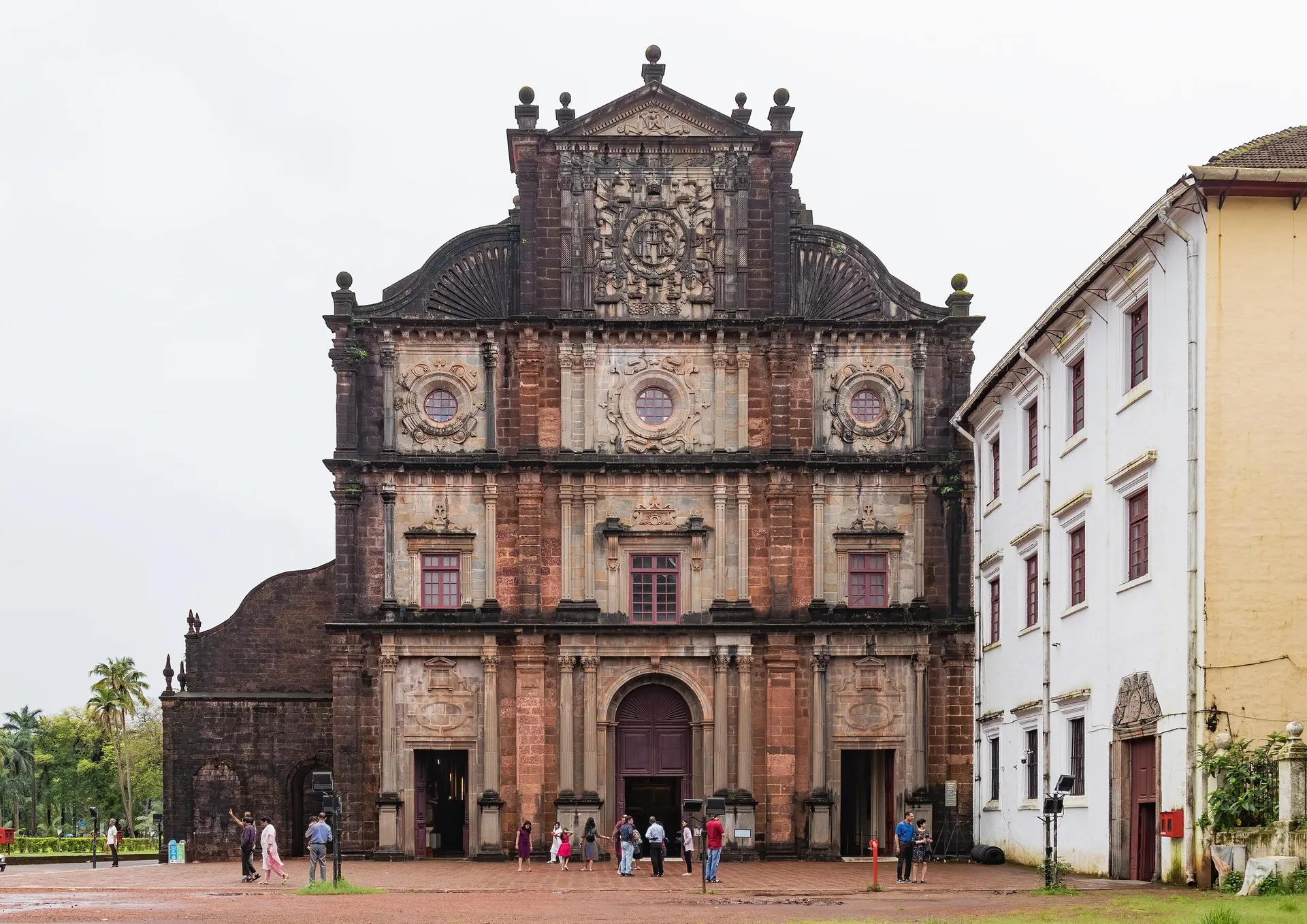
Among the largest churches in Asia, across a wide green square. It is dedicated to St. Catherine, on whose feast day in 1510 the Portuguese took the city, and was completed in 1619. Its Golden Bell, named for its rich tone, is said to be the largest in Goa.
One of its two towers fell in 1776 and was never rebuilt.
Photo: iMahesh, CC BY-SA 4.0, via Wikimedia Commons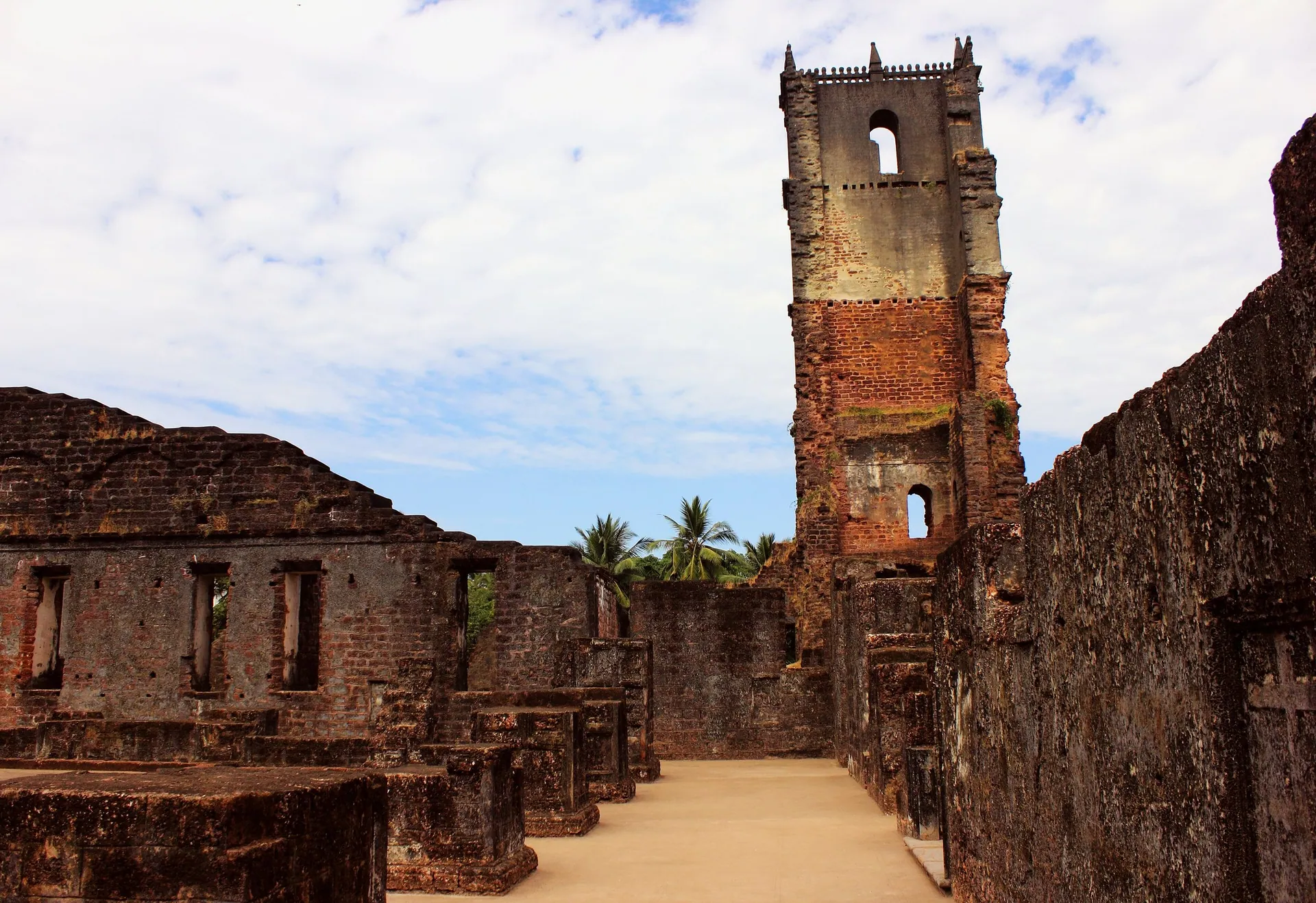
St. Augustine Tower
A 46 m laterite tower, all that remains of a church built by Augustinian friars between 1597 and 1602 and abandoned in 1835. Its bell now hangs in Panjim's Immaculate Conception Church, and bones found here in 2005 are believed to be those of Queen Ketevan of Georgia, martyred in 1624.
Photo: Amit Roy, CC BY-SA 4.0, via Wikimedia CommonsA day in history: the route
Churches while it is cool, a long lunch in the middle of the day, temples when the light softens. This is the route by road. If you'd rather be on the water, swap Ponda for the islands below.
A day in history, in order
- EarlyThe Basilica of Bom Jesus first thing, then the Sé Cathedral across the green square.
- Mid-morningUp Holy Hill to the St. Augustine Tower, before the sun is high.
- Late morningDrive on to Ponda for a spice farm walk. Tropical Spice Plantation in Keri is open 9 AM to 4 PM daily.
- LunchThe Goan buffet at the plantation, at the end of the walk.
- AfternoonThe Mangueshi and Shantadurga temples, with their tall lamp towers.
- DuskBack towards Panjim for the Mandovi promenade as the light goes.
Panjim's old quarter makes a fine end to the day, or a morning of its own: see Panjim and Fontainhas. The same day, with alternatives, is one of our Goa day plans.
Divar and Chorão, by ferry
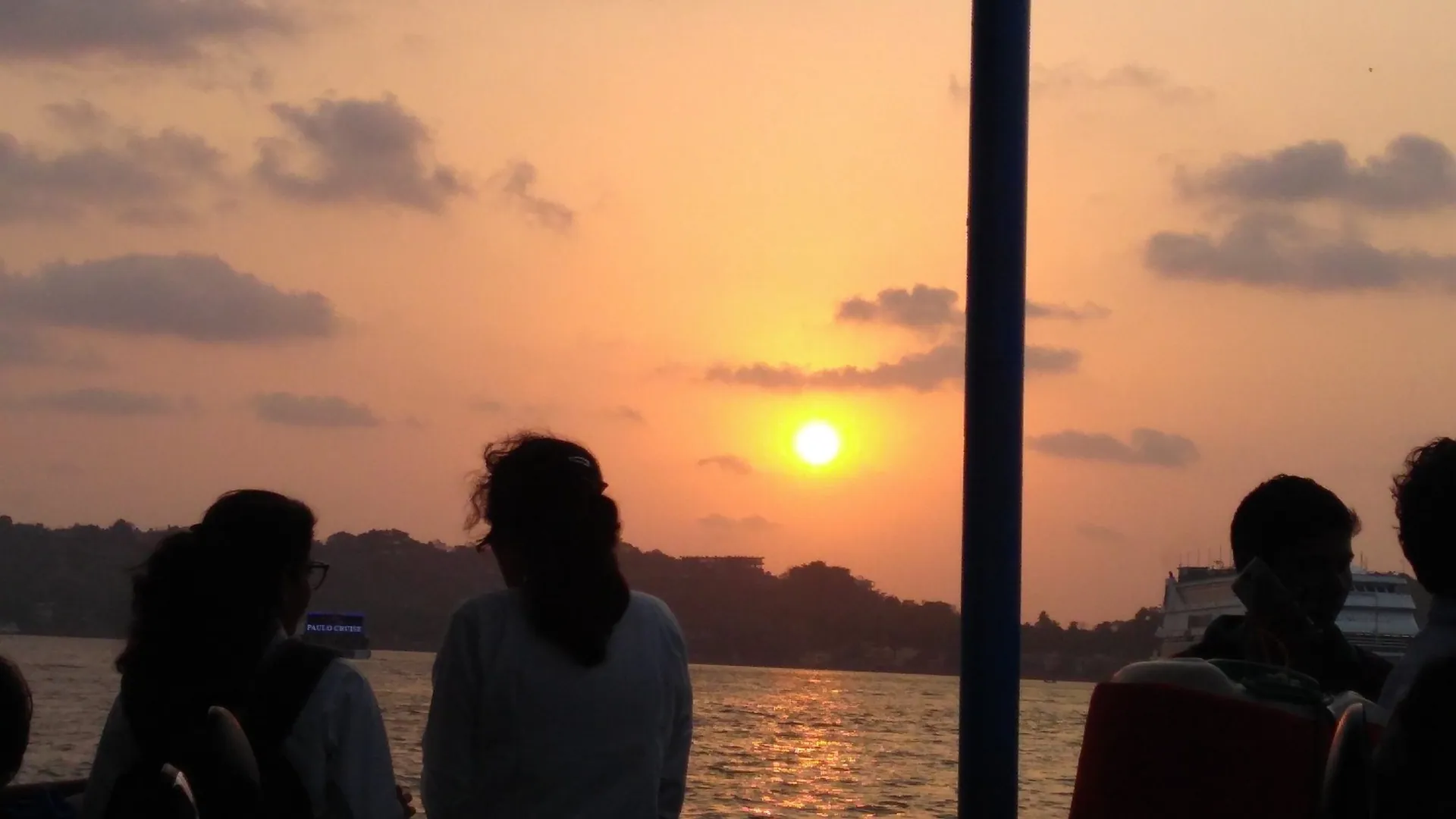
Across the Mandovi from Old Goa and Ribandar, two islands keep a slower Goa of paddy fields, old houses and mangroves. Government ferries cross to both, free for foot passengers. Timings vary by route, so check at the jetty, and carry water and a little cash.
Divar
Paddy fields, old houses and the hilltop Piedade church, a short, free ferry ride from Old Goa.
Few shops on the island. Carry water, or bring breakfast and picnic among the fields.
Divar by e-bike
A guided three-hour loop past paddy fields, a hilltop church, temple ruins and old houses.
Starts near Old Goa. Book a day or two ahead in season.
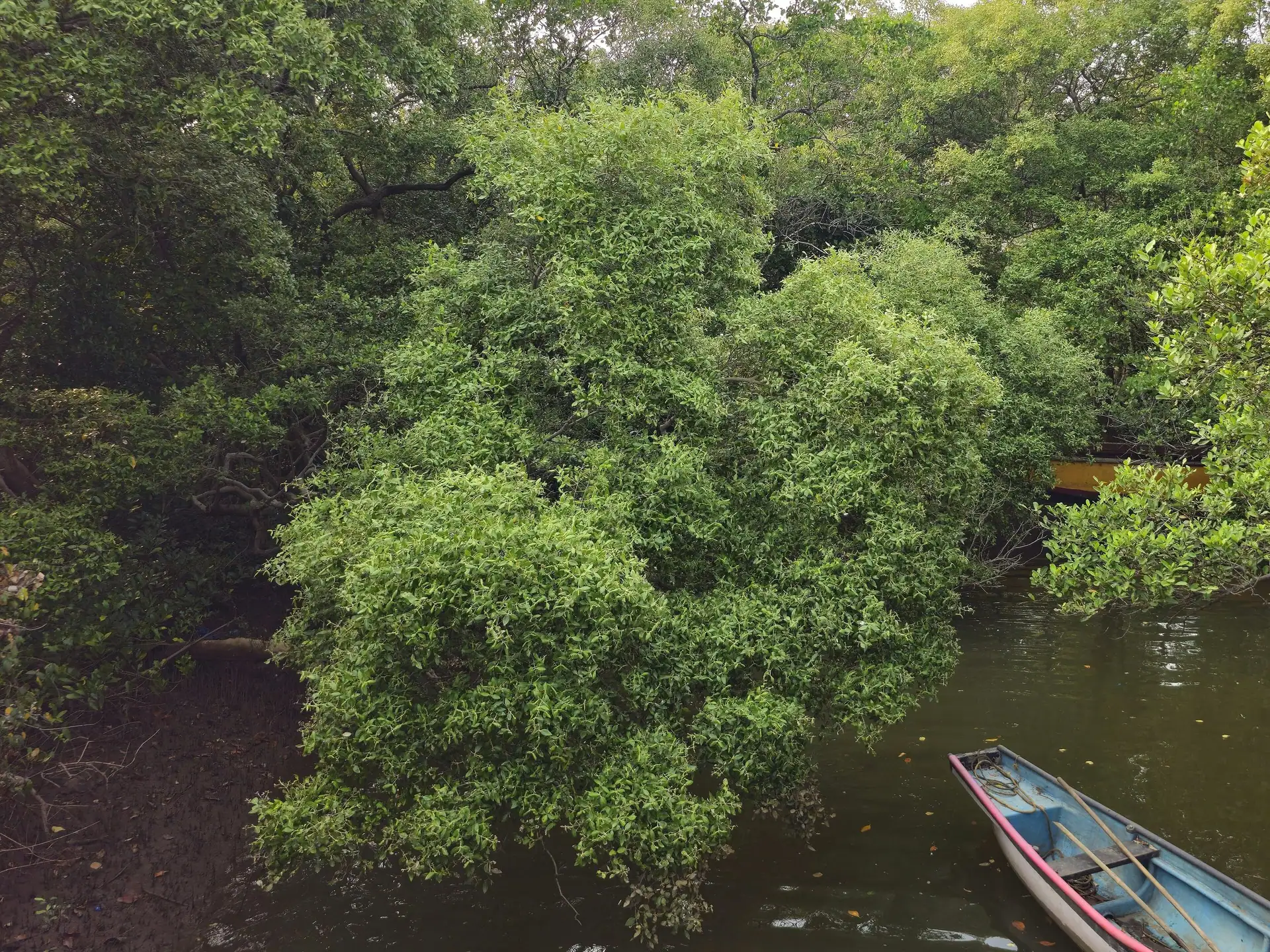
Dr. Salim Ali Bird Sanctuary
178 hectares of mangrove on the western tip of Chorão, protected since 1988, with a paved walk between the trees. Striated and western reef herons are common, and so are mudskippers and fiddler crabs.
Boat trips follow the tide. LetsGoa lists guided birding by boat, 7 to 9 AM, November to May.
Birding on LetsGoaPhoto: Gannu03, CC BY-SA 4.0, via Wikimedia CommonsCook with a Goan family
A hands-on cooking class and lunch with a family on their spice plantation on Chorão: you cook a Goan curry and a sweet, then sit down to eat them.
Book a few days ahead. LetsGoa lists it daily, 11:30 AM to 3 PM.
Book on LetsGoaFor a day on the islands alone, go birding on Chorão at 7 AM, stay on for the cooking class and lunch, and keep Divar for another morning. More quiet corners like these are in hidden Goa.
Ponda's temples
Inland from Old Goa, Ponda holds some of Goa's great temples. Both of the best known moved here in the sixteenth century, when their deities were carried out of Portuguese-held land. Both are living places of worship: cover shoulders and knees, take off your shoes, and ask before taking photographs inside.
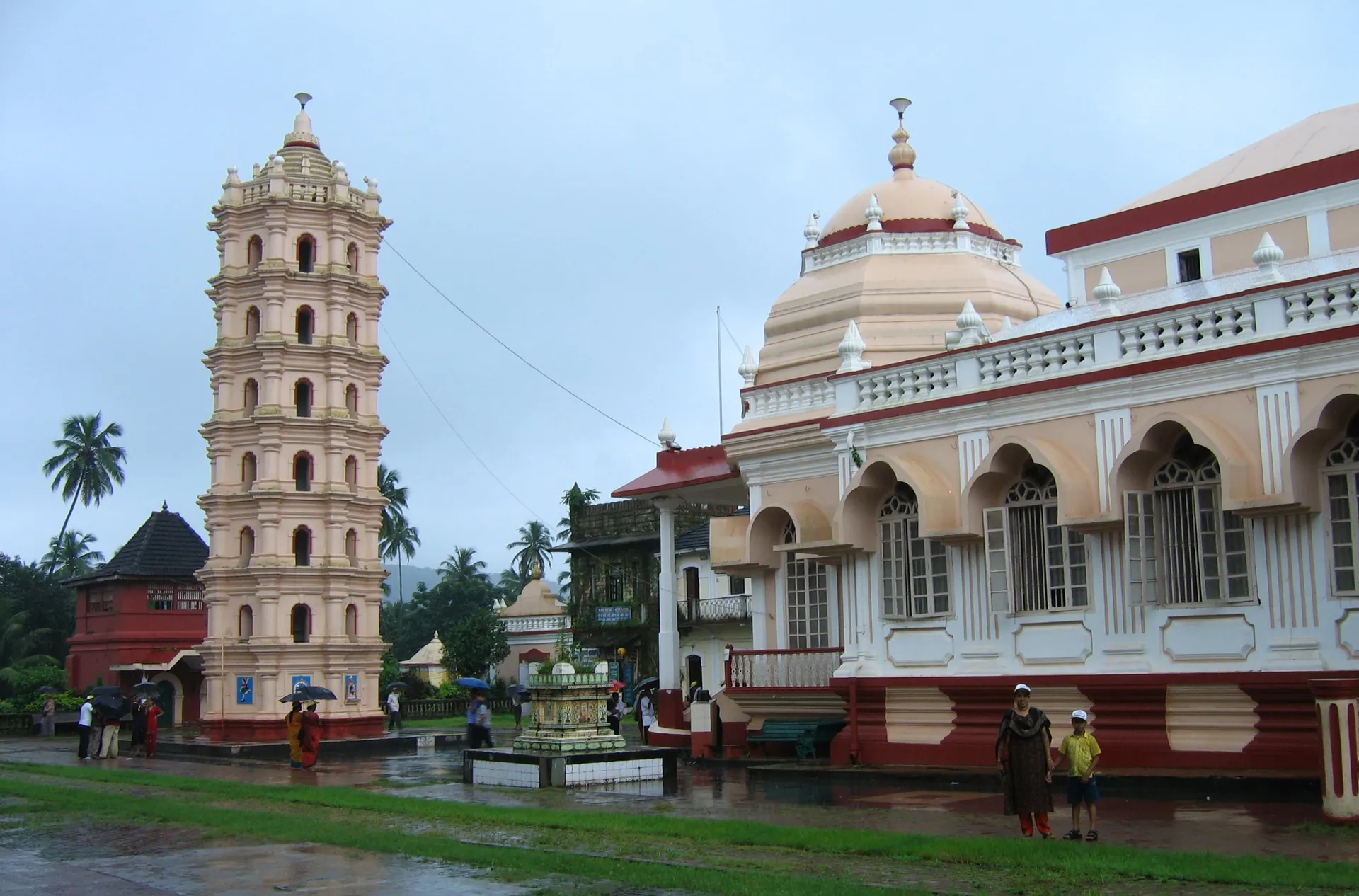
Shri Mangueshi Temple
Shiva, worshipped here as Manguesh, was brought from Cortalim before 1560. Look for the seven-storey lamp tower and the temple tank, thought to be the oldest part of the temple.
The temple has had a dress code since 2011, so dress modestly.
Photo: Vinayaraj, CC BY-SA 3.0, via Wikimedia CommonsShri Shantadurga Temple
The goddess who mediates between Vishnu and Shiva. Her original temple at Quelossim was destroyed in 1566, and the present one was built between 1713 and 1738, in the time of the Maratha ruler Shahu Maharaj.
Remove your shoes, and ask before photographing inside.
Spice farms, and a Goan lunch
A spice farm visit is a guided walk through the gardens, then lunch, often a Goan meal on a banana leaf. Go late morning so the walk ends as lunch begins, and pair it with the churches before or the temples after.
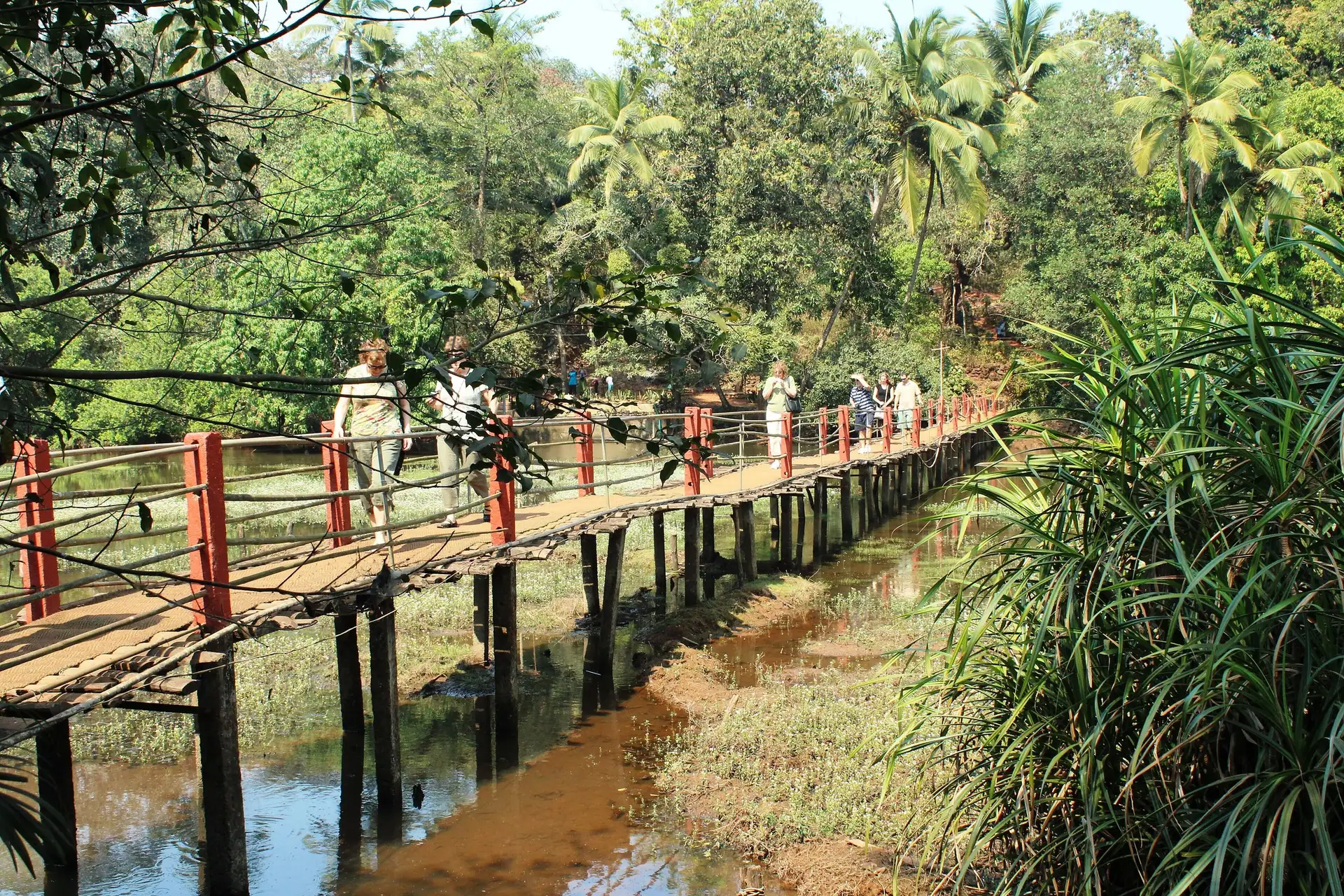
Tropical Spice Plantation
The established choice: a guided walk through the spice gardens, then a Goan buffet lunch.
Open daily. Leave time for lunch before the 4 PM close.
Official sitePhoto: Jennifer Rose Stankowski, CC BY-SA 3.0, via Wikimedia CommonsLetsGoa lists other spice farm visits and nature trips too. For more to book across Goa, see experiences in Goa. If you are heading on into the forest, Goa's oldest temple is at Tambdi Surla: see Dudhsagar and the Western Ghats.
Feasts, and when to go
The dry months, October to March, are the most comfortable for walking between churches and cycling on Divar. In any month, the mornings are best. Festivals that follow the lunar calendar change dates each year, so check before you plan around them.
| When | Feast | Where |
|---|---|---|
| August | Bonderam, the flag festival | Divar |
| 3 December | Feast of St. Francis Xavier, Old Goa's great feast day | Old Goa |
| Magha, by the lunar calendar | The temple's jatra, at Magha Poornima | Mangueshi, Ponda |
| Lunar calendar | Maha Shivaratri | Mangueshi, Ponda |
Questions people ask
Early, before 11 AM, to beat the midday heat and the crowds. October to March is the most comfortable season. Around 3 December, the Feast of St. Francis Xavier, expect Old Goa to be busy.
Dress modestly, covering shoulders and knees, as in all of Goa's churches and temples. Keep voices low, especially during Mass, and ask before photographing people.
His body lies in an ornate tomb in the Basilica of Bom Jesus, which you can visit. The relics are brought down for a public exposition about once every ten years.
By government ferry from Old Goa, free for foot passengers. (The ferry from Ribandar goes to Chorão, the neighbouring island.) Timings vary by route, and there are few shops on the island, so carry water.
Tropical Spice Plantation in Keri, Ponda, is the established choice: a guided walk through the spice gardens, then a Goan buffet lunch. It is open 9 AM to 4 PM daily. Go late morning so the walk runs into lunch.
Yes, with an early start: the churches first, a spice farm lunch in Ponda, and the Mangueshi and Shantadurga temples in the afternoon. Book taxis on GoaMiles or hire a car with a driver, since Uber and Ola don't operate in Goa.
Sources and checks
- The House of Nivak guest guide (facts checked 27 Sep 2026)
- Wikipedia: Churches and convents of Goa
- Wikipedia: Basilica of Bom Jesus
- Wikipedia: Se Cathedral
- Wikipedia: Church of St. Augustine, Goa
- Wikipedia: Our Lady of the Immaculate Conception Church, Goa (the Holy Hill bell)
- Wikipedia: Mangueshi Temple
- Wikipedia: Shanta Durga Temple
- Wikipedia: Dr. Salim Ali Bird Sanctuary
- Tropical Spice Plantation, Keri
- LetsGoa: Birdwatching at Dr Salim Ali Bird Sanctuary
- LetsGoa: The Kulagar Kitchen Experience, Chorão
- LetsGoa: Nature and wildlife
Opening days, prices and seasonal rules change. We check them before every update; please confirm anything time-sensitive before you go.