Goa in the monsoon: what closes, what's at its best, and where to stay
From June to September the sea closes and the shacks come down, and Goa turns a deep, glowing green. What stays open, what doesn't, and how to spend a rainy week well.
On this page
In short
- Goa's monsoon runs from June to September. July is the wettest month: Panjim averages about 955 mm of rain over 27 rainy days, with about three hours of sunshine a day.
- The sea is closed for swimming through the monsoon. Beach shacks close, and sea sports, river kayaking and paddleboarding stop until October.
- Swimming is banned at waterfalls, rivers and lakes for about 60 days from late June, under district orders. You can visit the falls, but not go in.
- What's at its best: full waterfalls such as Harvalem, the misty Chorla Ghat drive, white-water rafting on the Mhadei from mid-June to mid-September, and São João in Siolim on 24 June.
- For a monsoon base in North Goa, choose a river or inland village such as Siolim, Aldona or Assagao over a beach strip whose shacks have closed.
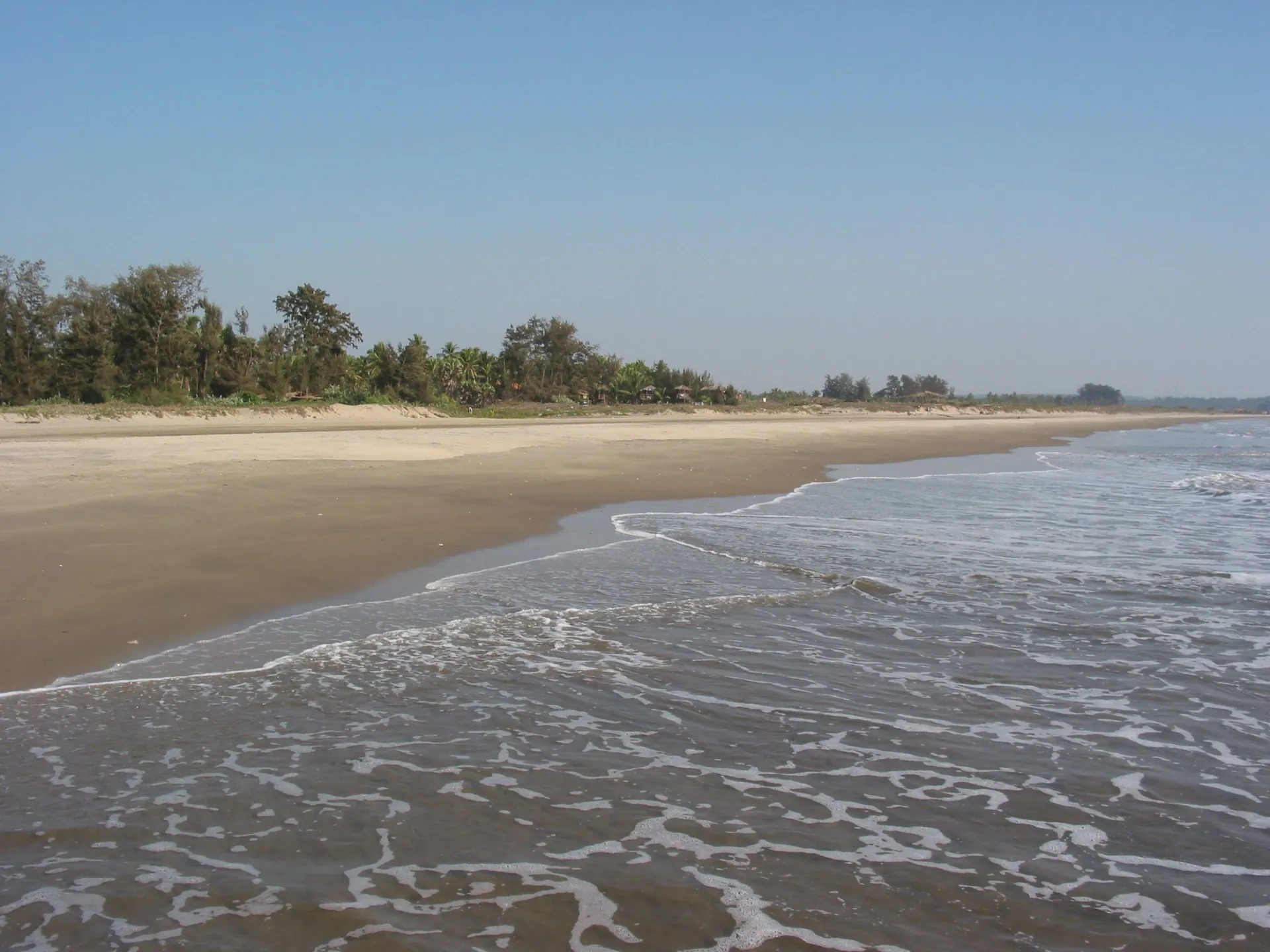
Yes, Goa is good in the monsoon, as long as you come for the rain and not the sea. From June to September the sea is closed for swimming, most beach shacks close and water sports stop. In return the fields and palms turn a deep, glowing green, the waterfalls run full, the feasts come to the villages and the whole coast slows down.
It's a different trip, not a lesser one. Plan for drives into the hills, old churches and markets, a Goan curry on a wet evening, and walks rather than swims on the beach. Here is what closes and why, what's worth doing, the monsoon feasts, and where to base yourself in North Goa.
What the monsoon is like, month by month
The rains arrive in June and ease through September, and October is the changeover. It's warm rather than cool: highs of about 29 to 31°C, nights around 24 to 25°C and humidity in the 80s. The figures are the India Meteorological Department's long-term averages for Panjim.
| Month | Rain | Sunshine | What's happening |
|---|---|---|---|
| June | About 890 mm over 21 rainy days | About 4 hours a day | The rains arrive and the sea closes. São João, 24 June; rafting from mid-June |
| July | About 955 mm over 27 rainy days | About 3 hours a day | The wettest month: deep greens, full waterfalls, Chikhal Kalo |
| August | About 570 mm over 23 rainy days | About 4 hours a day | Bonderam on Divar, late in the month |
| September | About 300 mm over 14 rainy days | About 6 hours a day | The rains ease. Ganesh Chaturthi; rafting runs to mid-month |
| October | About 155 mm over 7 rainy days | About 7.5 hours a day | The season opens: shacks and sea sports return |
For comparison, January averages about 1 mm of rain and nearly 10 hours of sunshine a day. Even in July there are a few hours of sun on an average day, but expect rain on most of them. The rest of the year is laid out in when to go to Goa.
What closes in the monsoon, and why
Almost everything that closes does so for safety in the water, and the rules are worth taking seriously.
- The sea is closed for swimming through the monsoon. The beaches stay open for walking; in the monsoon they belong to walkers and fishermen.
- Beach shacks, sunbeds and sea sports run through the dry season, from about October to May. Most beach venues close or slow down from June to September.
- Swimming at waterfalls, rivers and lakes is banned for about 60 days from late June, under district orders meant to prevent drownings. In 2026, South Goa's order ran for 60 days from 26 June: you could still visit a waterfall, but not swim, bathe or go into the water.
- River kayaking and paddleboarding pause, and return in October.
- The jeep safaris to Dudhsagar don't run until about late October, and walking the railway line to the falls is banned. Our guide to Dudhsagar and the Western Ghats has the dry-season plan.
- Forest roads and some trips can close in heavy rain, so check before a day in the hills.
- The fishing ban keeps mechanised and motorised boats off Goa's waters from 1 June to 31 July, so fish can breed. Only traditional, non-motorised boats may be allowed out, so ask what's fresh before you order seafood.
Things to do in Goa in the monsoon
The monsoon moves Goa's best days inland and under a roof. These are our picks for a wet week: the hills at their most spectacular, and the old towns and markets, rain or shine.
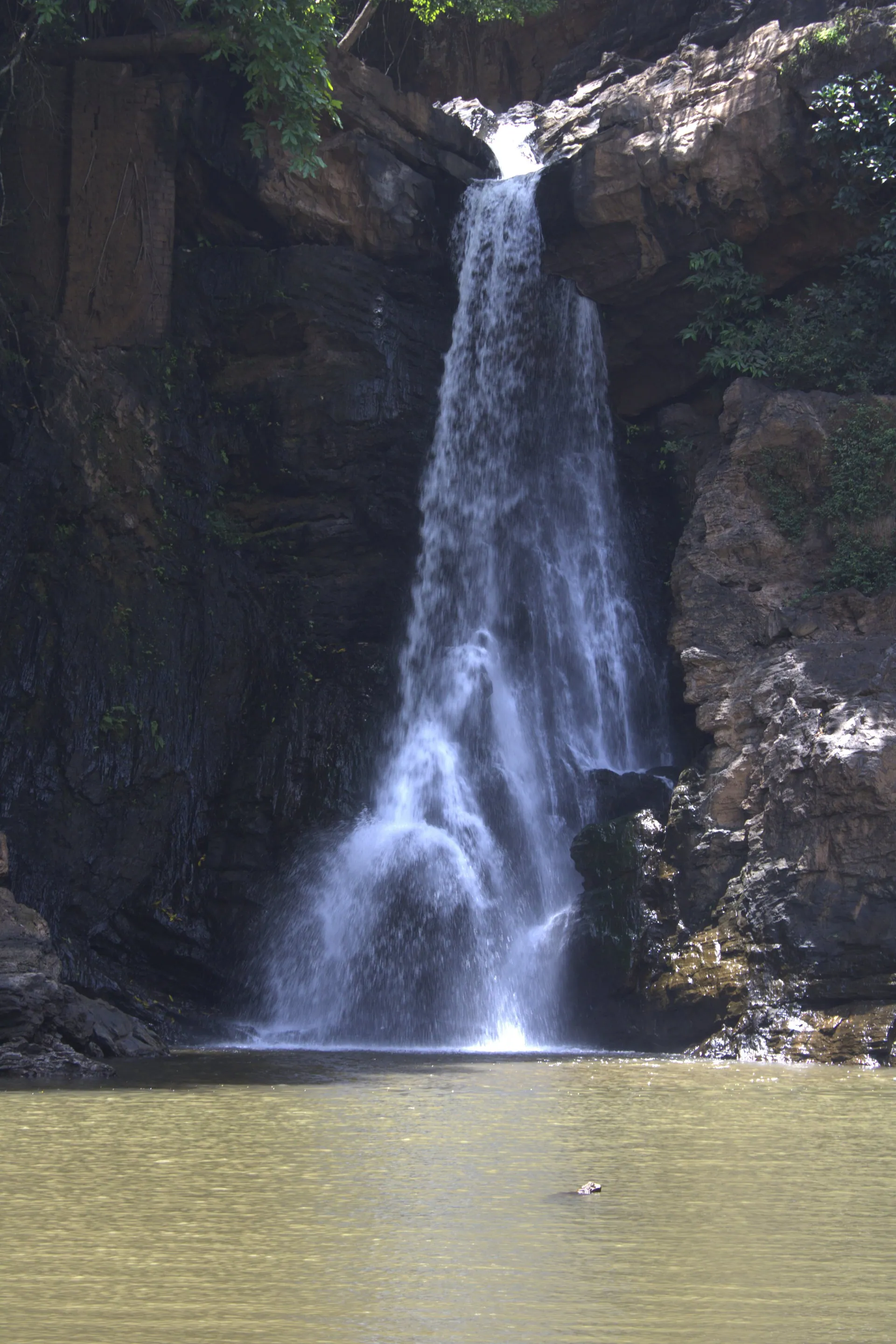
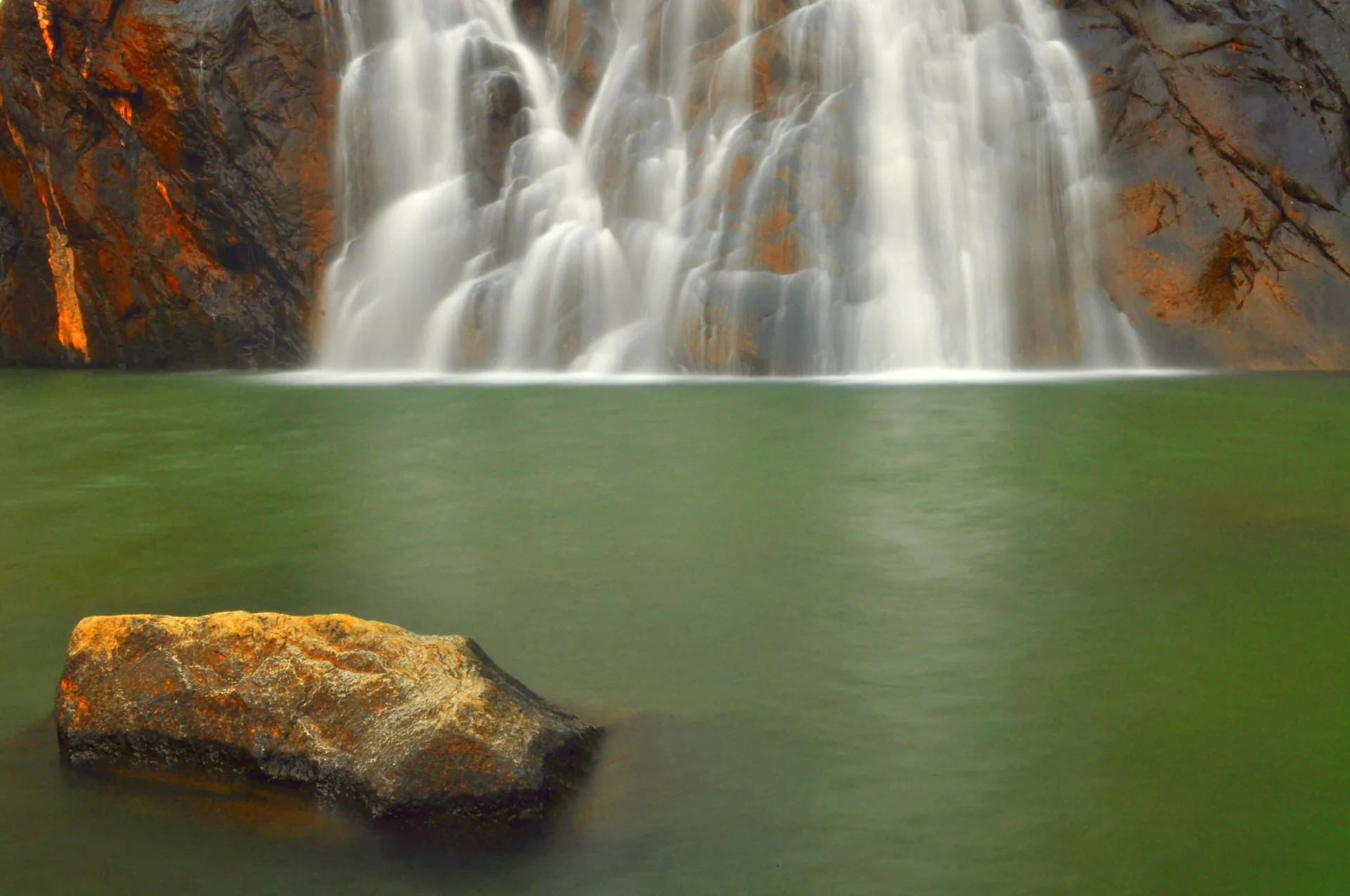
Harvalem (Arvalem) falls and caves
A 50 m waterfall beside sixth-century rock-cut caves and the Rudreshwar temple, at its fullest after the rains.
Look, but no going in the water in the monsoon.
Photo: Primejyothi, CC BY-SA 3.0, via Wikimedia Commons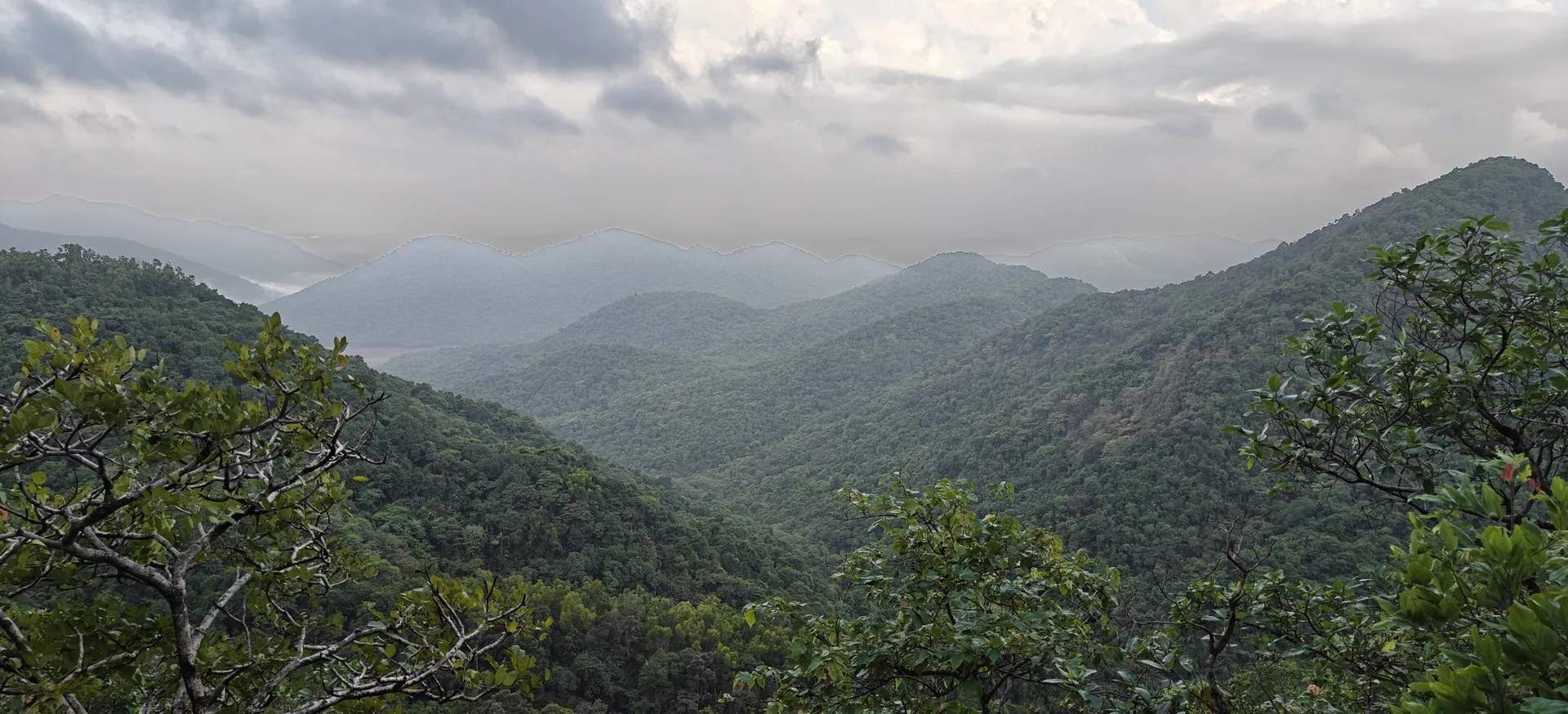
Chorla Ghat
A misty mountain road where Goa meets Karnataka and Maharashtra, and Goa's classic monsoon drive.
Forest roads can close in heavy rain, so check before you set out.
Photo: Rohitjahnavi, CC BY-SA 3.0, via Wikimedia CommonsWhite-water rafting on the Mhadei
About three hours on Grade II to III rapids, run by Goa Tourism with Southern River Adventures, on a 10 km stretch beside the Mhadei Wildlife Sanctuary.
Age 12 and up. The booking site lists Rs 1,800 a person, meeting at the Cashew House in Nagargaon, near Valpoi.
Book at goarafting.com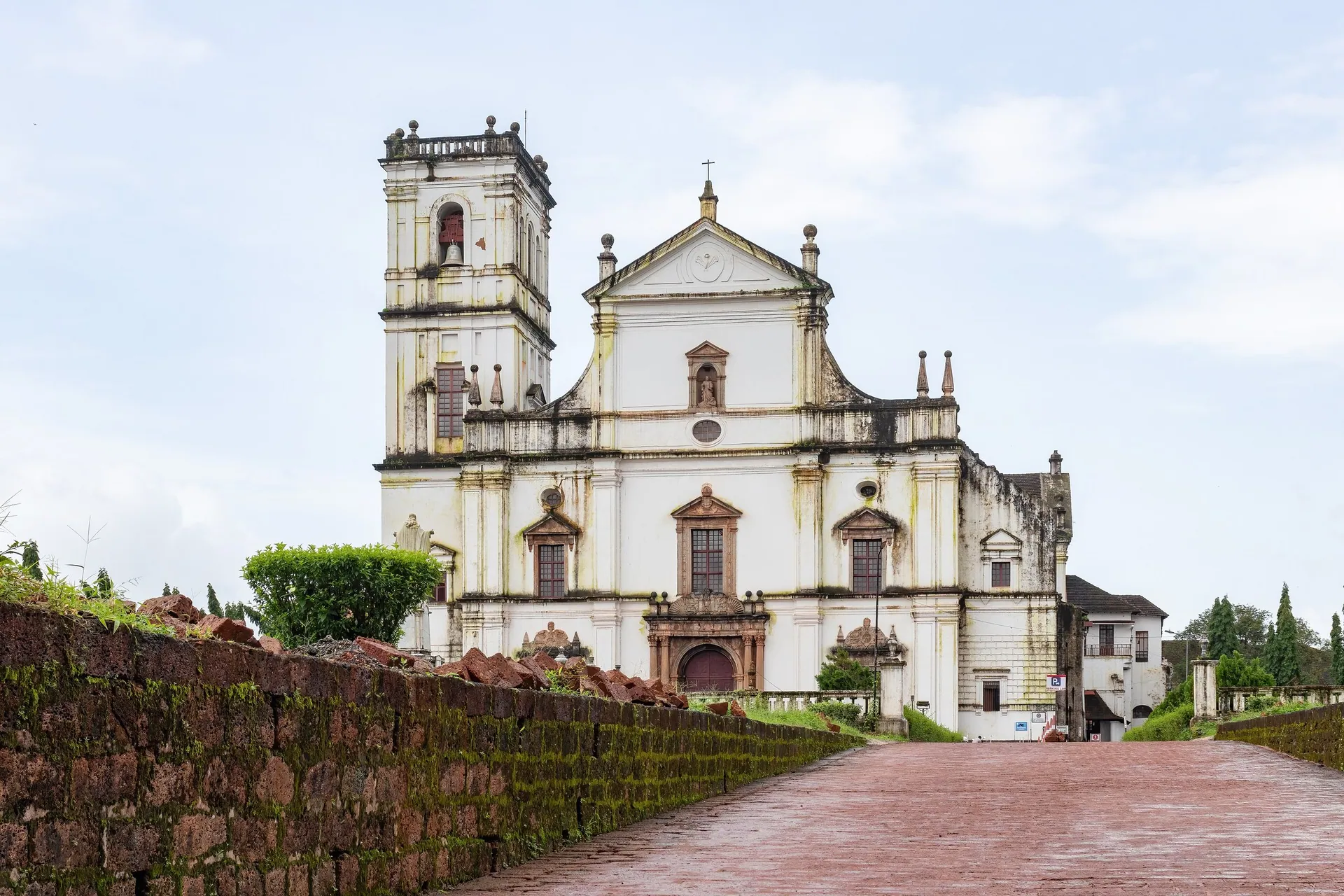
The churches of Old Goa
Bom Jesus, with the relics of St. Francis Xavier, and the Sé Cathedral: part of a UNESCO World Heritage site, and good places to be when it pours.
Cover shoulders and knees. More in our Old Goa guide.
Photo: iMahesh, CC BY-SA 4.0, via Wikimedia Commons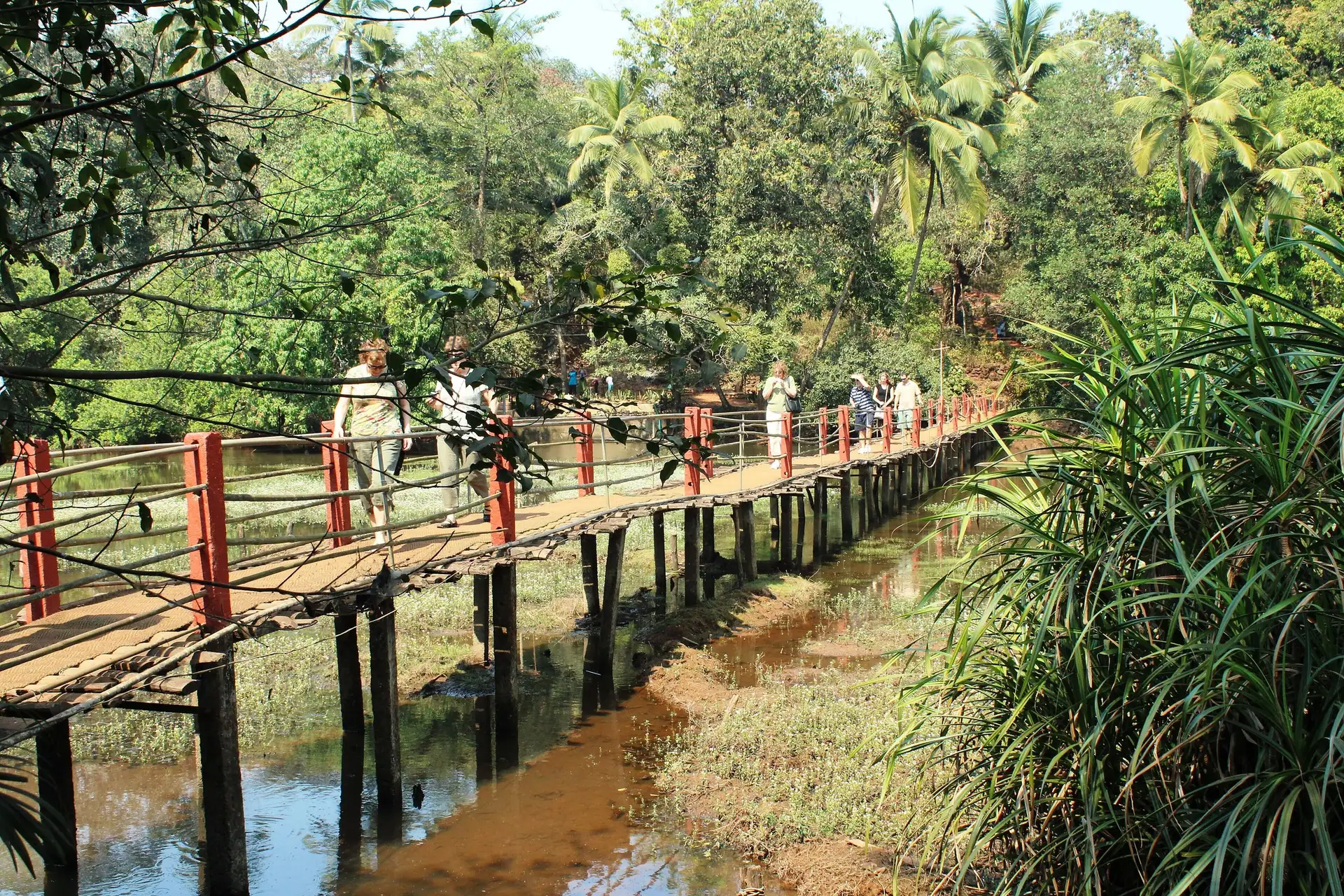
A spice farm and lunch
A walk through the spice gardens, then a Goan buffet. Tropical Spice Plantation in Keri is the established choice.
Open 9 AM to 4 PM daily.
Photo: Jennifer Rose Stankowski, CC BY-SA 3.0, via Wikimedia Commons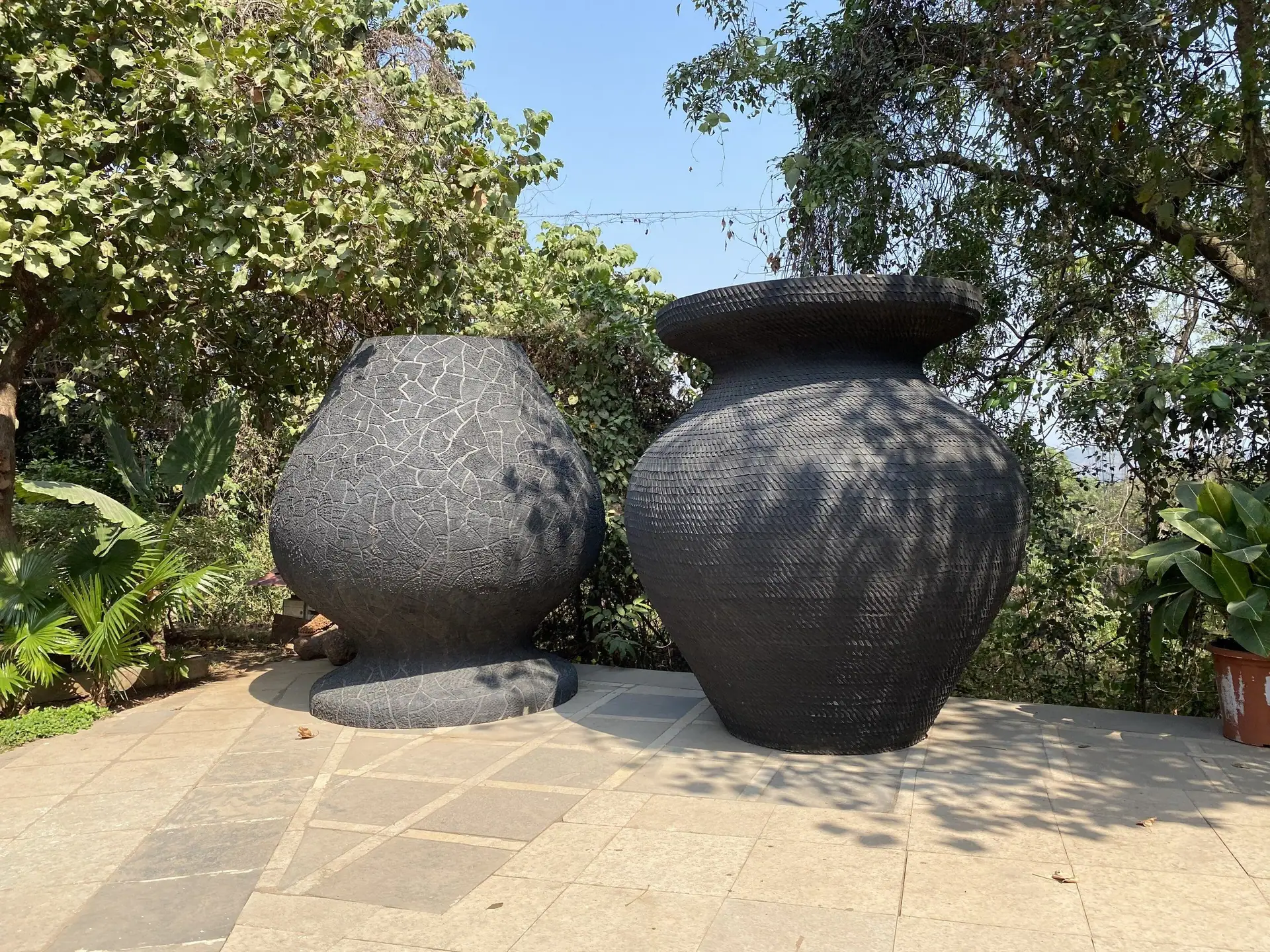
Museum of Goa
Contemporary art about Goa's history, landscape and people, founded by the artist Subodh Kerkar, with a café and a shop.
10 AM to 6 PM. About Rs 300.
Photo: Vinayaraj, CC BY-SA 4.0, via Wikimedia Commons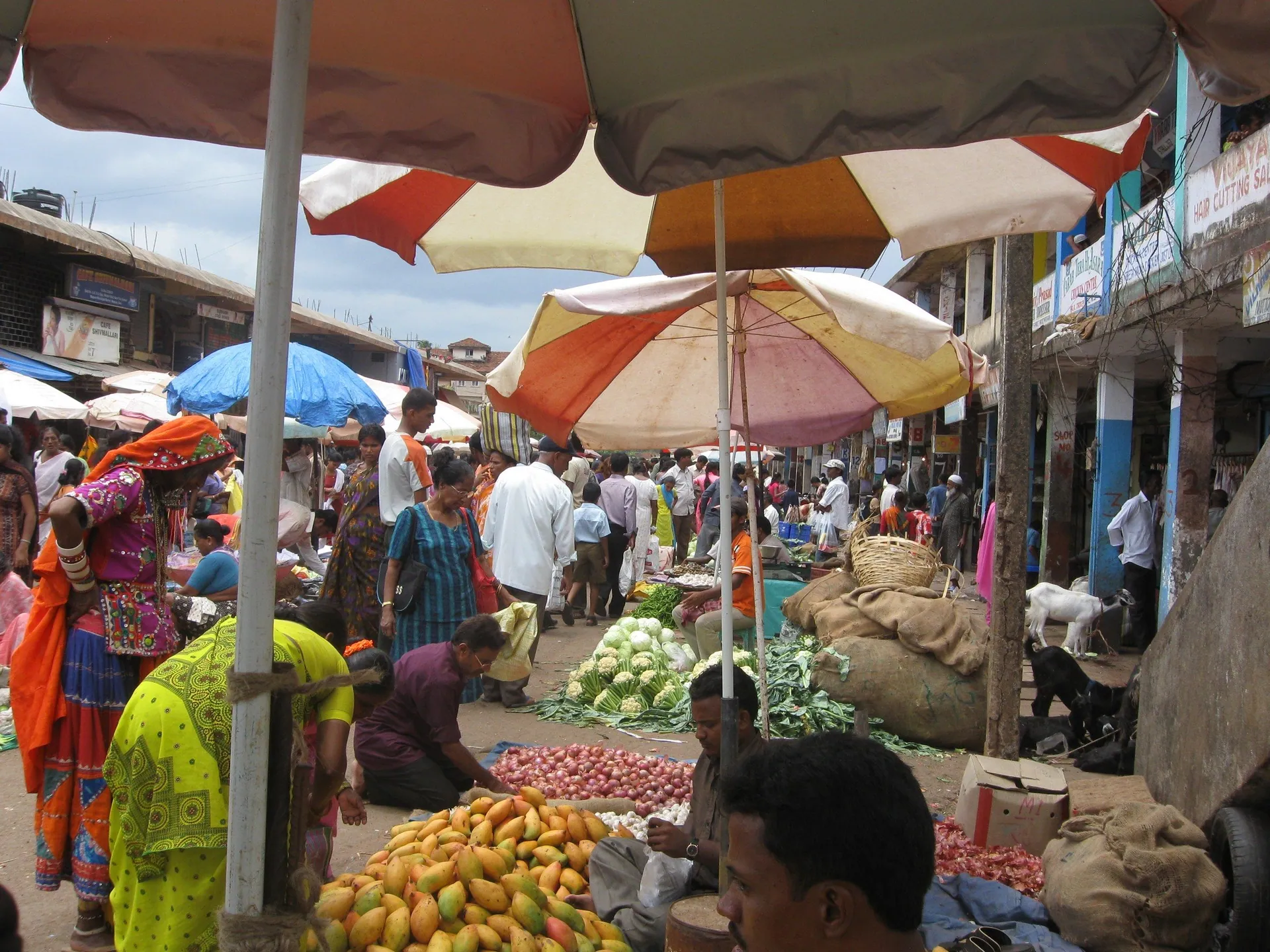
Mapusa market
North Goa's market town, open daily and liveliest on Fridays: spices, Goan sausages, cashews, fruit and sweets.
The Anjuna flea market is a dry-season affair, so Mapusa is the market for the rains.
Photo: Aaron C, CC BY-SA 2.0, via Wikimedia CommonsThe monsoon feasts
The monsoon is feast season in the villages. São João is always on 24 June; the Hindu festivals follow the lunar calendar and move each year, so check the dates for your trip.
São João
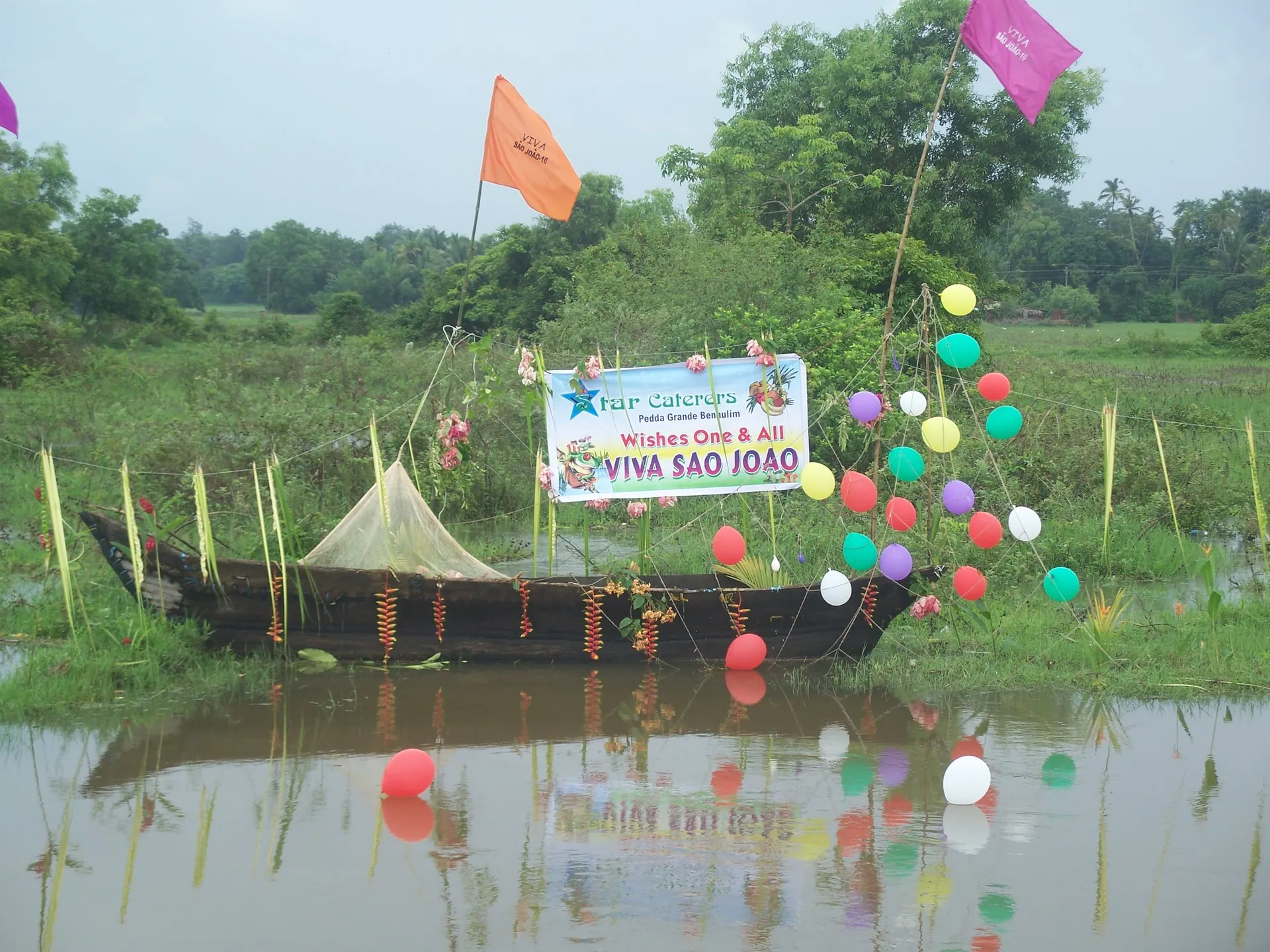
The feast of St. John the Baptist, and Siolim's best-known day, with the Sangodd boat parade on the Chapora and crowns of leaves and flowers called kopels.
Come for the day and expect rain. Read our São João guide.
Photo: Frenia pamela barretto, CC BY-SA 3.0, via Wikimedia CommonsChikhal Kalo
The 'mud bath' festival at the Devki Krishna temple, honouring the bond between Goa's farmers and the earth, with traditional games like chendu fali and gilli danda played in the mud.
Held around the 11th day of the Hindu month of Ashadh: 24 to 26 July in 2026.
Bonderam
Divar's flag festival, named for the bandeiras, the colourful flags once used to settle boundary disputes, with a parade of floats.
Take the free government ferry from Old Goa.
Ganesh Chaturthi
The festival of Ganesh, as the rains ease at the end of the monsoon.
Its date follows the lunar calendar, so check it for your year.
A green rainy day
When the rain sets in, don't fight it. This is the shape we suggest for a wet day, from the guide we give our own guests.
A green rainy day, in order
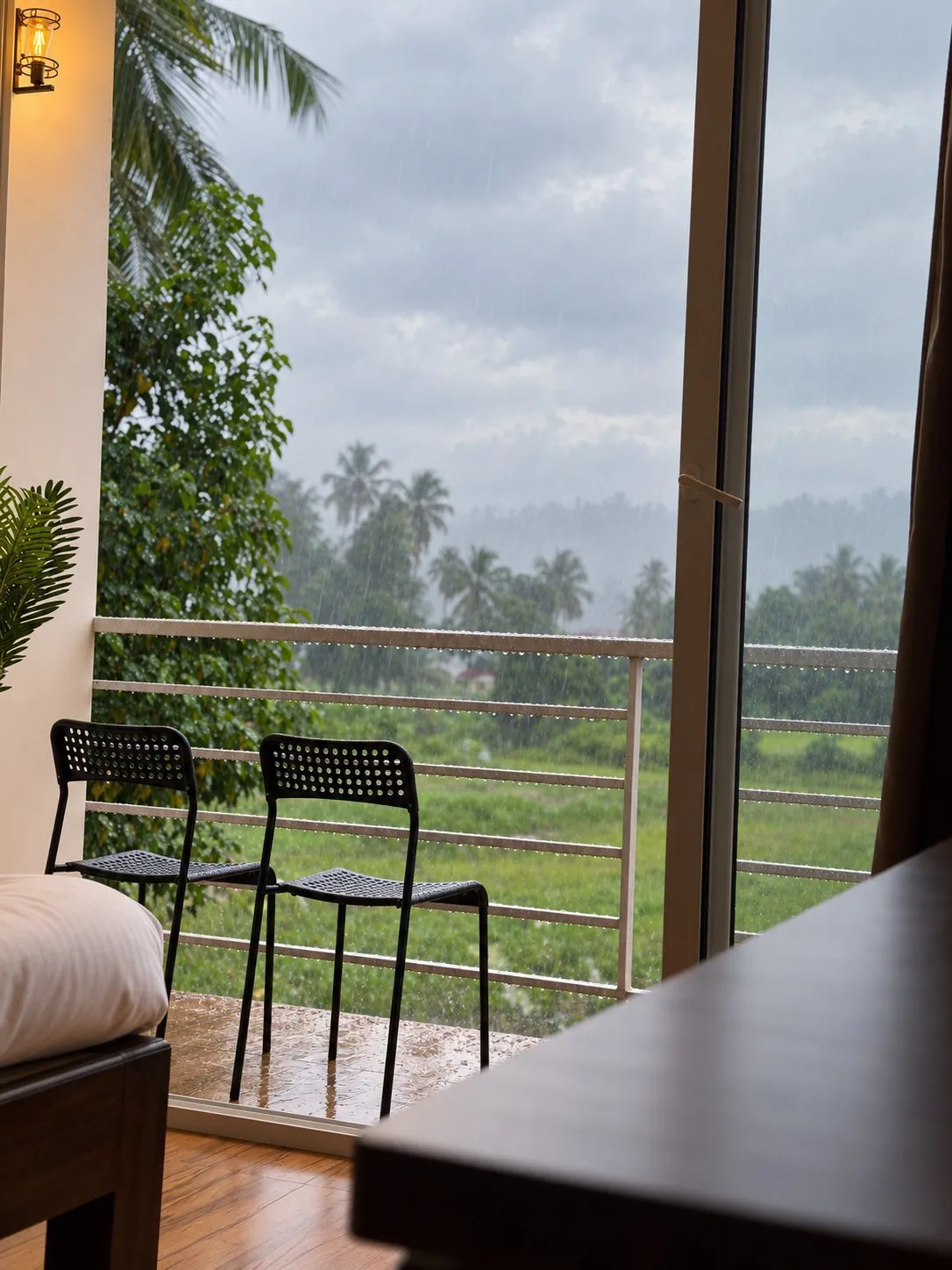
- MorningChai on the balcony, watching the rain move over the fields.
- Late morningThe drive up Chorla Ghat, into mist and forest where Goa meets Karnataka and Maharashtra.
- AfternoonArvalem Falls near Sanquelim, at its fullest. Look from the bank; swimming is banned.
- EveningA Goan curry, and a quiet evening in.
It's a long day inland, so start early and check the roads before you set out. On a quieter evening, feni, Goa's own spirit, is poured all year in the old taverns, though the cashew stills only run from late February to mid-May.
Where to stay in North Goa during the monsoon
Choose a village over a beach strip. Beach towns are built around shacks, sunbeds and water sports, and from June to September most of that is closed. River and inland villages such as Siolim, Aldona and Assagao are lived-in places whose days don't turn on the beach, and they are at their greenest in the rain.
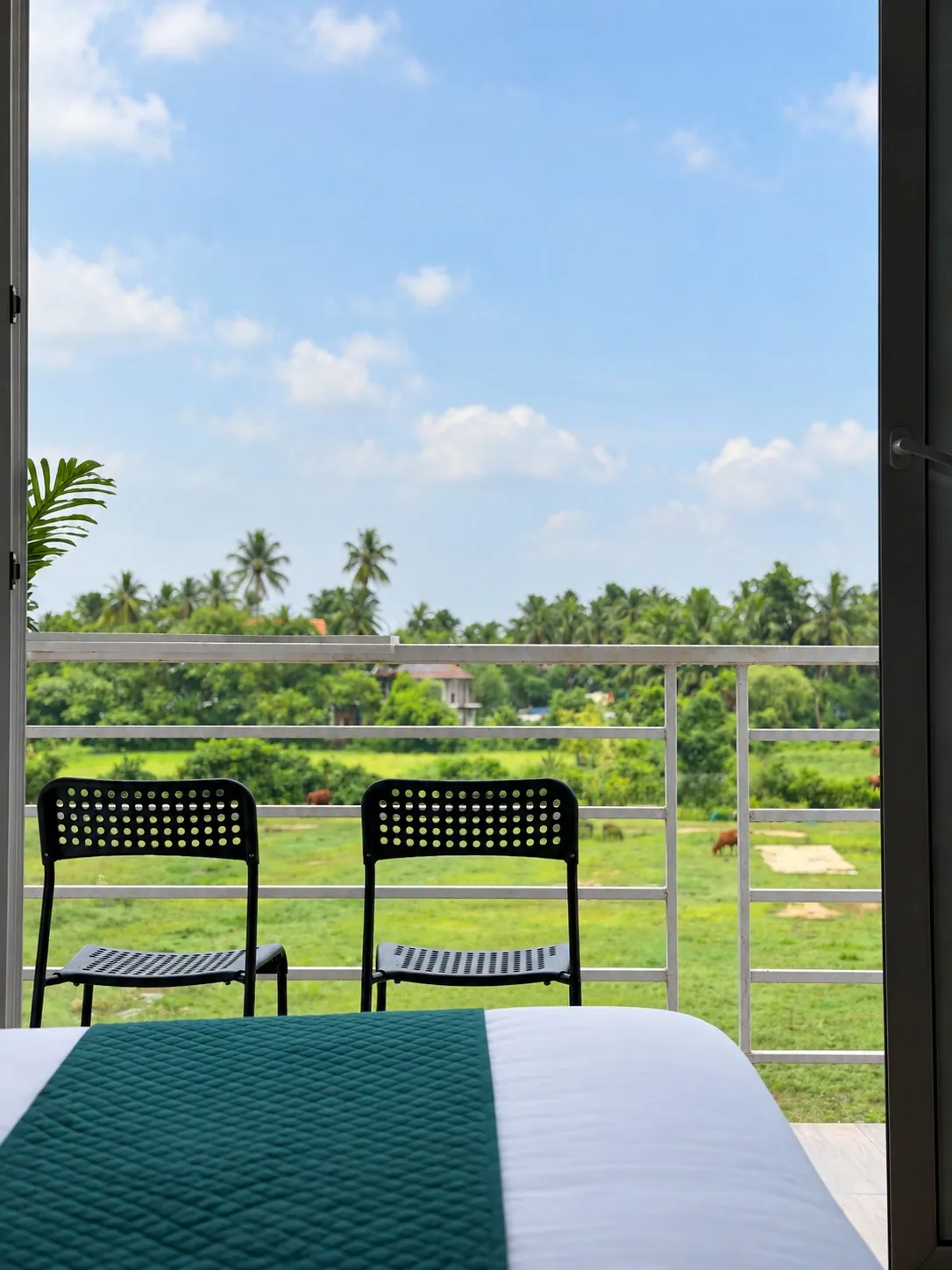
- A balcony or verandah with a view, because in the monsoon you'll spend more time on it than you think.
- A kitchen or kitchenette, for the evenings you'd rather stay in.
- Good Wi-Fi and a desk, if you're working through the quiet weeks.
- A market town within reach, such as Mapusa, for supplies and buses.
Siolim is where our own riverside studio, Rivara, stands. Its balcony looks over the river, the palms and the fields, which makes it a good seat for the monsoon.
Getting around, and what to pack
Questions people ask
Yes, if you come for green landscapes, rain, feasts and quiet rather than the beach. From June to September the sea is closed for swimming and most shacks and water sports stop, but the waterfalls are full, the hills are at their most spectacular, and São João, Chikhal Kalo and Bonderam all fall in these months.
No. The sea is closed for swimming through the monsoon, and district orders ban swimming at waterfalls, rivers and lakes for about 60 days from late June. The beaches are for walking until the season reopens in October.
Wet and very green. July is the wettest month: Panjim averages about 955 mm of rain over 27 rainy days, with about three hours of sunshine a day and highs near 29°C. The waterfalls are at their fullest and rafting runs on the Mhadei, but the sea and the falls are closed to swimmers.
In a village rather than a beach strip, since most shacks and beach venues close or slow down from June to September. River and inland villages such as Siolim, Aldona and Assagao stay lived-in and are at their greenest. Look for a balcony, a kitchen and good Wi-Fi.
Mostly not. Shack season runs through the dry season, from about October to May, and most beach venues close or slow down from June to September. Eat in the villages and towns instead, and check a restaurant is open before you go, as many open only in season.
Not by the usual route. The jeep safaris from Collem run from about late October to May, and walking the railway line to the falls is banned. In the monsoon, see Harvalem falls near Sanquelim instead, from the bank, as swimming is banned.
Sources and checks
- The House of Nivak guest guide (facts checked 27 Sep 2026)
- Climate data for Panaji, India Meteorological Department normals (Wikipedia)
- digitalgoa: South Goa's 60-day ban on swimming in natural water bodies, 29 June 2026
- ICSF: Goa's annual fishing ban, 1 June to 31 July
- GoaRafting: rafting on the Mhadei
- Goa Tourism Development Corporation: Chikhal Kalo
- Goa Tourism Development Corporation: Bonderam
- Goa Tourism: calendar of state festivals 2026 to 2027 (tentative dates)
Opening days, prices and seasonal rules change. We check them before every update; please confirm anything time-sensitive before you go.