Hidden places in Goa that are worth an early alarm
Quiet corners that reward an early start: a lake behind the sea, a free ferry to a fort, coves you reach by boat and a riverbank in Siolim at dusk.

On this page
In short
- Goa's quiet places are at its edges: Querim at the northern tip; Sweet Water Lake behind Arambol; the river islands of Divar and Chorão near Panjim; and the coves of Canacona in the far south.
- Most are at their best, and quietest, before 9 AM, and in the cooler months from about October or November to March.
- Querim (Keri), Goa's northernmost beach, has no lifeguards. A state ferry, free for foot passengers, crosses the river to Tiracol Fort.
- Butterfly and Honeymoon beaches are reached by boat from Palolem or Agonda, October to May. Leave Palolem around 7:30 AM to beat the tour boats.
- In the monsoon, district orders close waterfalls, rivers and lakes to swimmers for about 60 days from late June: look, don't swim.
The hidden places in Goa aren't secrets. They're at its edges: Querim and Sweet Water Lake at the top of the north coast; the river islands of Divar and Chorão near Panjim; and the coves of Canacona in the far south, some of which you can only reach by boat. All of them are quiet if you go early and outside the December rush, and if you treat them with care.
I love finding the quieter corners of a place, and these are my picks in Goa, north to south: the same ones I give guests in Siolim, with the months and the hour I'd choose. They're simple places with few shops, and some have no lifeguards, so carry water and a little cash.
The quiet north: a riverbank, a lake and a ferry
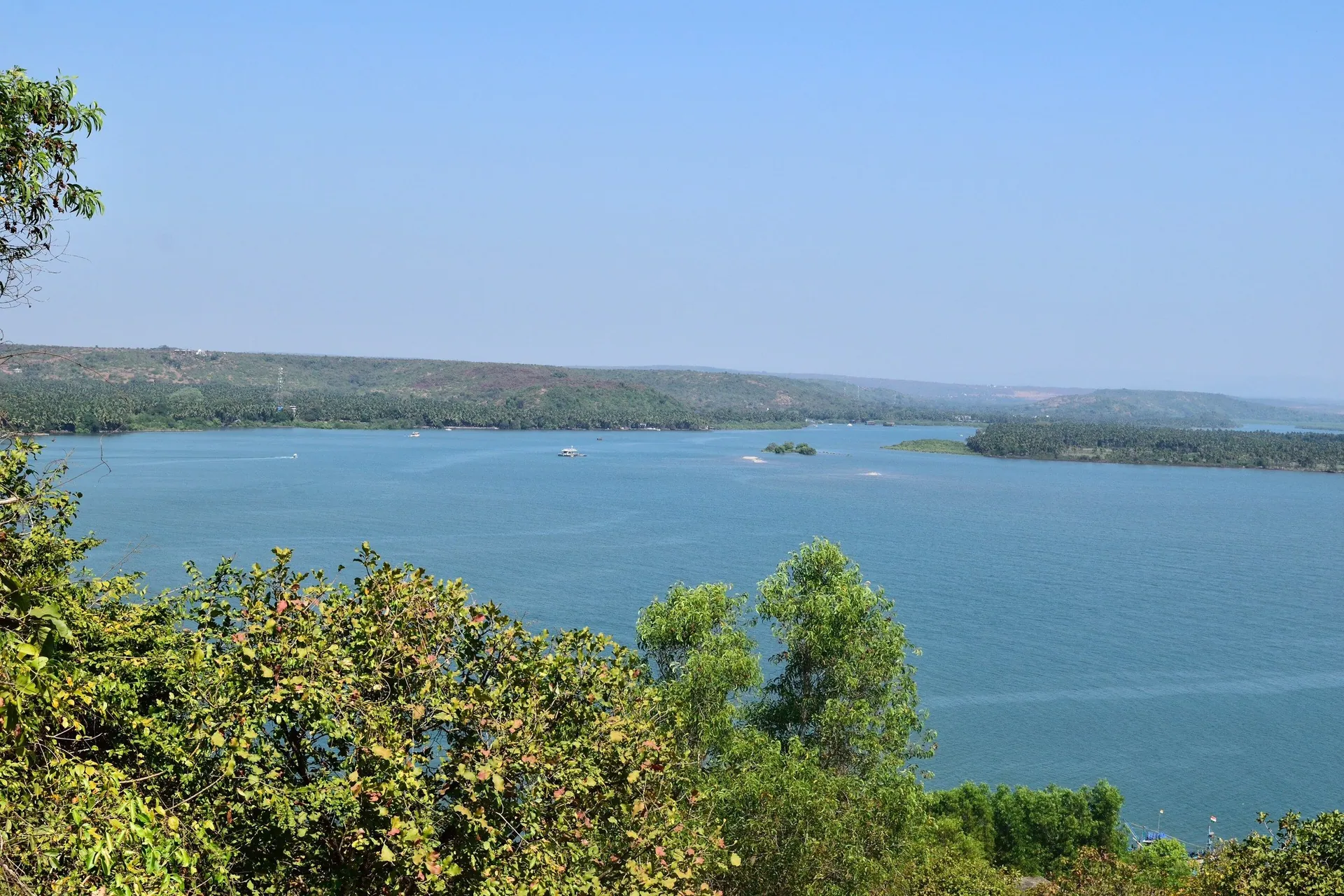
Start in Siolim, at dusk. Walk the Vaddy road along the Chapora to the old ferry point, now used only by fishermen, and stay as the light goes, when locals gather under the Siolim bridge. On 24 June, for São João, the same river fills with decorated boats.
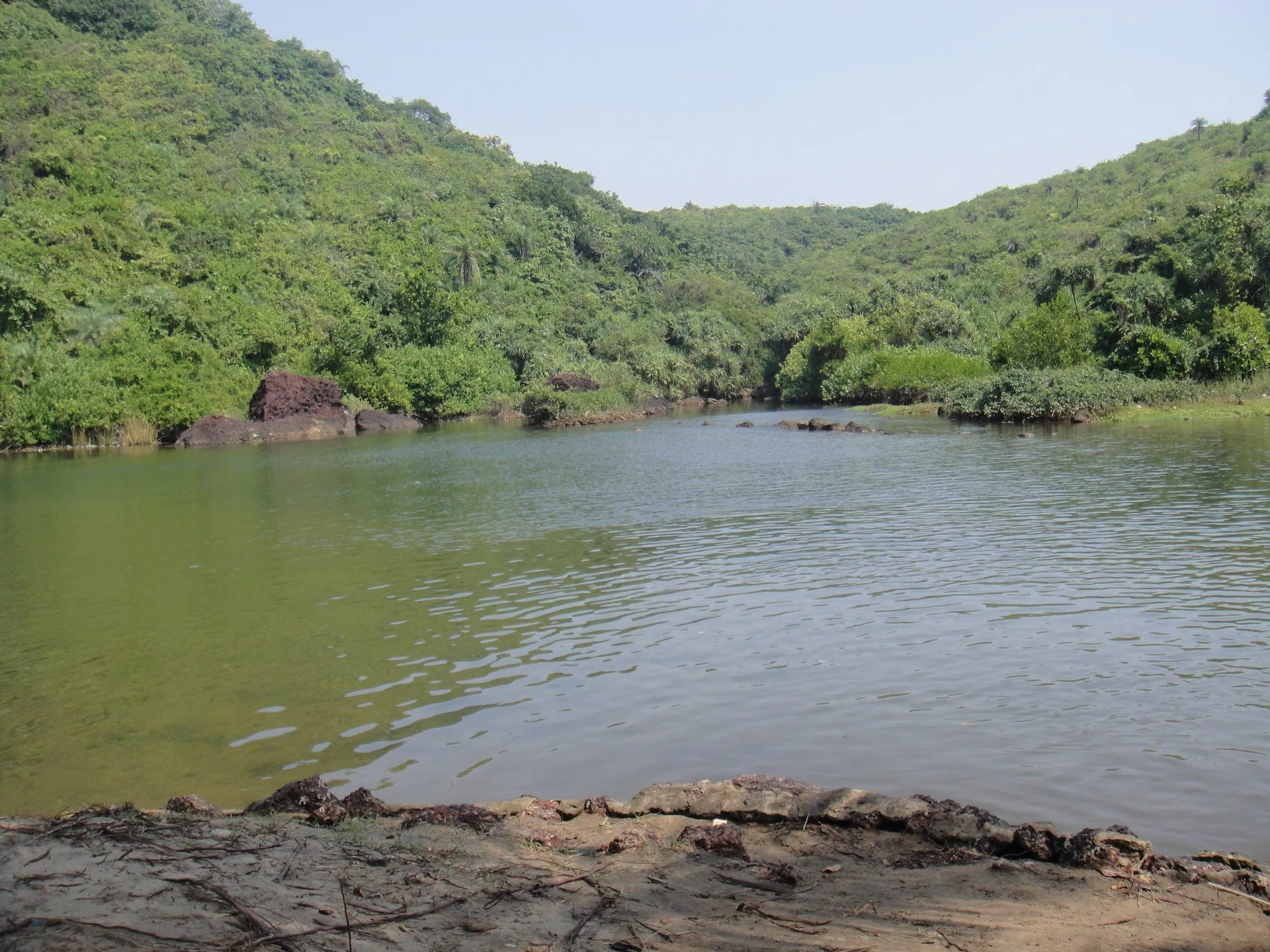
Then go to the top of the coast. Sweet Water Lake sits just behind the sea at the northern end of Arambol beach, fed by a spring, with jungle rising behind it. Walk over the rocks before 9 AM and it's just you, the water and the trees.
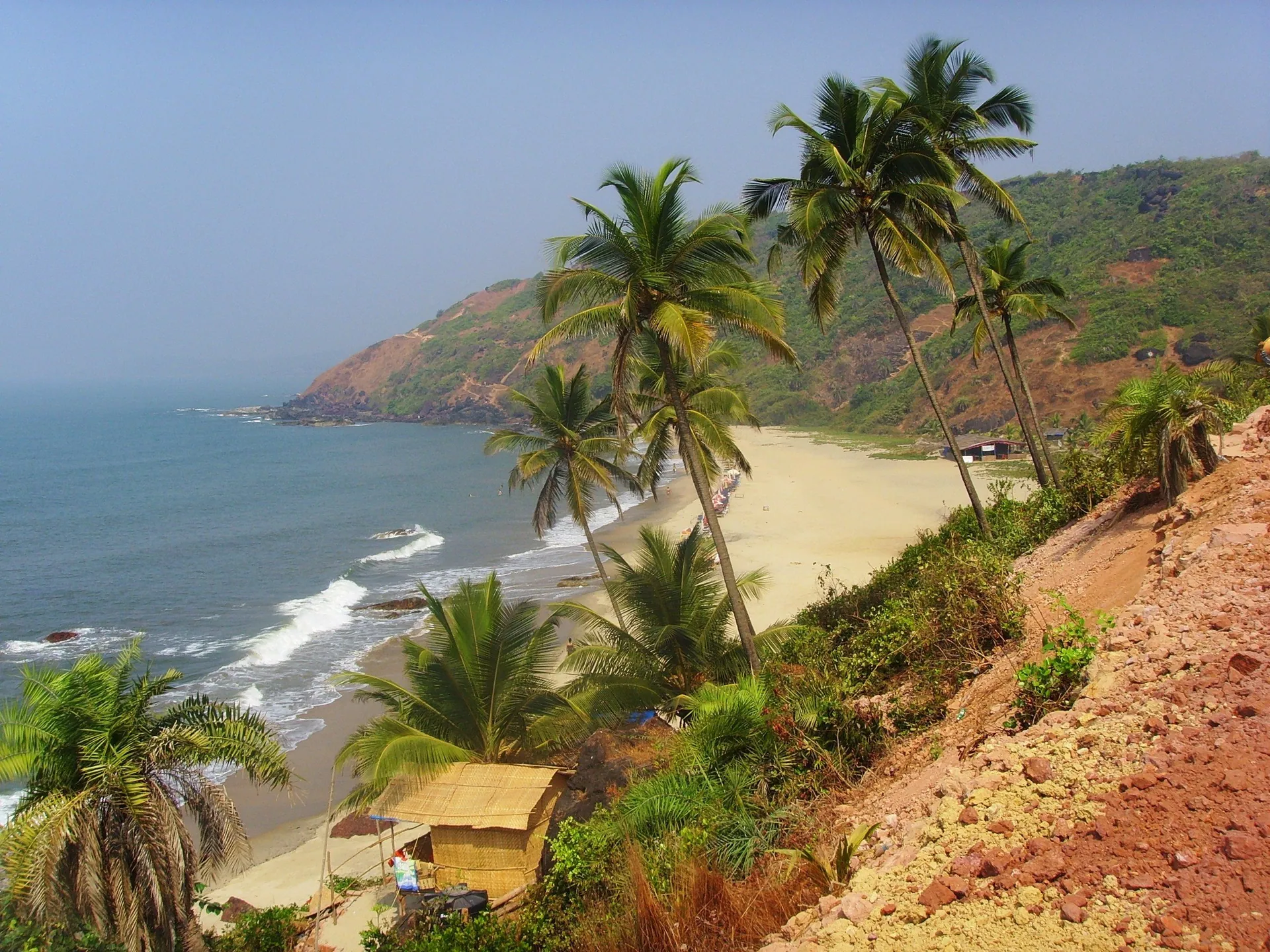
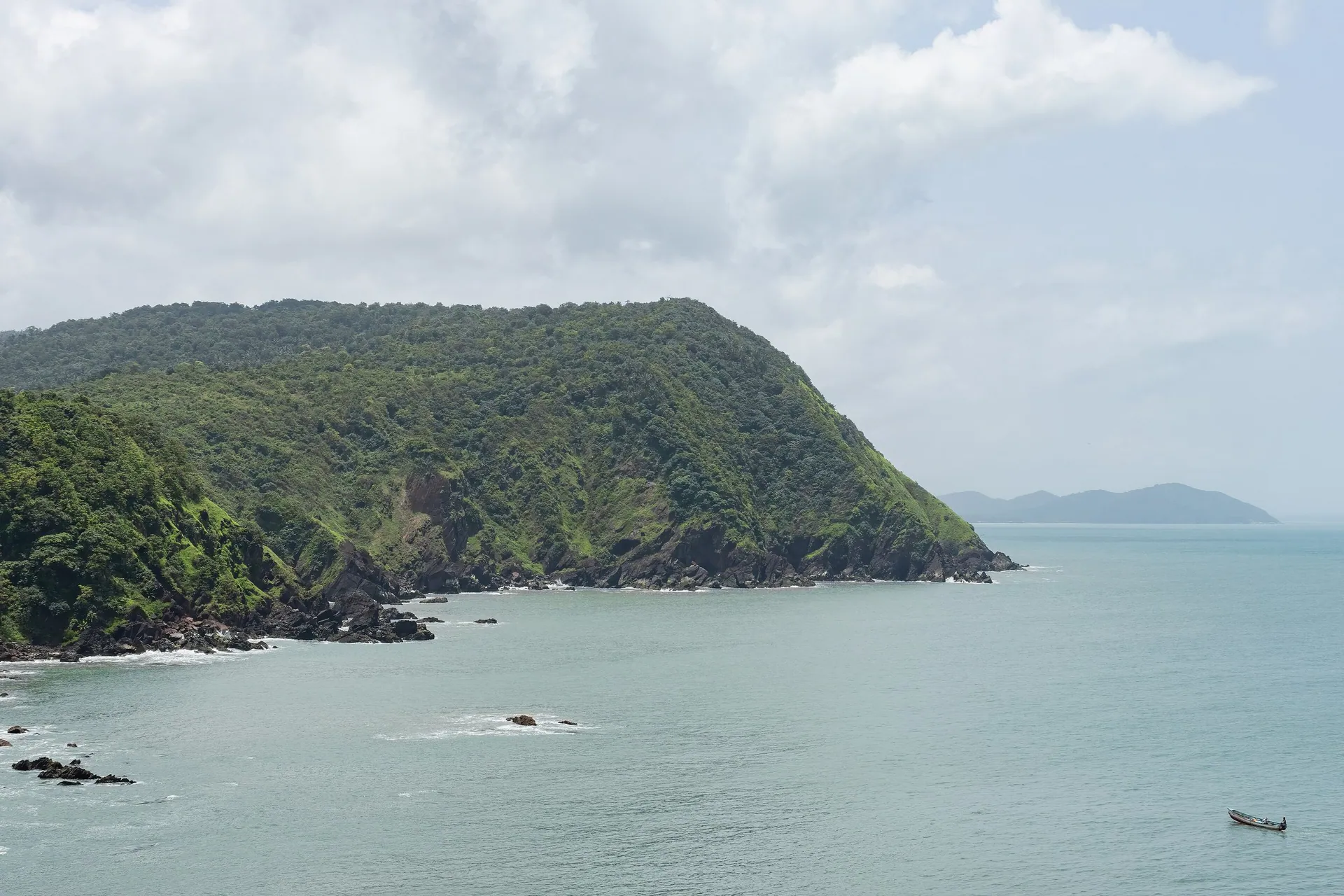
Further north, Querim, or Keri, is Goa's northernmost beach and the darkest corner of the north coast. For stars, go within a few nights of a new moon, between November and March. For Tiracol Fort itself, and a scooter loop that takes in the ferry, see my places to visit in North Goa.
The Siolim riverbank
The Vaddy road along the Chapora to the old ferry point, now used only by fishermen. Locals gather under the bridge as the light goes.
On 24 June, São João fills the river with decorated boats.
Photo: Nikhilb239, CC BY-SA 4.0, via Wikimedia CommonsSweet Water Lake
A spring-fed lake just behind the sea at the northern end of Arambol beach, with jungle rising behind it.
About a 20-minute walk over the rocks from the beach. Go before 9 AM.
Photo: Kavita21sharma, CC BY-SA 4.0, via Wikimedia Commons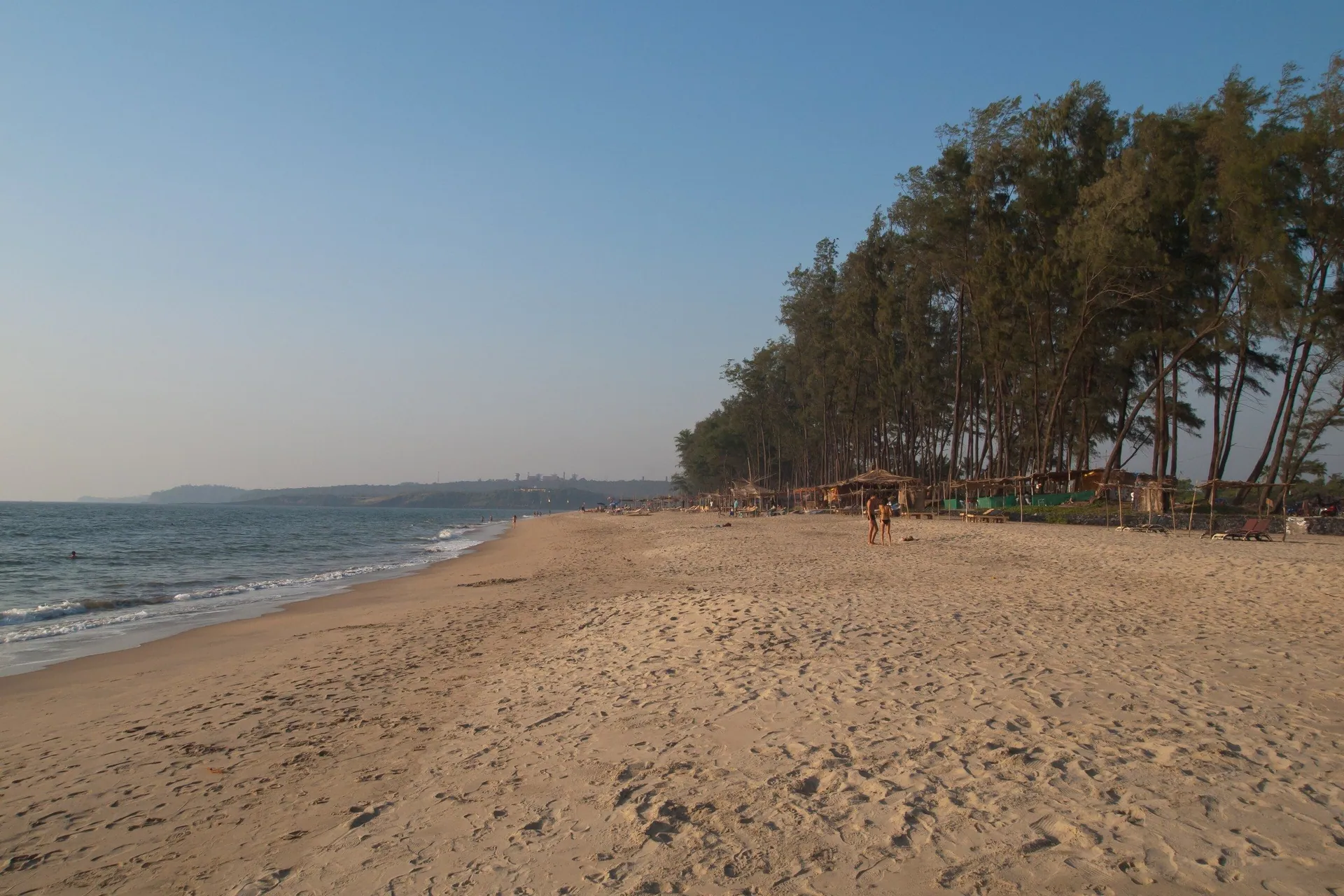
Querim and the Tiracol ferry
Casuarinas where the Tiracol river meets the sea, and a state ferry, free for foot passengers, across the river to Tiracol Fort.
No lifeguards. Keep out of the river mouth.
Photo: Vyacheslav Argenberg, CC BY 4.0, via Wikimedia CommonsIf you'd like quiet without a walk or a ferry, the everyday beaches of the far north are calmer than the middle of the coast. Mandrem and Ashwem are wide, calm and quiet, and Morjim is just across the Siolim bridge. They're all in the best beaches in Goa.
Panjim and the river islands
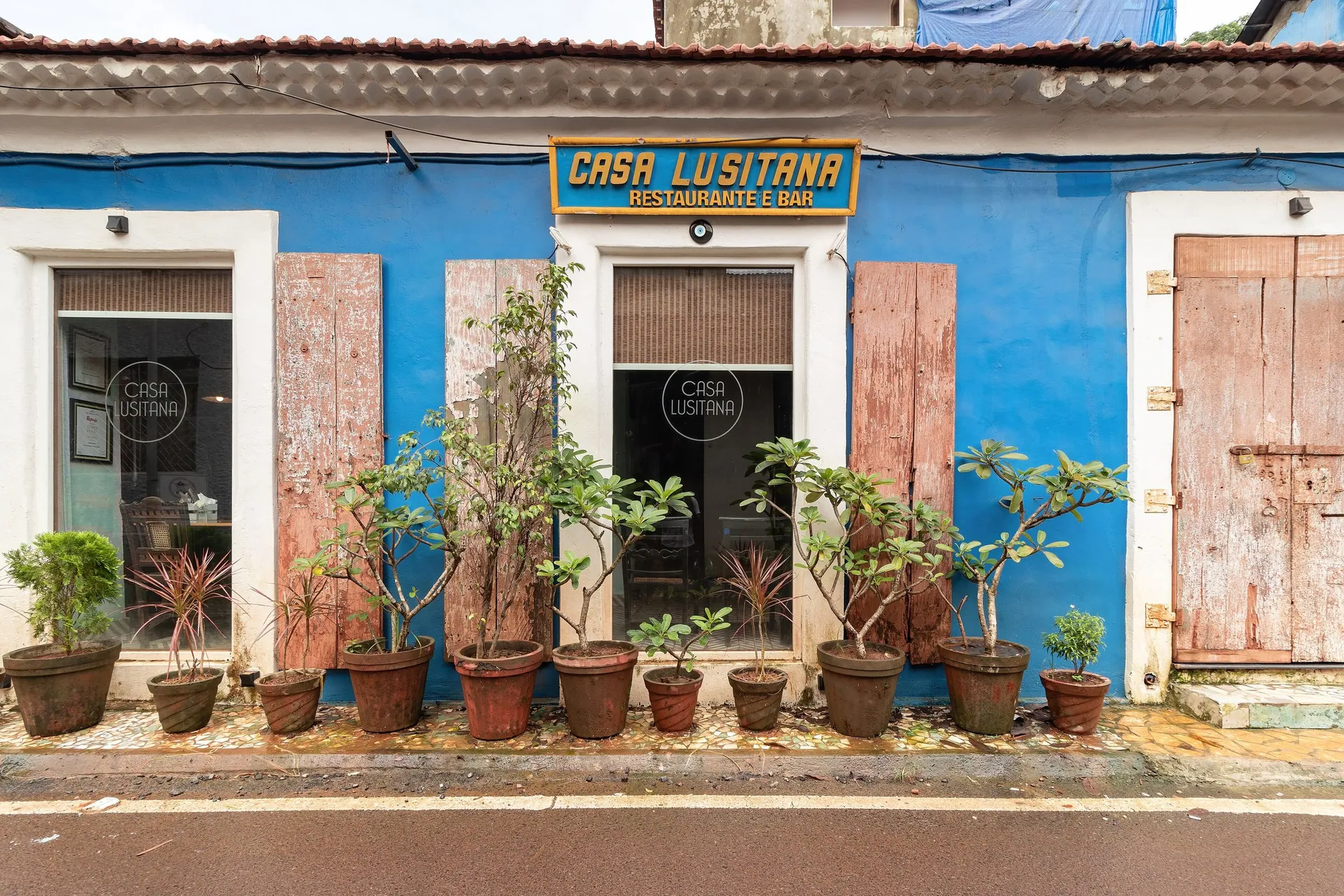
Near the capital, the quiet is in the early hours and on the water. Fontainhas, Panjim's old Latin quarter, is at its gentlest before the city wakes, and government ferries cross to the island villages, free for foot passengers.
Divar is paddy fields and the hilltop Piedade church, a short ferry ride from Old Goa, and in August the island keeps Bonderam, its flag festival. On Chorão, a free ferry ride from Ribandar, are the mangrove channels of the Salim Ali Bird Sanctuary. Go early, while the birds are busy.
Fontainhas at first light
Pastel houses, chapels and hillside steps, with the lanes almost to yourself.
People live here, so keep voices low.
Photo: iMahesh, CC BY-SA 4.0, via Wikimedia Commons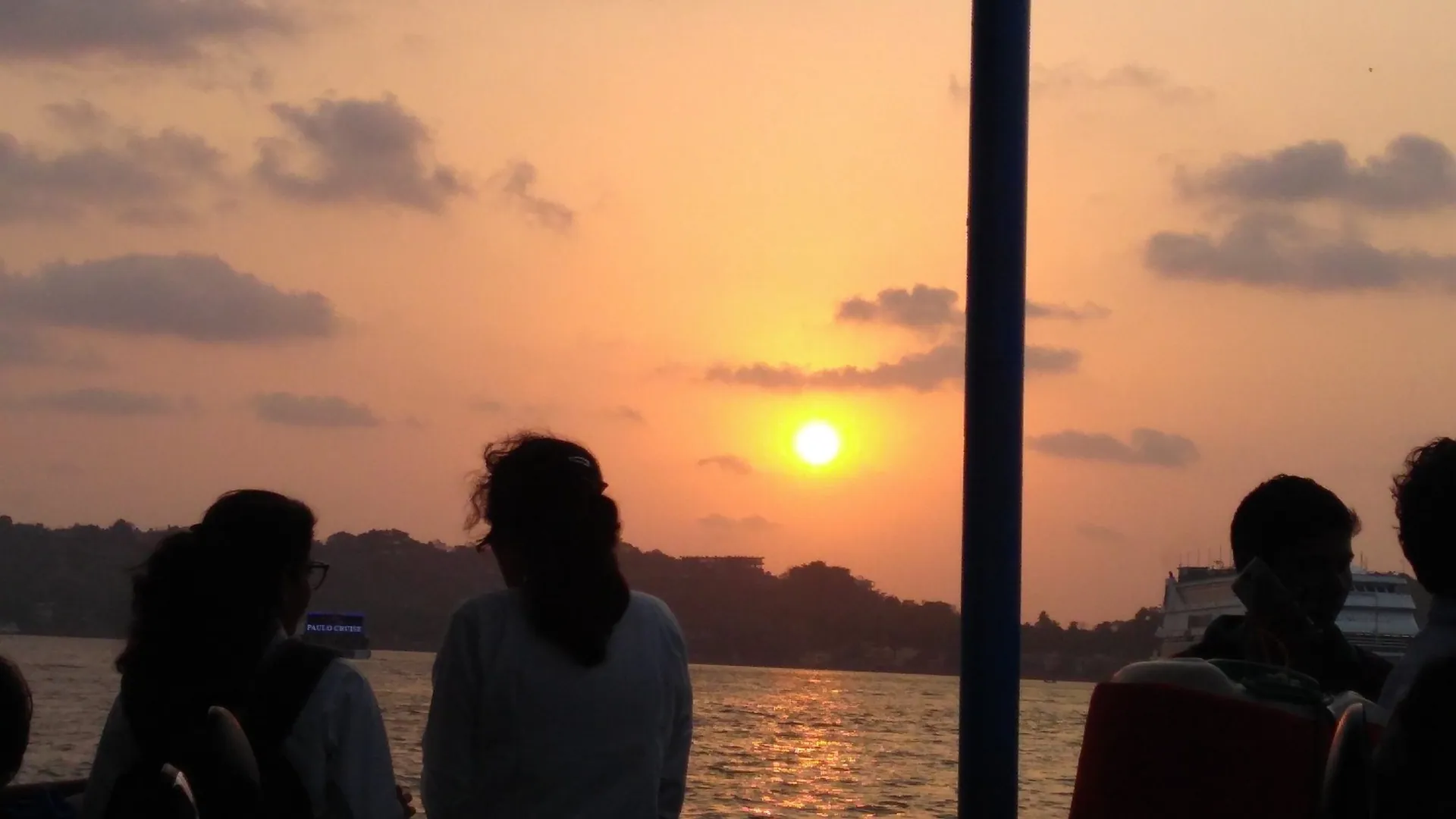
Divar by ferry
Paddy fields and the hilltop Piedade church, a short, free ferry ride from Old Goa.
Few shops on the island. Carry water, or a picnic breakfast.
Photo: Fredericknoronha, CC BY-SA 4.0, via Wikimedia Commons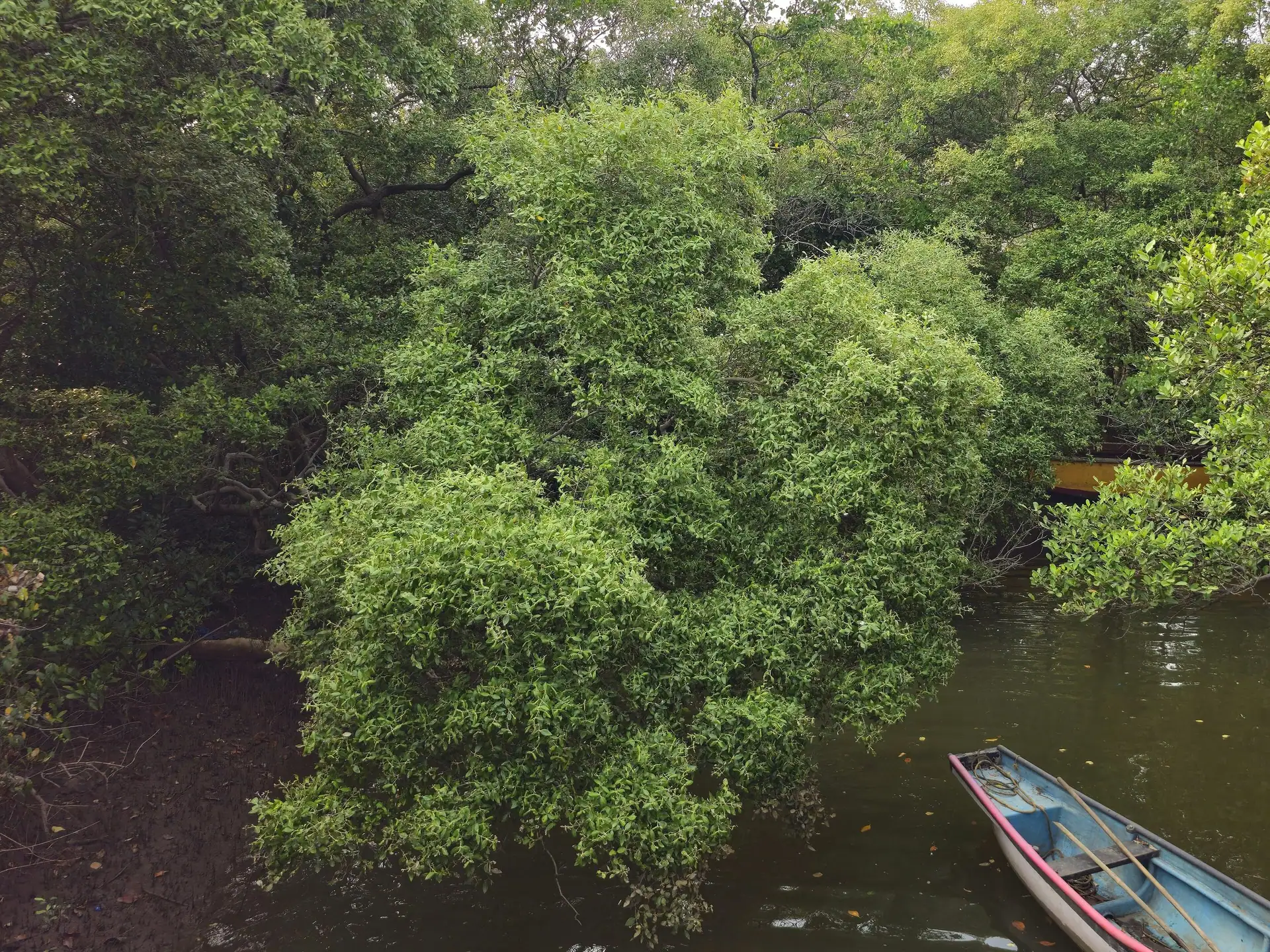
Salim Ali Bird Sanctuary
Mangrove channels on Chorão island, a free ferry ride from Ribandar.
Open 6 AM to 6 PM. Boat trips follow the tide. Bring binoculars and repellent.
Photo: Gannu03, CC BY-SA 4.0, via Wikimedia CommonsThe islands, Old Goa's churches and the temples of Ponda make a full day together, and I've written that day up in Old Goa and Ponda. Fontainhas has its own piece, a day in Panjim.
Inland, after the rains
In the monsoon the hinterland comes into its own, with full waterfalls and deep green forest. It's a season for looking, not swimming.
Harvalem, near Sanquelim, is a 50 m waterfall beside sixth-century rock-cut caves and the Rudreshwar temple, and it's fullest after the rains. Mayem Lake, on the same road, now has kayaking. For a drive in the rain, take Chorla Ghat, a misty mountain road where Goa meets Karnataka and Maharashtra.
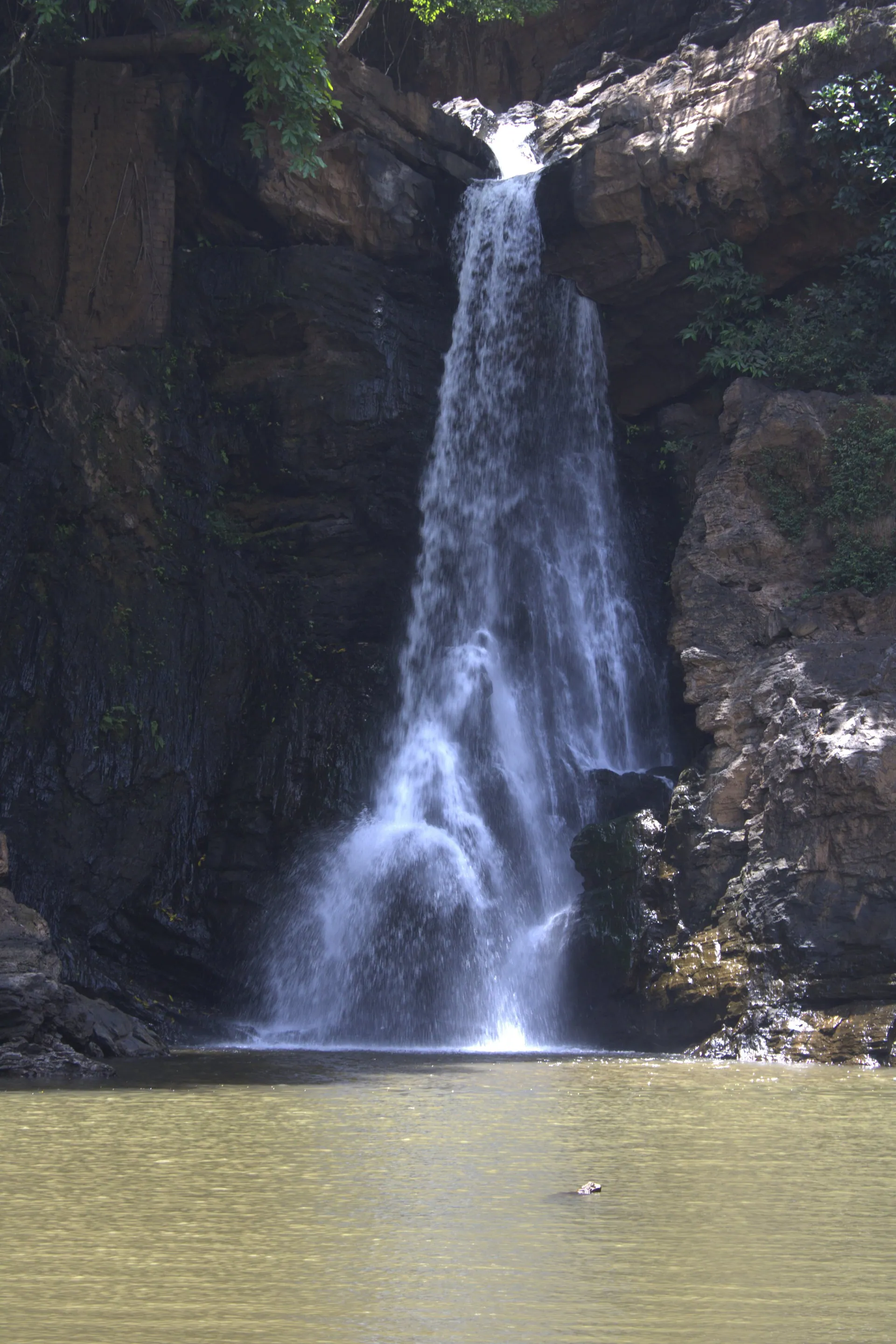
Harvalem falls and caves
A 50 m waterfall beside sixth-century rock-cut caves, fullest after the rains.
Look, but stay out of the water in the monsoon.
Photo: Primejyothi, CC BY-SA 3.0, via Wikimedia CommonsThe far south: coves, lagoons and turtles
Canacona, at the southern end of the coast, is a place of small coves, calm bays and forest coming down to the sand. It's a long day from the north, and an easy one if you do as I tell guests and stay a night near Palolem or Agonda.
Butterfly and Honeymoon are two small forest-backed coves that you reach by boat from Palolem or Agonda, often with dolphins on the way. Leave Palolem around 7:30 AM to beat the tour boats, agree the price before you board and wear the life jacket.
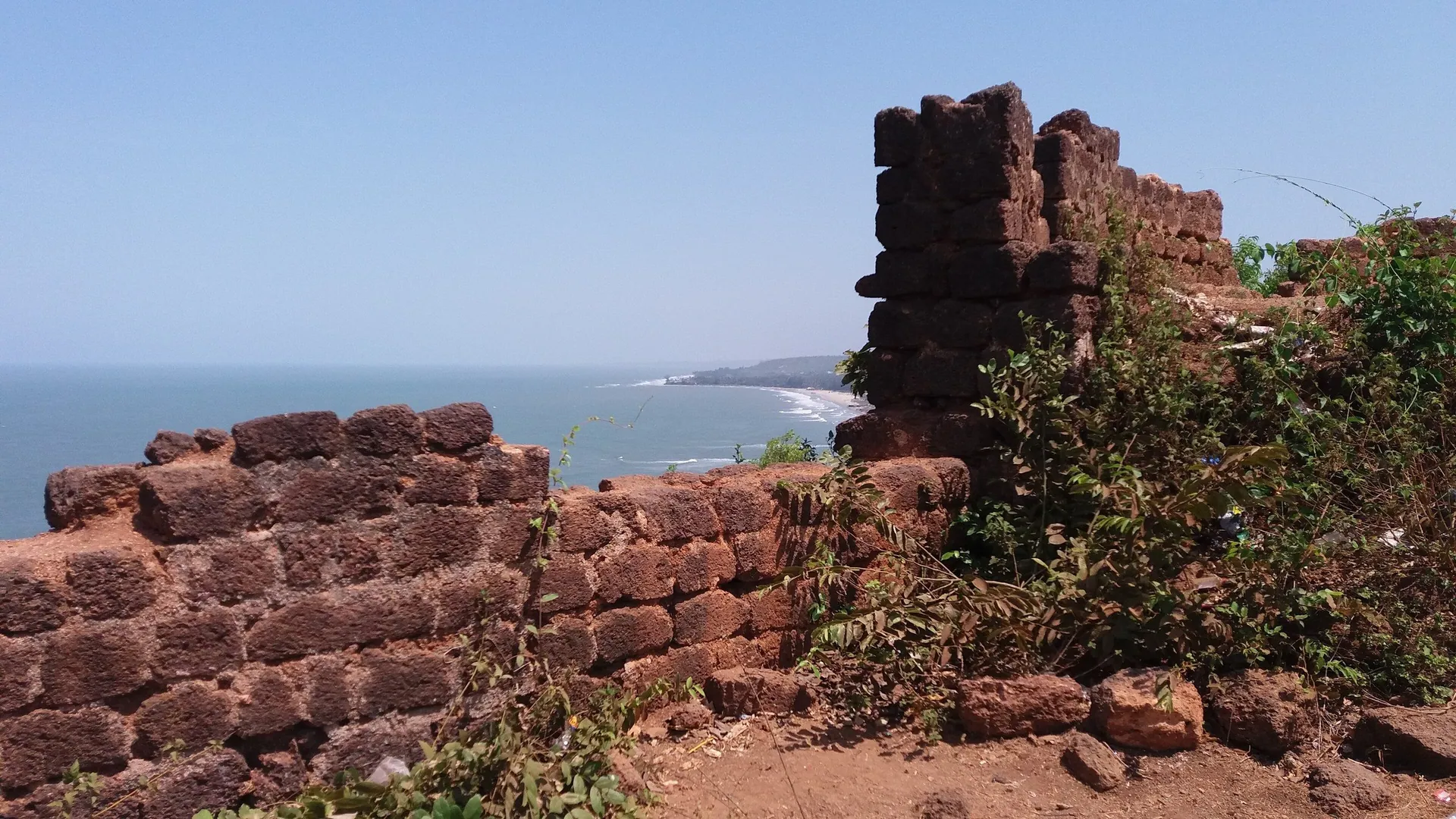
Kakolem, or Tiger Beach, lies below the cliffs near Cabo de Rama. Above it, the clifftop fort has a white chapel inside its walls; its gates close at 5:30 PM, so watch the sunset from the open cliffs nearby. It fits well into a day trip to South Goa.
Kakolem, or Tiger Beach
A cove below the cliffs, where a small freshwater fall runs onto the sand.
Steep steps, no lifeguards. Leave before dark.
Cola Beach lagoon
A calm freshwater lagoon sitting just behind the surf.
Walk the rough track, or come by boat from Agonda.
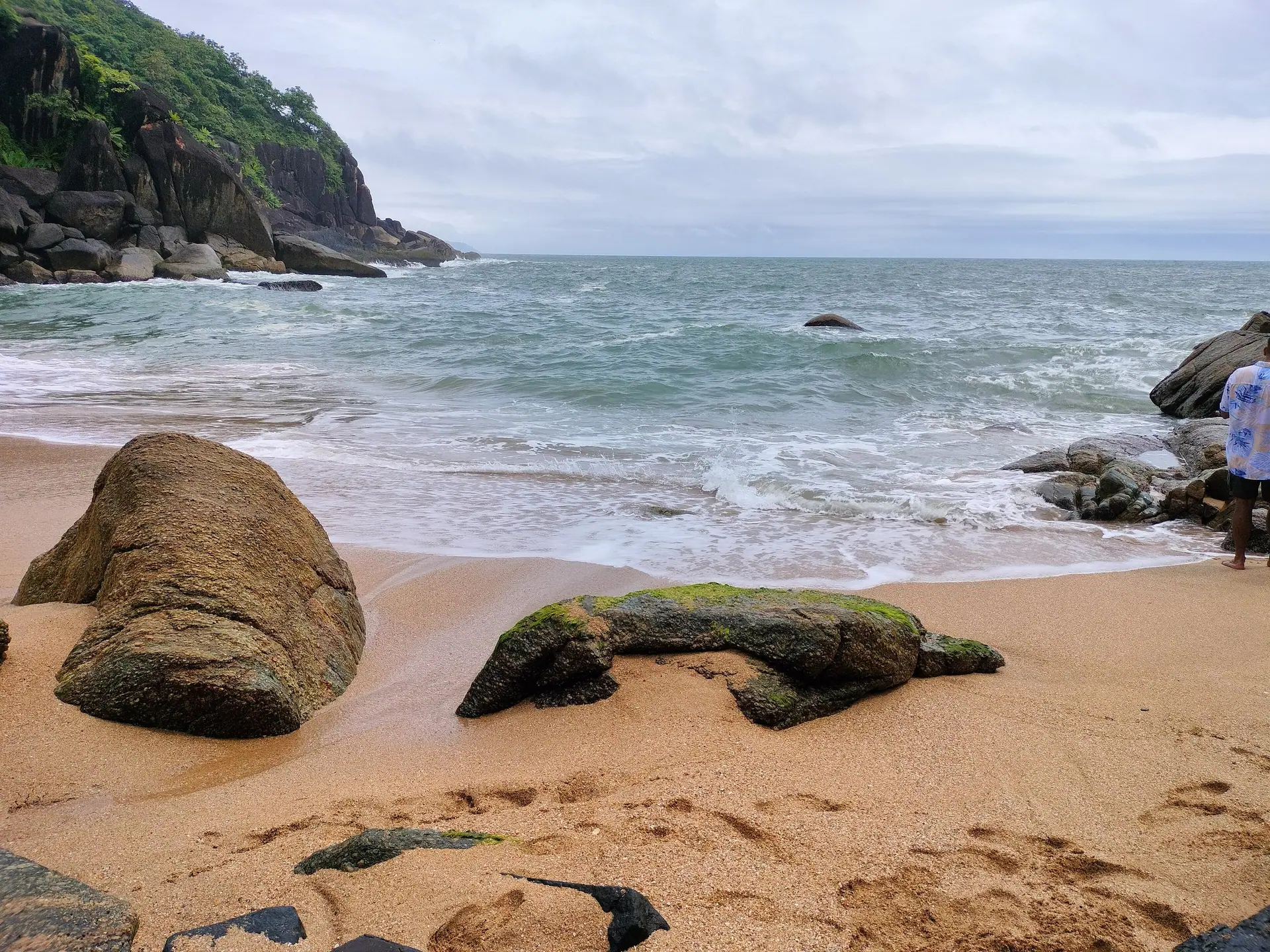
Butterfly and Honeymoon beaches
Two small forest-backed coves, reached by boat from Palolem or Agonda.
Agree the price first, and wear life jackets.
Photo: Ashi ashlesh, CC BY-SA 4.0, via Wikimedia CommonsGalgibaga
A long, quiet beach at the very south of Goa's coast, where olive ridley turtles nest through the winter.
Nests are cordoned. No bright lights after dark.
For a morning away from the sand, walk the forest trails of Cotigao Sanctuary, near Palolem, and climb its treetop watchtower. At Netravali, Budbudyachi Tali, the bubbling lake, is a small pond where bubbles rise from the bottom.
Hidden places in Goa: when to go, at a glance
The month matters as much as the hour. Most of these are at their best from about October or November to March, and the boats to the southern coves stop for the monsoon.
| Place | When | Getting there |
|---|---|---|
| Siolim riverbank | Dusk | On foot along the Vaddy road |
| Sweet Water Lake | Nov to Apr, before 9 AM | About 20 minutes over the rocks from Arambol beach |
| Querim | Nov to Mar | The coast road north; the ferry to Tiracol is free for foot passengers |
| Fontainhas | 6:30 to 8:30 AM | On foot in Panjim |
| Divar | Oct to Mar | Free ferry from Old Goa |
| Salim Ali Bird Sanctuary | Early; open 6 AM to 6 PM | Free ferry from Ribandar to Chorão |
| Harvalem falls | Jul to Oct | By road, near Sanquelim |
| Kakolem | Oct to Mar; leave before dark | Steep steps near Cabo de Rama |
| Cola Beach | Nov to Mar | A rough track, or a boat from Agonda |
| Butterfly and Honeymoon | Oct to May, from about 7:30 AM | Boat from Palolem or Agonda |
| Galgibaga | Nov to Mar | By road, at the southern end of the coast |
How to keep them quiet
Quiet is easy to spoil. Go early, carry what you need and take your rubbish home with you.
So set the alarm. The lake, the lanes and the coves belong to whoever gets there first.
Questions people ask
The quietest is Querim (Keri), Goa's northernmost beach, at the mouth of the Tiracol river, though it has no lifeguards. Sweet Water Lake, just behind the sea at Arambol's northern end, is the other reason to go to the top of the coast. For an everyday quiet beach with cafés, Mandrem and Ashwem are wide and calm.
Of the beaches you can drive to, my picks for quiet are Querim at the northern tip and Galgibaga at the southern end. The small coves of Butterfly and Honeymoon are reached only by boat from Palolem or Agonda, from October to May.
By boat from Palolem or Agonda, between October and May. Leave Palolem around 7:30 AM to beat the tour boats, agree the price before you board and wear a life jacket. Dolphins are often seen on the way.
Yes, for foot passengers. The state ferry crosses the Tiracol river from Querim to Tiracol Fort, which is now a heritage hotel, so check what's open to visitors before you go.
Some are at their best then: Harvalem's falls run full from July to October. But from late June, district orders close waterfalls, rivers and lakes to swimmers for about 60 days. Boats to the southern coves run only from October to May, and forest roads can close in heavy rain.
A spring-fed lake just behind the sea at the northern end of Arambol beach, with jungle rising behind it. It's about a 20-minute walk over the rocks. Go before 9 AM for the quiet, between November and April.
Sources and checks
- The House of Nivak guest guide (facts checked 27 Sep 2026)
- Querim, Wikipedia
- Querim Beach, Wikipedia
- Fort Tiracol, Wikipedia
Opening days, prices and seasonal rules change. I check them before every update; please confirm anything time-sensitive before you go.